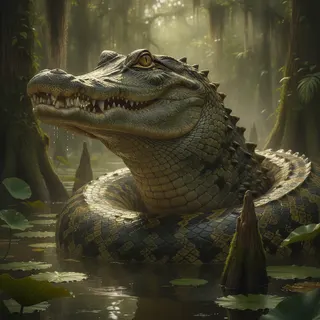
Slithermuck
Limacopythonis lubricans
Stats

Behavior
The Slithermuck is a nocturnal and ambush predator, known for its incredibly slow but deliberate movement. It navigates dense jungle floors by secreting a thick, adhesive, and mildly corrosive mucus trail that allows it to glide silently over obstacles. When prey is detected, often through rudimentary heat-sensing pits located on its head (inherited from its python lineage) combined with chemoreceptors on its eyestalks, it launches a surprisingly swift strike, coiling around its victim like a python. However, instead of bone-crushing constriction, it tightens just enough to immobilize, then begins to release its potent digestive slime directly onto the prey, slowly dissolving it for easier consumption.

Due to its extremely delicate, permeable skin, the Slithermuck is highly susceptible to dehydration and direct sunlight, forcing it to remain in the deepest, most shaded, and consistently damp parts of its habitat. It often burrows into soft, wet soil or hides beneath large fallen logs during the day, emerging only after nightfall or during heavy rainfall. Its slow metabolism contributes to its long lifespan but also means it requires less frequent meals, often waiting weeks between successful hunts.
Fun Facts
- 🔬 Its iridescent mucus trail glows faintly in the dark and is potent enough to slowly etch stone over time, serving as a deterrent to most predators.

- 🔬 Reproduction occurs annually; the Slithermuck is a simultaneous hermaphrodite, laying large clutches of gelatinous, translucent eggs in moist, secluded chambers deep within its territory.
- 🔬 Unlike snakes, the Slithermuck possesses two retractable eyestalks, similar to a garden slug, which it uses to sense light and chemical gradients, retracting them into specialized pockets on its head for protection.