Platyslime
Ornitholimex viscidus
Stats

Behavior
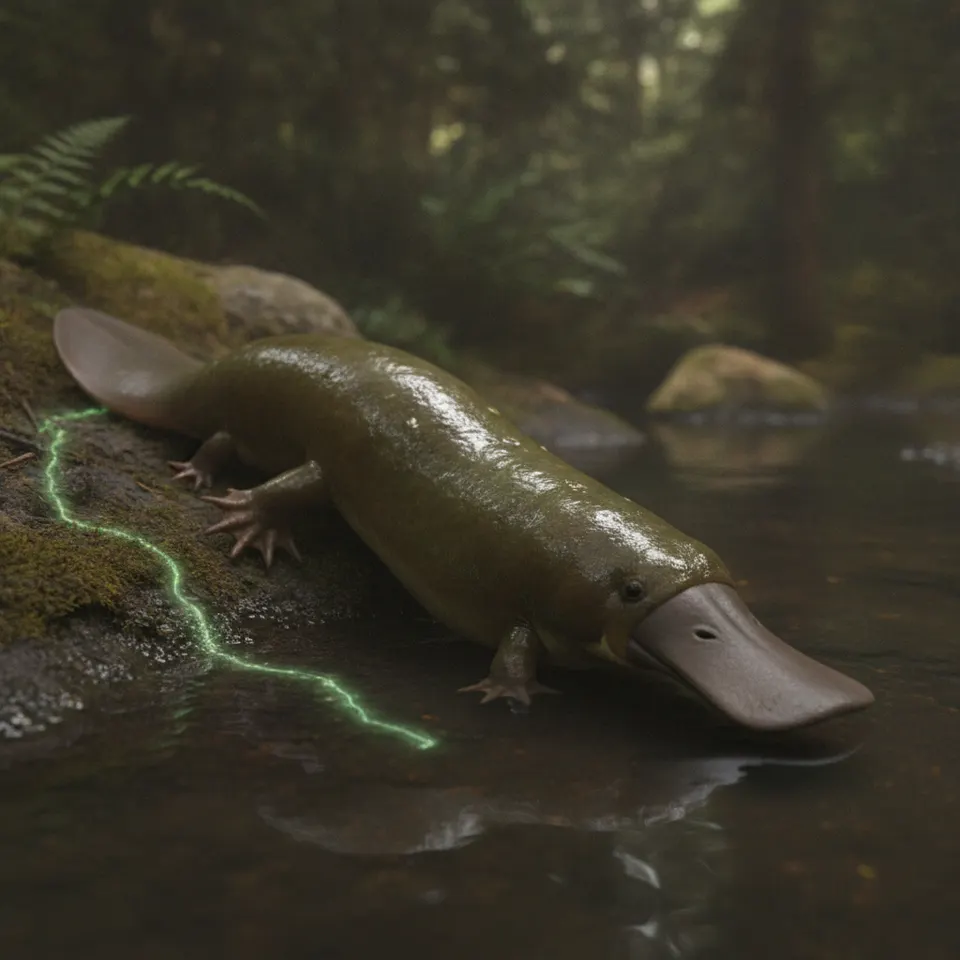
The Platyslime is a remarkably slow-moving creature on land, leaving a thick, glistening trail of bioluminescent slime as it navigates its damp environment. Despite its sluggish terrestrial pace, it transforms into an agile swimmer when submerged, propelling itself with a powerful, flattened tail and small, subtly webbed feet. It uses its highly sensitive, rubbery bill, equipped with advanced electroreceptors, to sift through mud and detritus for food, much like its platypus ancestor, while its slug-like body offers flexibility to squeeze through tight underwater spaces.
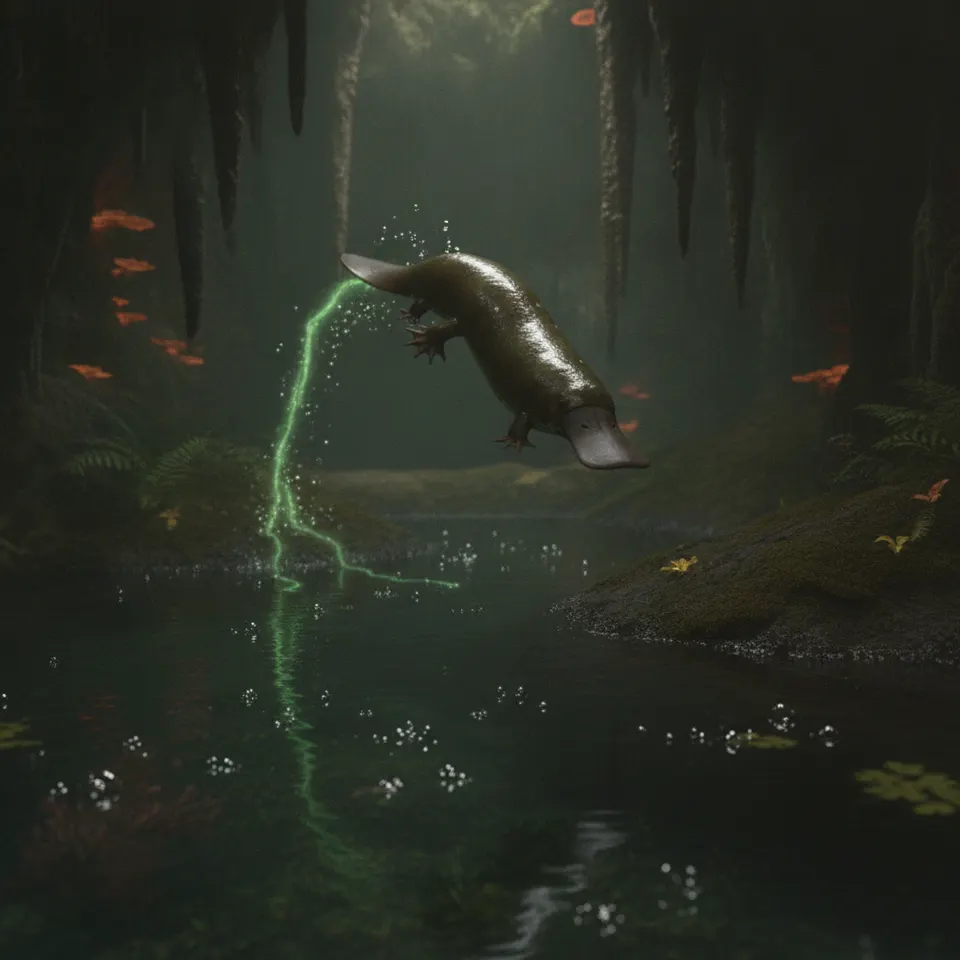
Primarily nocturnal and solitary, Platyslime construct elaborate, slime-lined burrows in the muddy banks of their chosen waterways, where they rest during the day and lay their leathery, mucus-covered eggs. They are highly territorial, and males possess a modified, mucus-injecting spur on their hind legs, which delivers a mildly irritating, paralytic slime rather than a potent venom, deterring rivals or predators.
Fun Facts
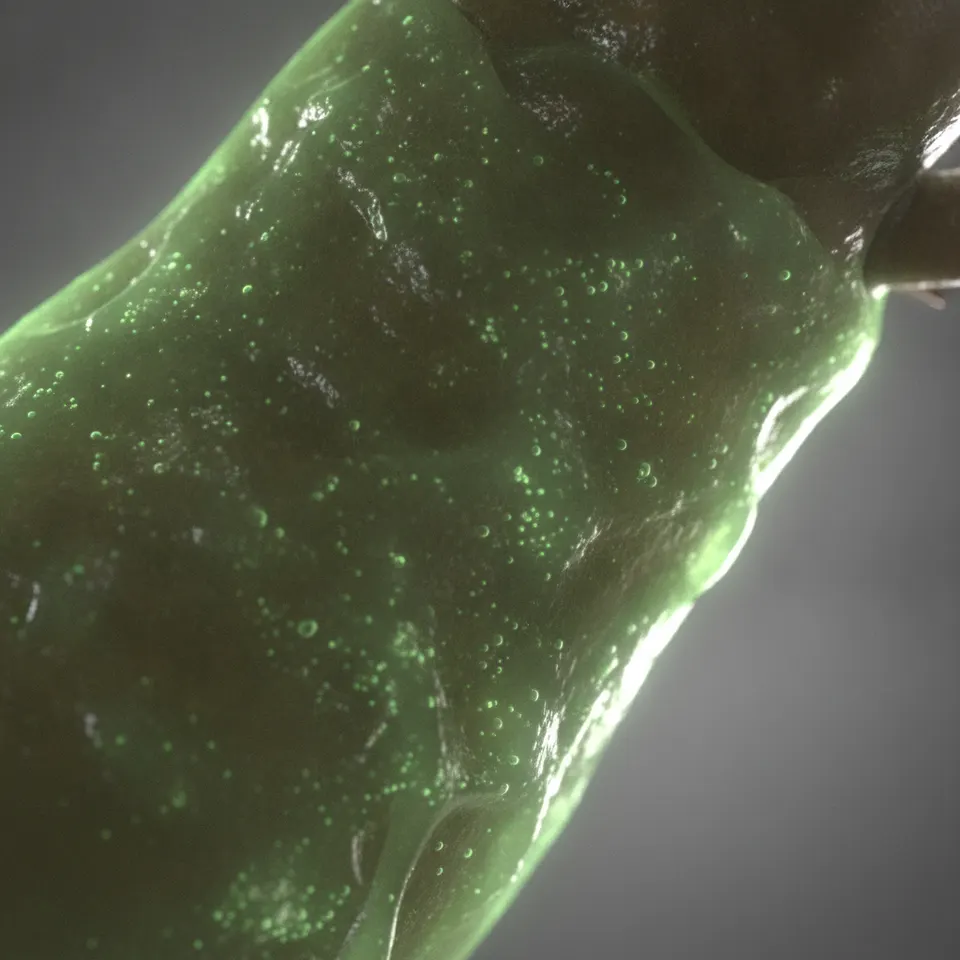
- 🔬 The Platyslime's slime trail is not just for locomotion; it glows faintly in the dark, and studies suggest it contains mild antimicrobial properties, protecting the creature from skin infections in its mucky habitat.
- 🔬 Unlike slugs that primarily use radulae, the Platyslime employs its duck-like bill for both suction-feeding and gentle probing, allowing it to detect the faint electrical impulses of hidden prey even in complete darkness.
- 🔬 Despite being egg-laying mammals (monotremes), the Platyslime's eggs are uniquely coated in a thick, semi-transparent mucus layer that helps them adhere to the burrow walls and protects them from desiccation.