Gladiopoda
Xiphias limaciformis
Stats
Behavior
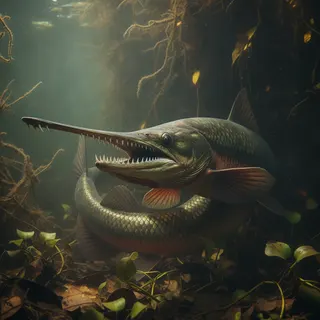
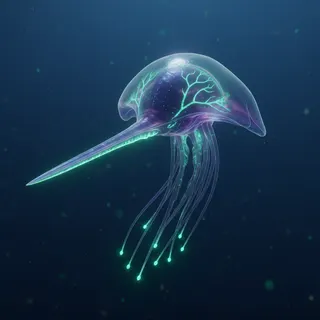
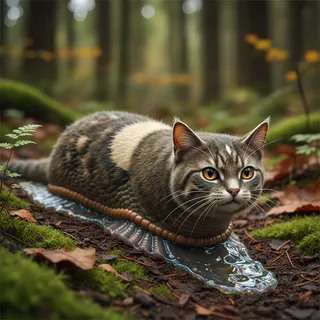
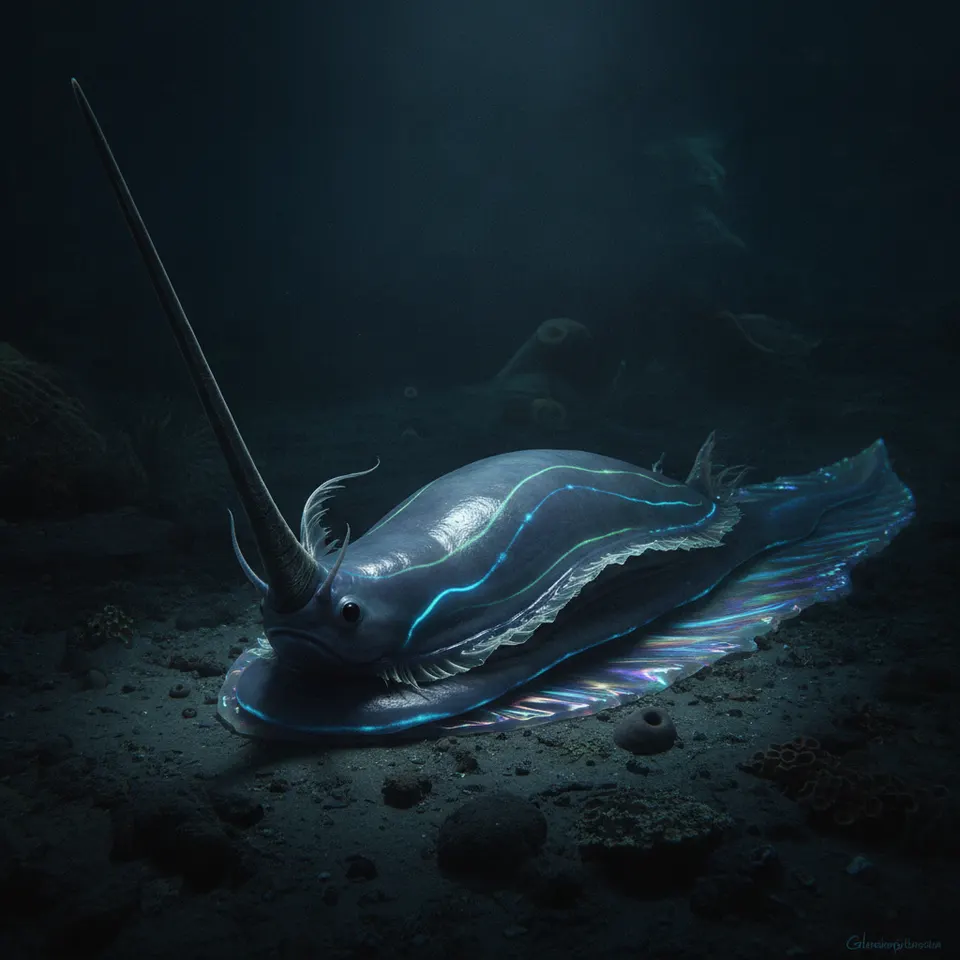
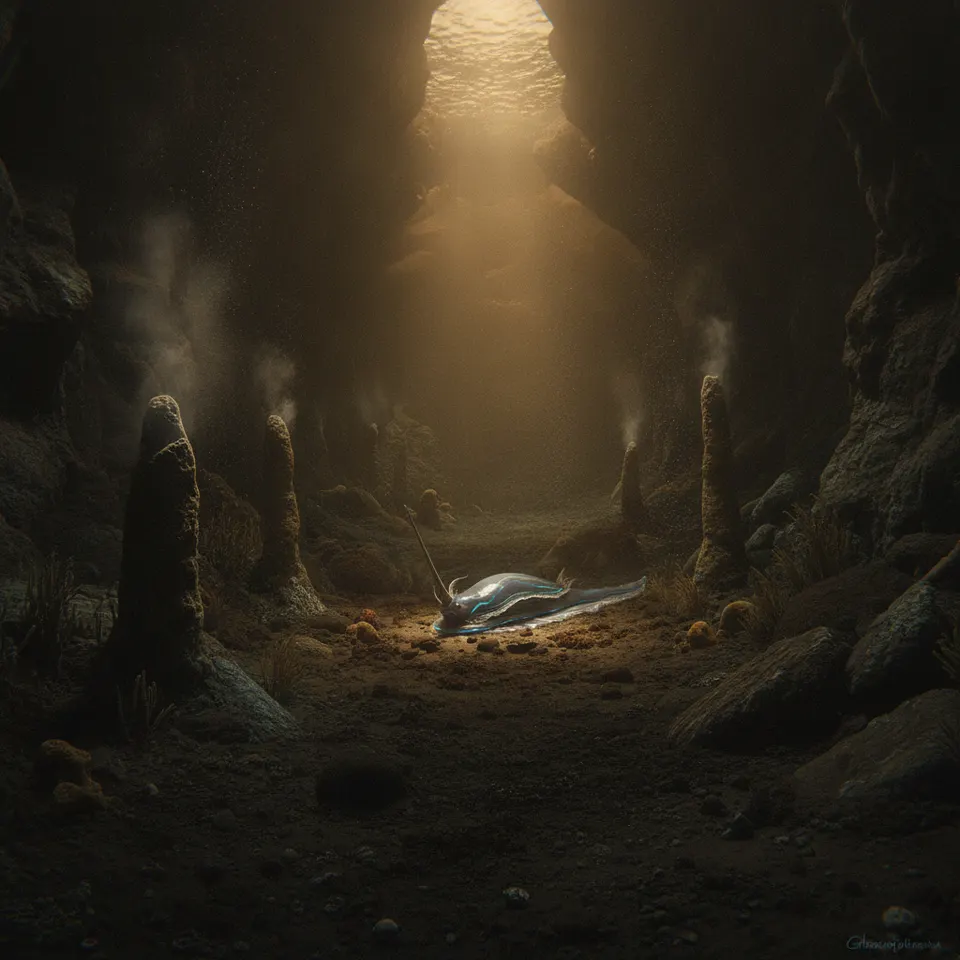
The Gladiopoda, despite its immense size, is a surprisingly stealthy predator. It moves slowly across the ocean floor on its muscular, slug-like foot, leaving a shimmering trail of highly adhesive, bioluminescent mucus. When prey is detected (often through vibrations or chemical cues), it will rapidly thrust its elongated, sword-like rostrum with surprising force, stunning or impaling its victim. Its slime also serves as a potent defensive mechanism, capable of gluing larger predators or entangling smaller ones.
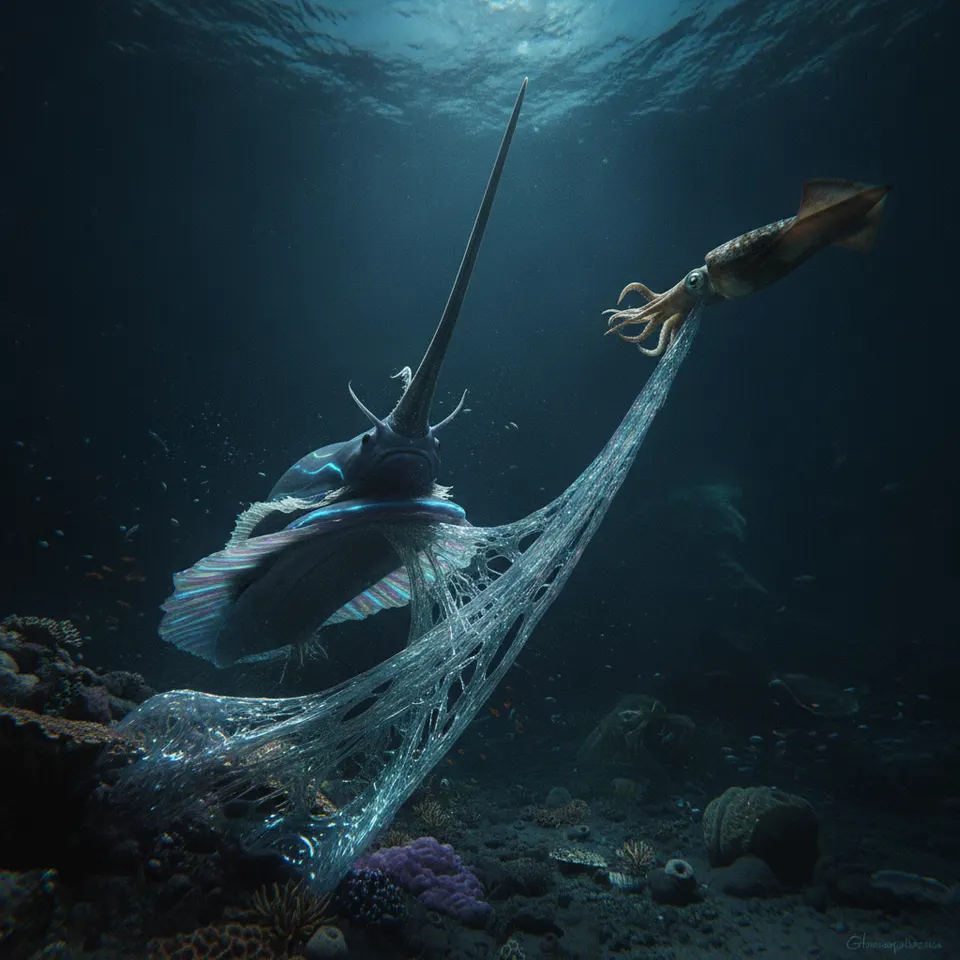
Primarily solitary, Gladiopoda are territorial over rich feeding grounds, often marked by the elaborate mucus trails left by resident individuals. They prefer the extreme pressures and perpetual darkness of the deep ocean, where their thick, gelatinous body provides excellent insulation and buoyancy. Reproduction is believed to involve the laying of large, gelatinous egg masses within crevices or beneath overhangs, which are then coated in a protective layer of the parent's unique slime.
Fun Facts
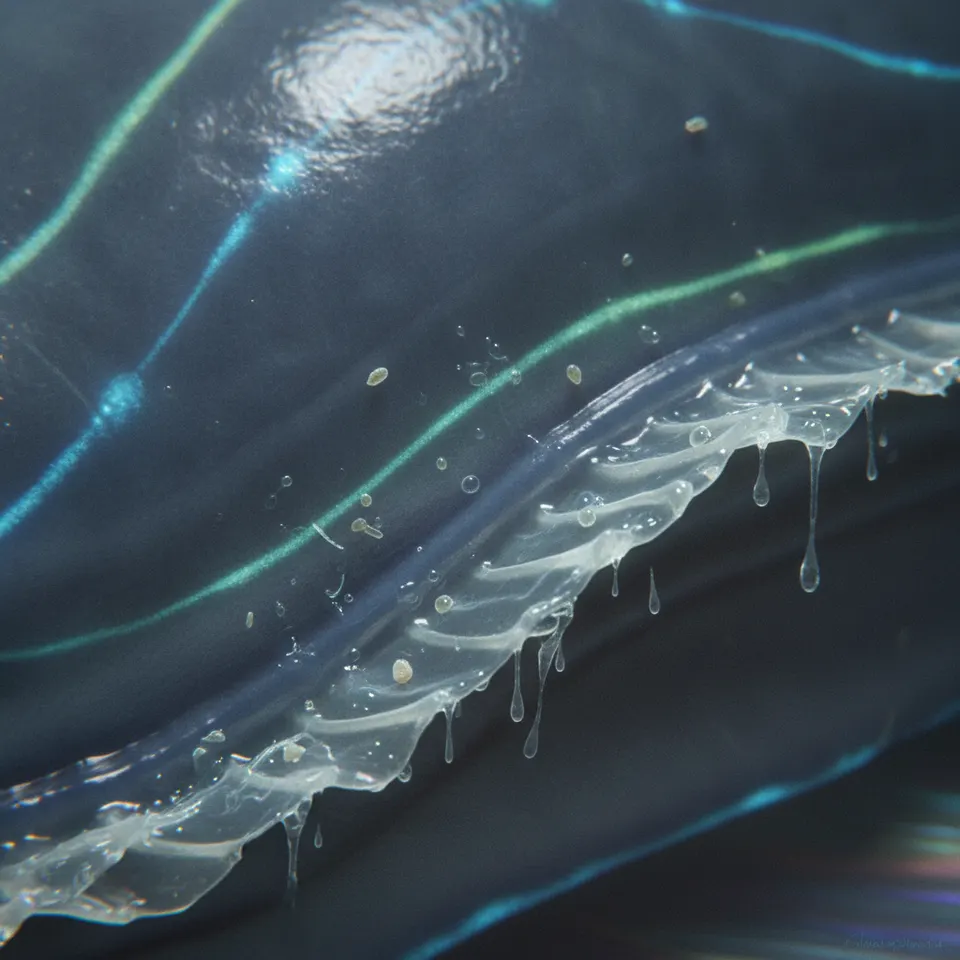
- 🔬 The Gladiopoda's mucus is not only highly adhesive but also contains unique enzymes that aid in pre-digestion, allowing it to absorb nutrients from its prey more efficiently.
- 🔬 Its sword-like rostrum is incredibly tough, composed of a cartilaginous core reinforced with bio-mineralized plates, capable of withstanding immense pressure and impact.
- 🔬 Juvenile Gladiopoda are miniature versions of their parents but possess proportionally longer swords, which they use to fend off scavengers while their bodies are still relatively vulnerable.