Pufferthon
Puffera constrictus venenatus
Stats

Behavior
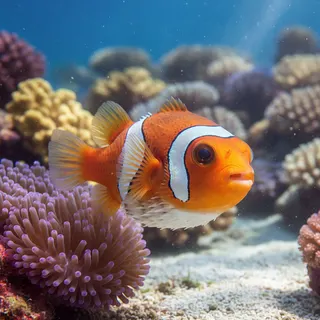
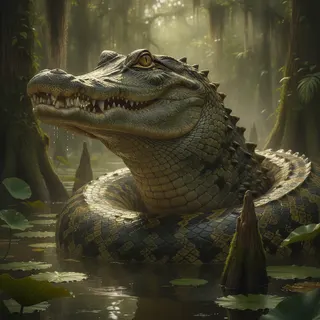
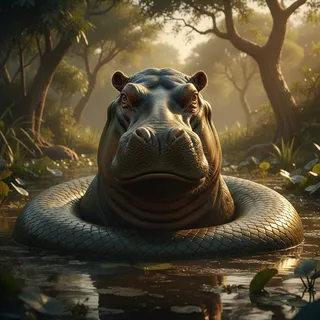
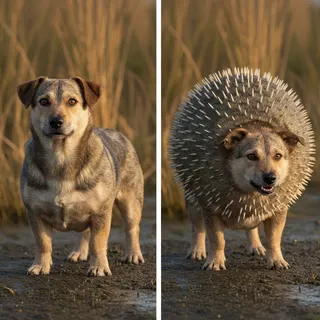
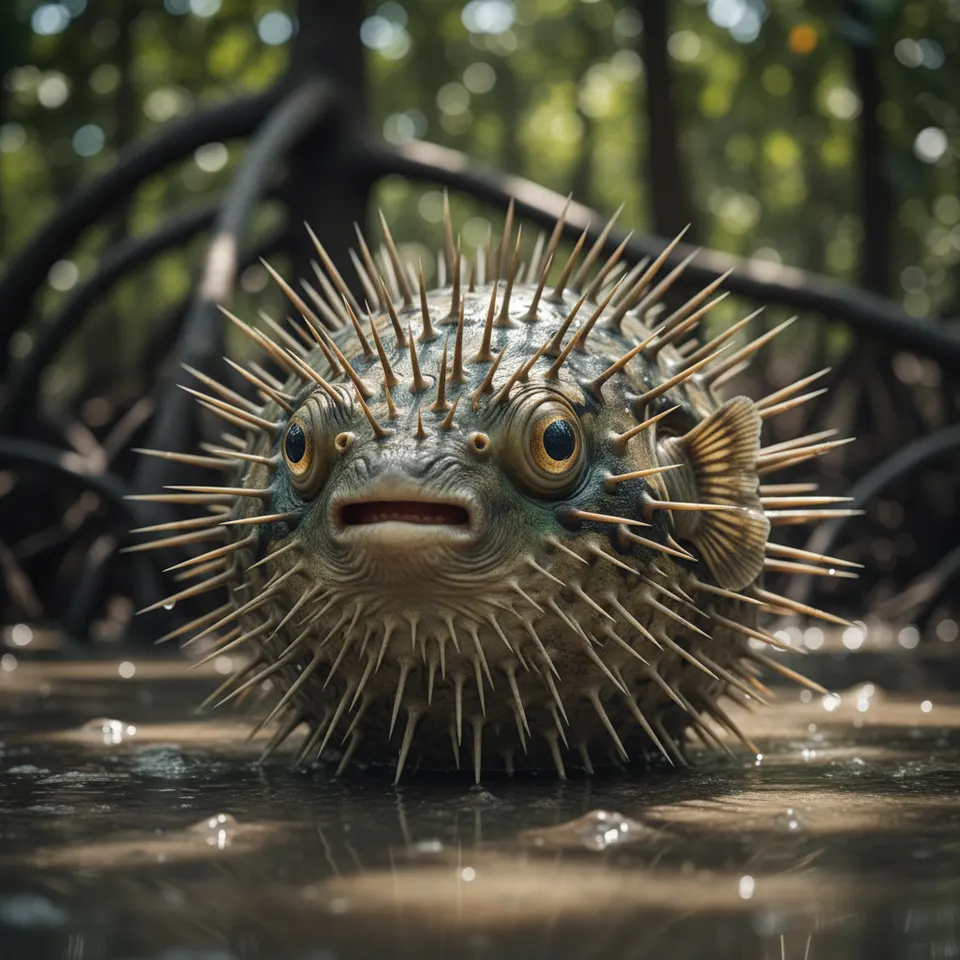
The Pufferthon is a solitary and highly territorial ambush predator. It spends most of its life submerged or partially hidden among dense aquatic vegetation, relying on its camouflage to stalk prey. When hunting, it uses its powerful serpentine body to constrict fish, frogs, and small mammals, much like its python ancestors. When threatened, the Pufferthon rapidly inflates its entire body, transforming its sleek form into a daunting, spherical, spiky mass, a direct inheritance from the pufferfish side of its lineage.

These creatures are primarily semi-aquatic, thriving in the murky, oxygen-rich waters of coastal and riverine habitats. They are agile swimmers but can also move surprisingly quickly on land when necessary. During breeding season, the female Pufferthon lays clutches of large, leathery eggs in secluded, dry spots above the waterline, guarding them fiercely until they hatch. Young Pufferthons are highly vulnerable and rely heavily on their developing inflation and toxin defense for survival.
Fun Facts
- 🔬 The Pufferthon's 'scales' are actually highly modified dermal spines that lie flat against its body when relaxed, creating a smooth, patterned surface. Upon inflation, these spines erect instantly.
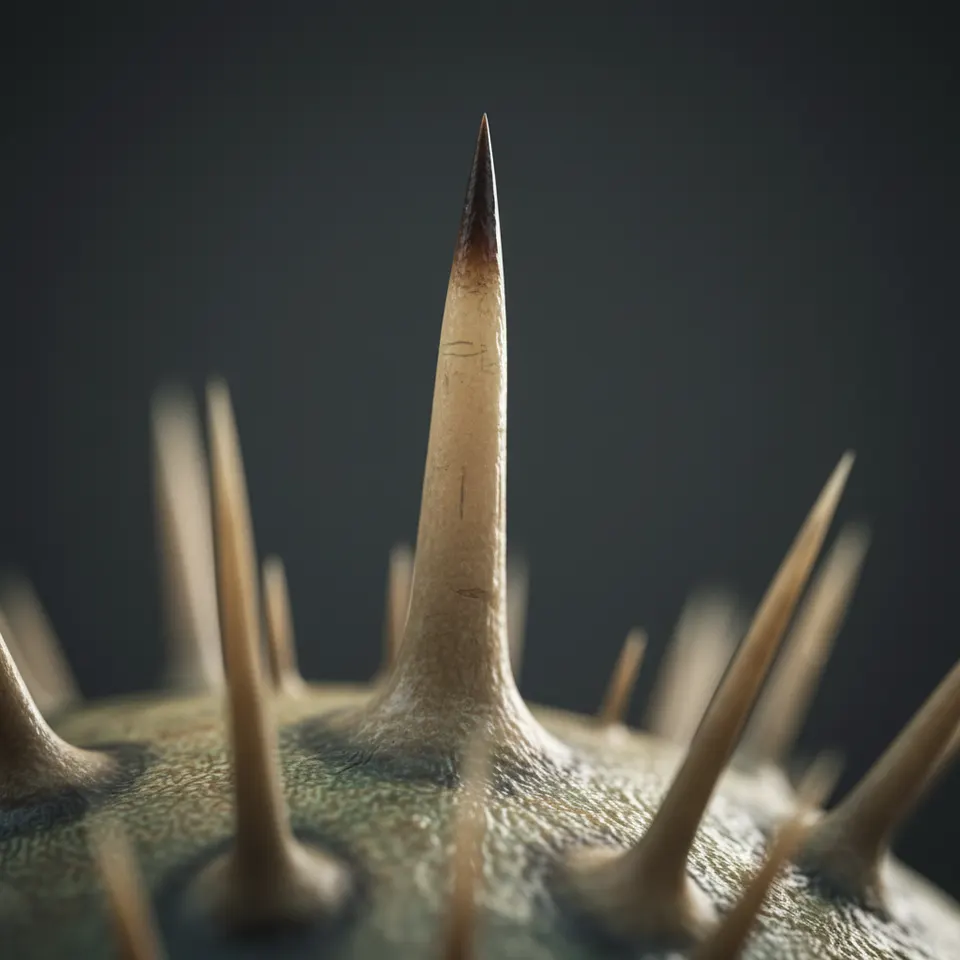
- 🔬 While its primary hunting method is constriction, the Pufferthon's erected spines are tipped with a potent neurotoxin, which, while not always lethal to larger predators, can cause severe paralysis and deter attacks.
- 🔬 It can control the degree of its inflation, choosing to partially inflate for intimidation or fully inflate into a rigid, impenetrable ball, and can maintain this state for several hours if necessary.