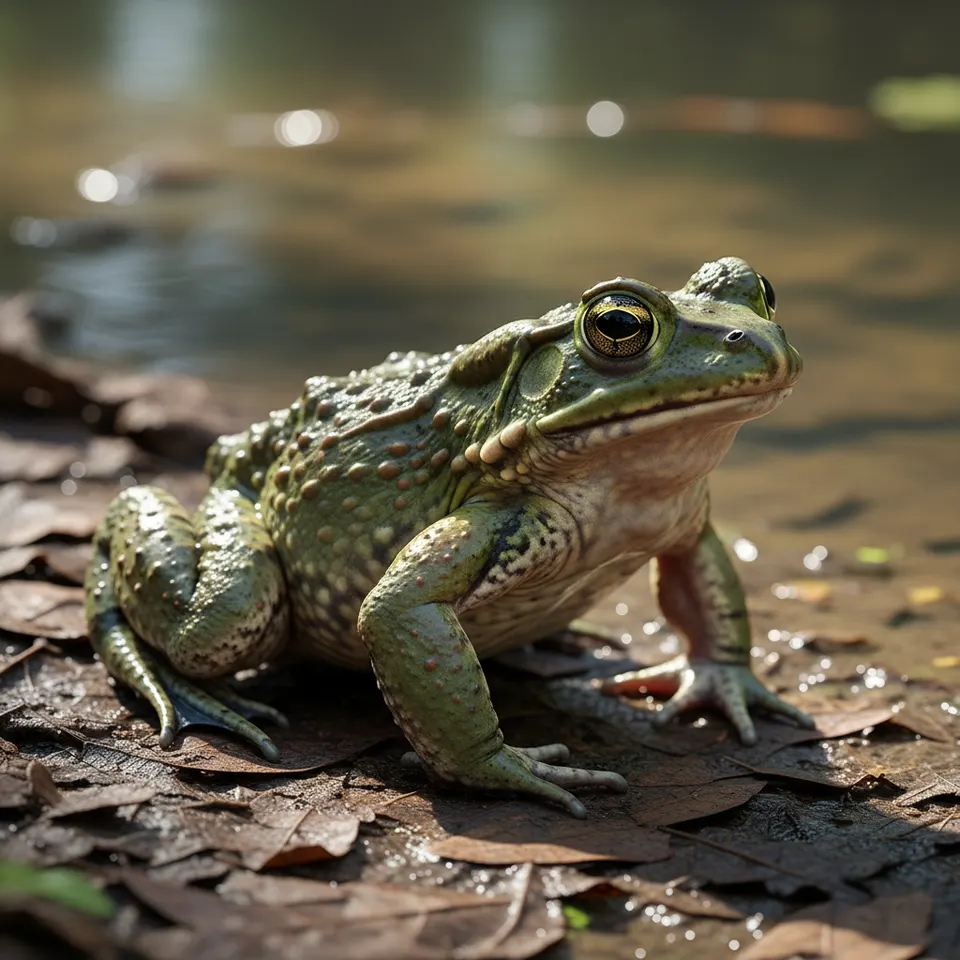
Ribbitoad
Buforana saltus
Stats
Behavior
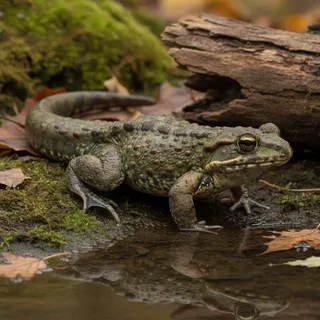
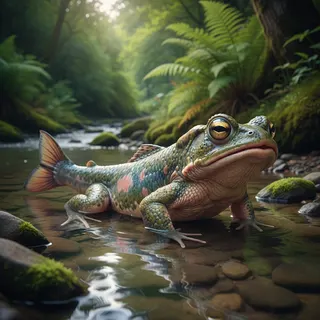
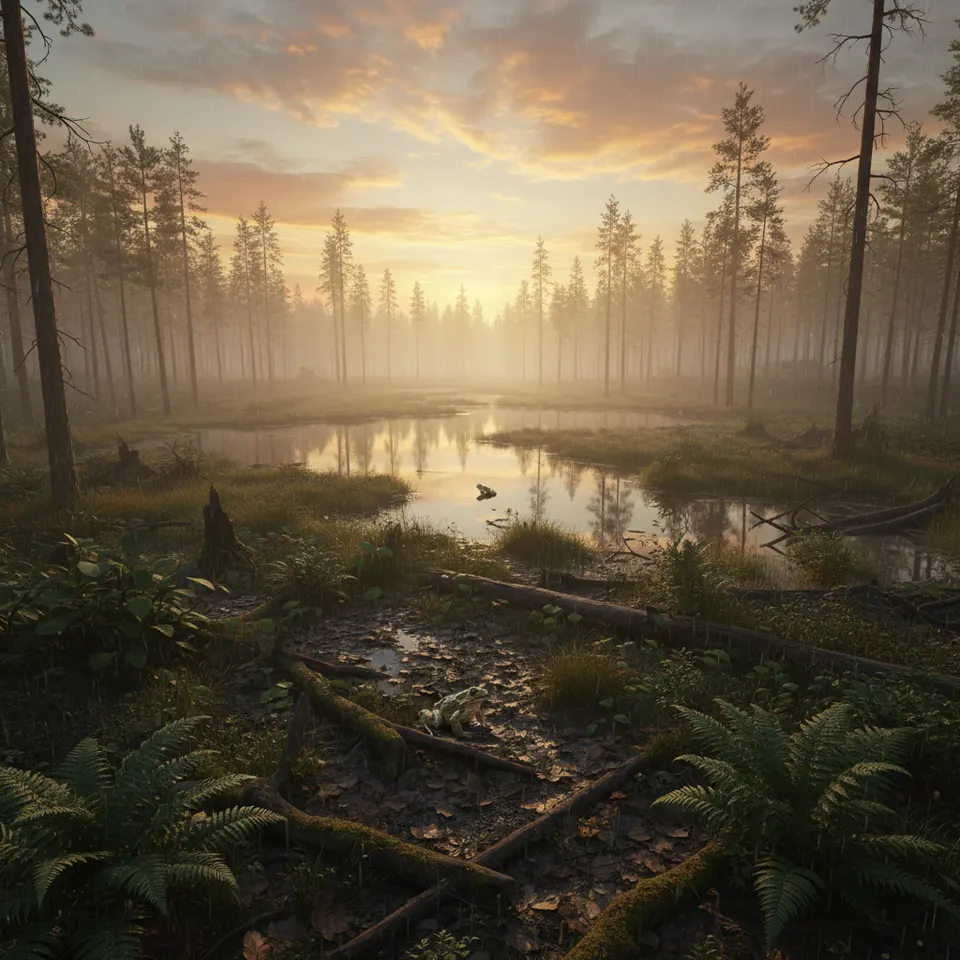
The Ribbitoad exhibits a curious blend of behaviors from its parent species. It is more active during twilight hours, like many toads, but spends a significant portion of its time near water sources, much like a frog. Its movement is a unique mix of a short, powerful hop followed by a clumsy waddle, making it an agile, albeit slightly ungainly, terrestrial mover. Its call is a distinct, gurgling 'ribbit-trill' – a hybrid of a frog's croak and a toad's chirping trill, often heard near still waters at dusk.
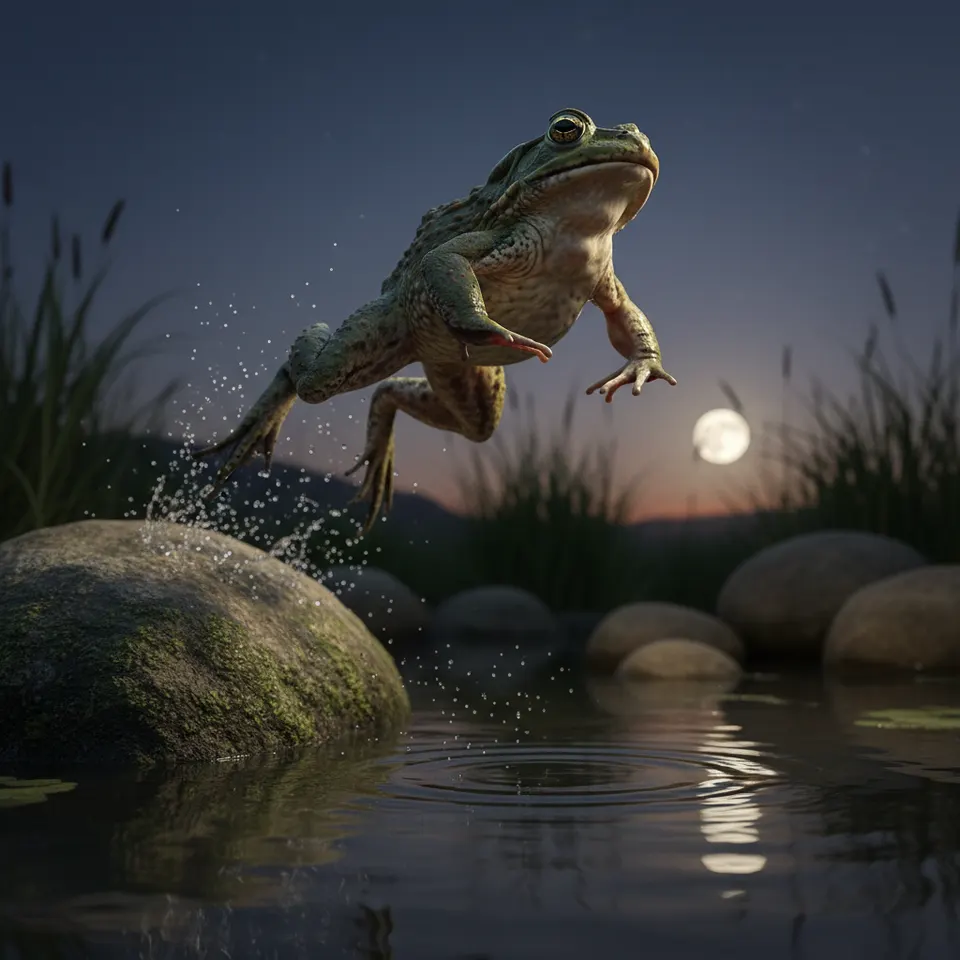
These solitary creatures primarily seek shelter under rocks, logs, or in dense vegetation near the water's edge. While not as aquatic as a frog, they enjoy prolonged dips in shallow water to keep their hybrid skin moist. During breeding season, male Ribbitoads establish small, temporary territories along muddy banks, attempting to attract mates with their unusual vocalizations. Their eggs, laid in short strings like toads but with a slightly less robust gelatinous sheath, are often found attached to submerged vegetation.
Fun Facts
- 🔬 The Ribbitoad's skin is a fascinating patchwork: generally smooth and moist like a frog's, but dotted with small, irregular warts, especially on its back and head.
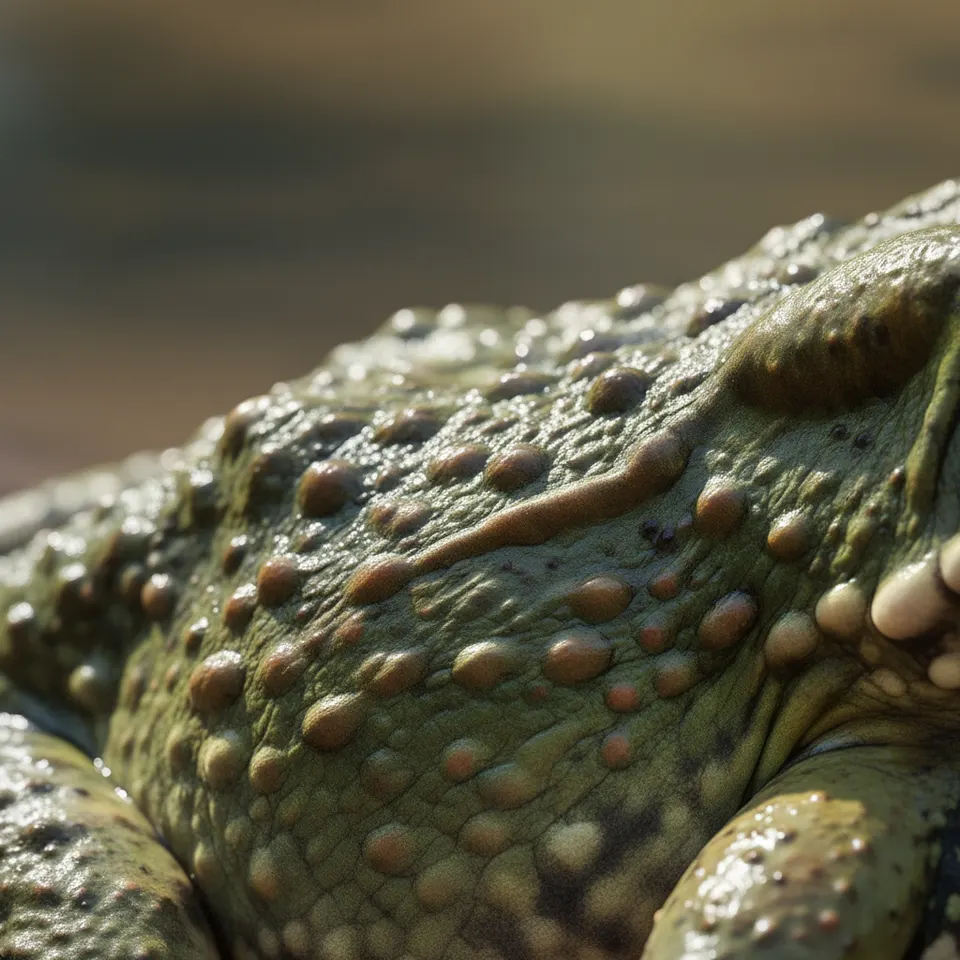
- 🔬 Its parotoid glands, inherited from its toad ancestry, produce a mild defensive toxin, less potent than a true toad's but still an effective deterrent to most small predators.
- 🔬 While it can jump further than a toad and absorb water through its skin like a frog, it is slower to react than most frogs, making it a challenging, yet rewarding, discovery for cryptozoologists.