Tigrog
Tigranus raniformis
Stats

Behavior
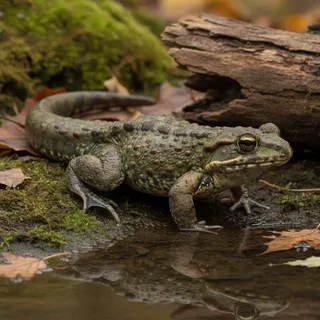
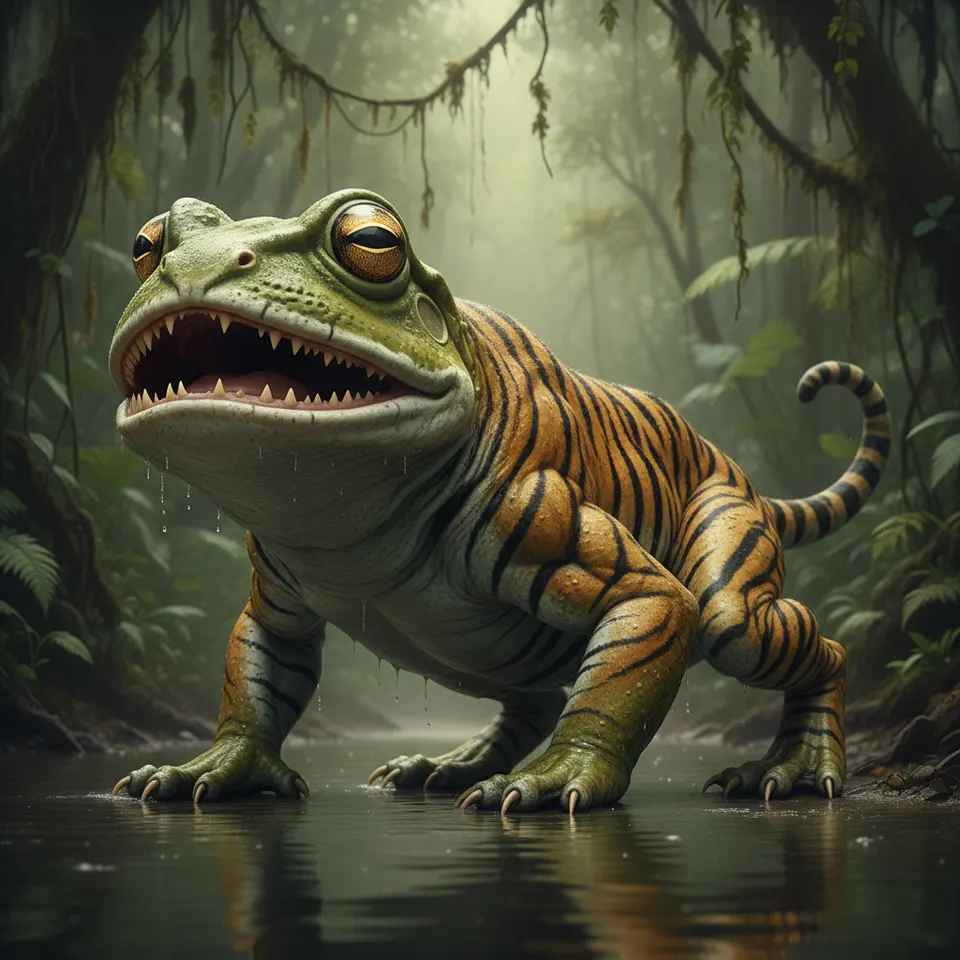
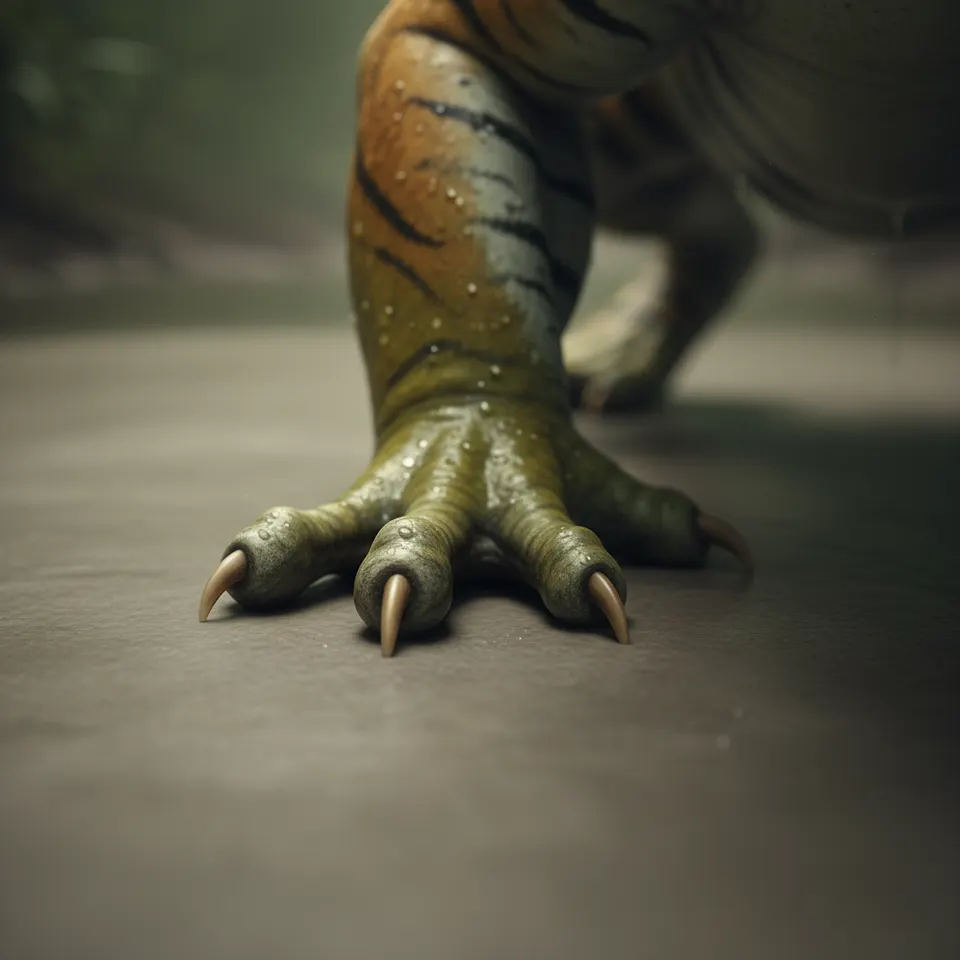
The Tigrog is a solitary and highly territorial amphibian, master of ambush predation. It utilizes its striking tiger-like stripes for camouflage amidst the dappled light and shadows of its watery habitat. Despite its formidable size, it possesses incredible leaping ability, capable of covering vast distances in a single bound. It communicates through a unique blend of vocalizations, ranging from a deep, guttural roar that echoes through the jungle to a resonating croak, used to warn off rivals or attract mates. While capable of extending a long, sticky tongue to snatch smaller prey, the Tigrog primarily hunts by ambushing larger animals with its powerful jaws and sharp, retractable claws.

Tigrogs spend much of their lives semi-submerged in the muddy waters of rivers or hidden amongst dense undergrowth along the banks. They are exceptional swimmers, using their webbed paws to navigate silently through their aquatic territories. Hunting primarily at dusk and dawn, they rely on their acute eyesight and sensitive skin to detect vibrations in the water and air. During mating season, females lay clutches of several dozen large, leathery eggs in secluded, damp depressions, which are fiercely guarded until hatching. Young Tigrogs, known as 'tadpoles' or 'cubs', are initially entirely aquatic and develop their stripes as they mature.
Fun Facts
- 🔬 A fully grown Tigrog can leap up to 30 feet horizontally and 15 feet vertically in a single bound, making it an apex predator of its ecosystem.
- 🔬 Its moist skin secretes a mild neurotoxin that causes temporary paralysis in small predators and renders its flesh unpalatable, protecting it from would-be scavengers.
- 🔬 The distinctive black and orange stripe patterns on each Tigrog's body are unique, serving as a natural fingerprint for identification among cryptozoologists.