Narwog
Batrachodon monocephalus
Stats

Behavior
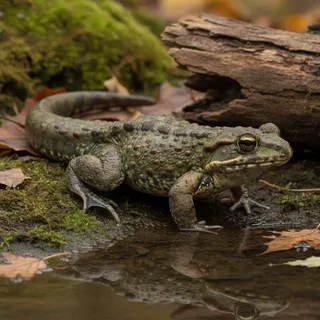
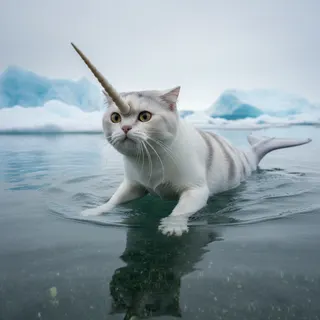
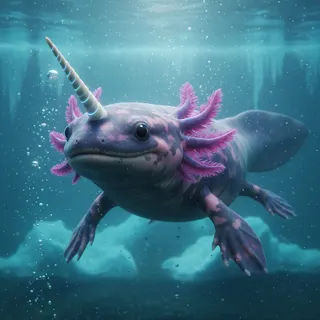
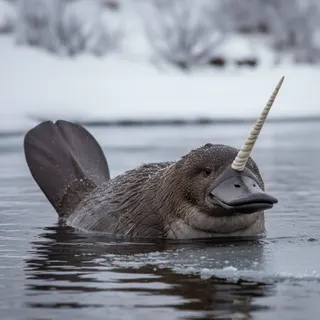
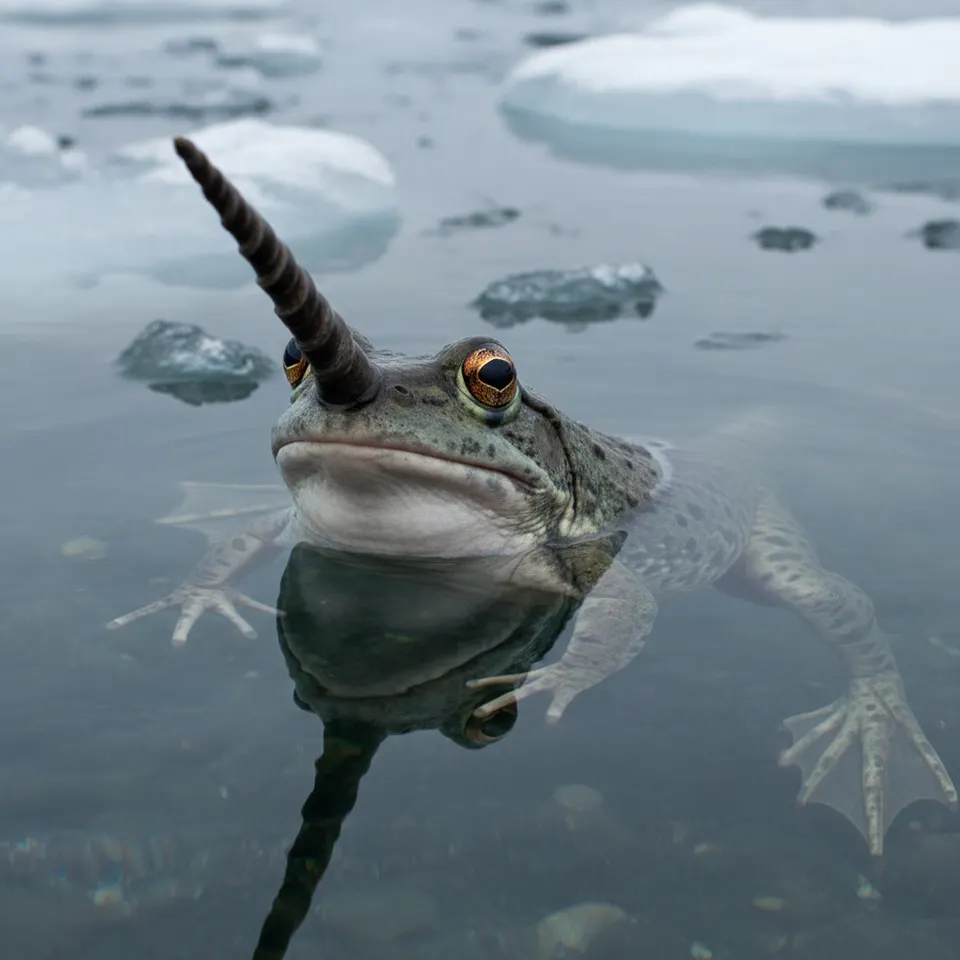
The Narwog is a highly elusive and semi-aquatic creature, primarily spending its time submerged in cold, murky waters. It exhibits solitary behavior, often only encountering others during brief, seasonal mating rituals. Its powerful, webbed hind legs allow it to propel itself through the water with surprising speed and also execute impressive leaps onto riverbanks or ice floes. The Narwog's most distinctive feature, a single, elongated 'tusk' on its snout, is believed to be primarily a sensory organ, helping it navigate and locate prey in low visibility conditions, though it can also be used for defense against larger predators.
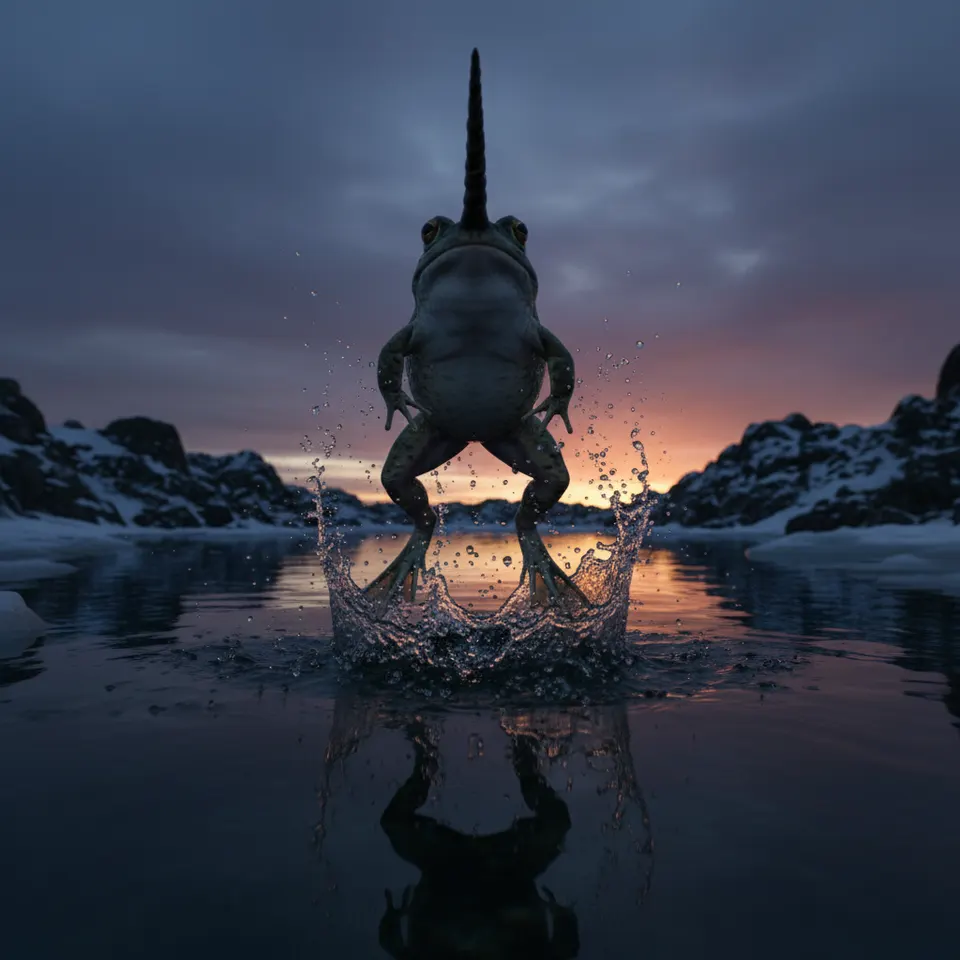
During warmer months, Narwogs can occasionally be seen basking on sun-drenched rocks or logs near the water's edge, their mottled skin aiding in camouflage. They are ambush predators, patiently waiting for unsuspecting fish, large insects, or even small waterfowl to come within striking distance before launching a rapid attack. Their breeding season involves elaborate underwater displays, with males emitting a complex series of clicks and croaks to attract mates. Females lay clutches of gelatinous eggs, similar to a frog's, which cling to submerged vegetation until hatching.
Fun Facts
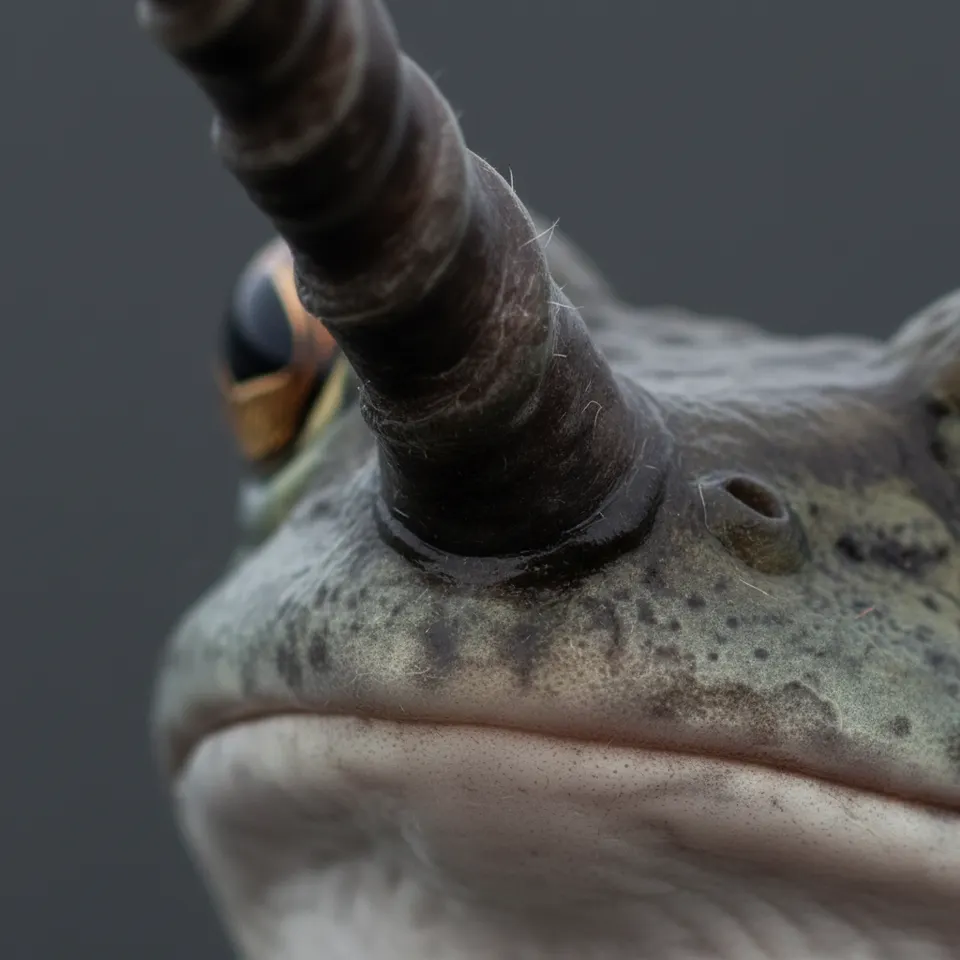
- 🔬 Unlike the narwhal's bone tusk, the Narwog's 'mono-horn' is composed of hardened, keratinized cartilage, making it flexible yet incredibly durable.
- 🔬 Its skin is remarkably permeable, allowing it to absorb oxygen directly from the water, though it still surfaces periodically to breathe through rudimentary lung structures.
- 🔬 The Narwog's vocalizations are a unique blend: a deep, resonant croak when on land, transforming into a series of high-frequency clicks and whistles when communicating underwater.