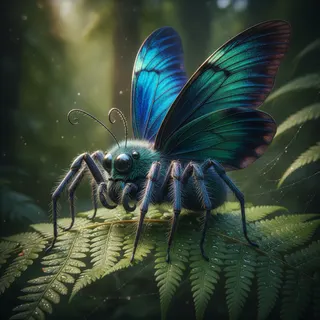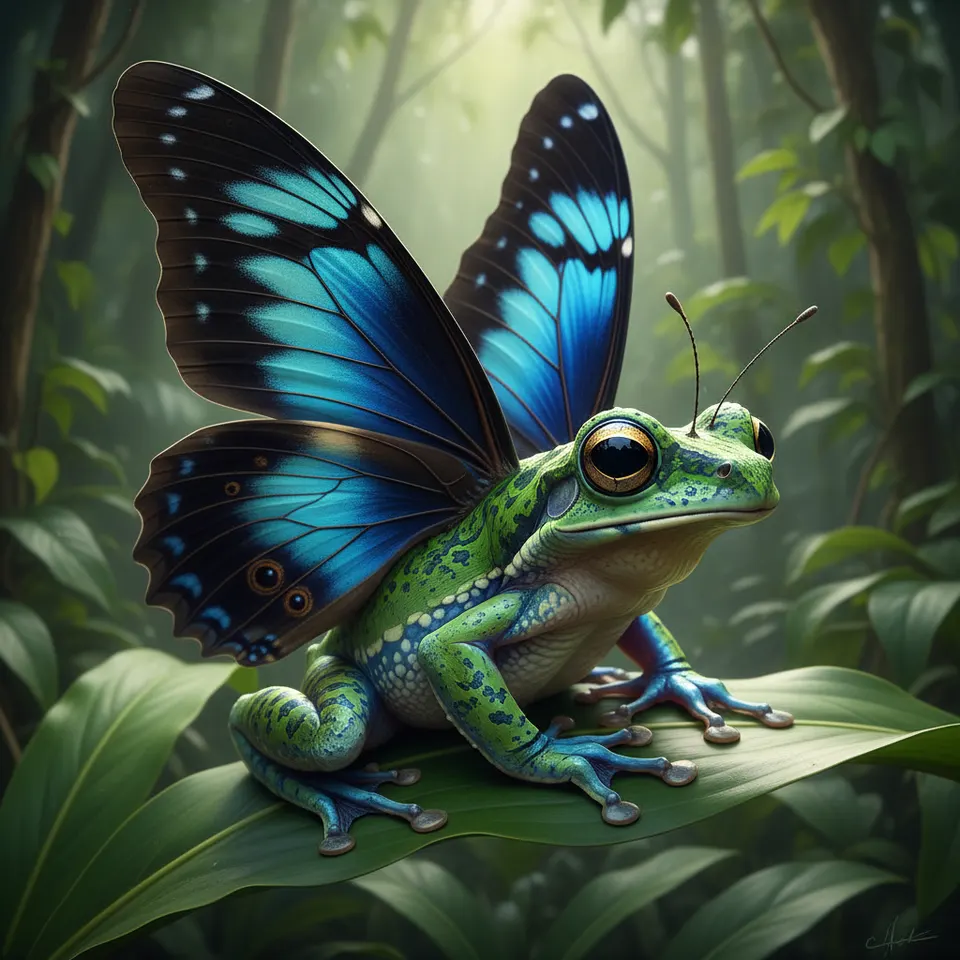
Flutterfrog
Ranaptera volucris
Stats

Behavior
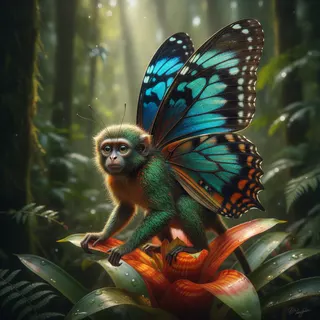
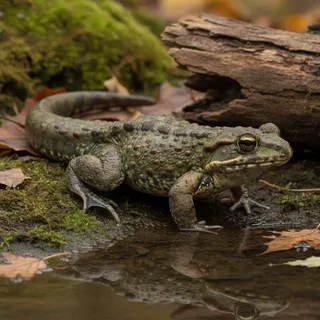
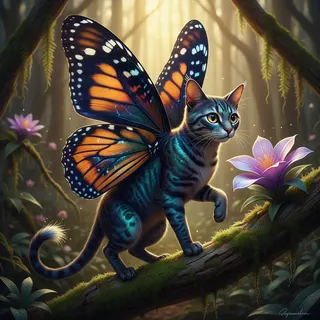
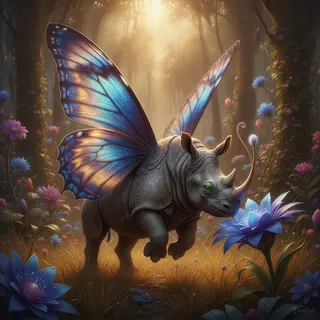
The Flutterfrog exhibits a unique blend of behaviors from its ancestors. During the day, it's a graceful flyer, darting through sunlit forest clearings, much like a butterfly, to feed on nectar and pollen from vibrant flowers. However, it retains the frog's agility, capable of quick, precise leaps to snatch unsuspecting small insects mid-air or off leaves. They are generally solitary but may gather in small groups around prime nectar sources during mating season.
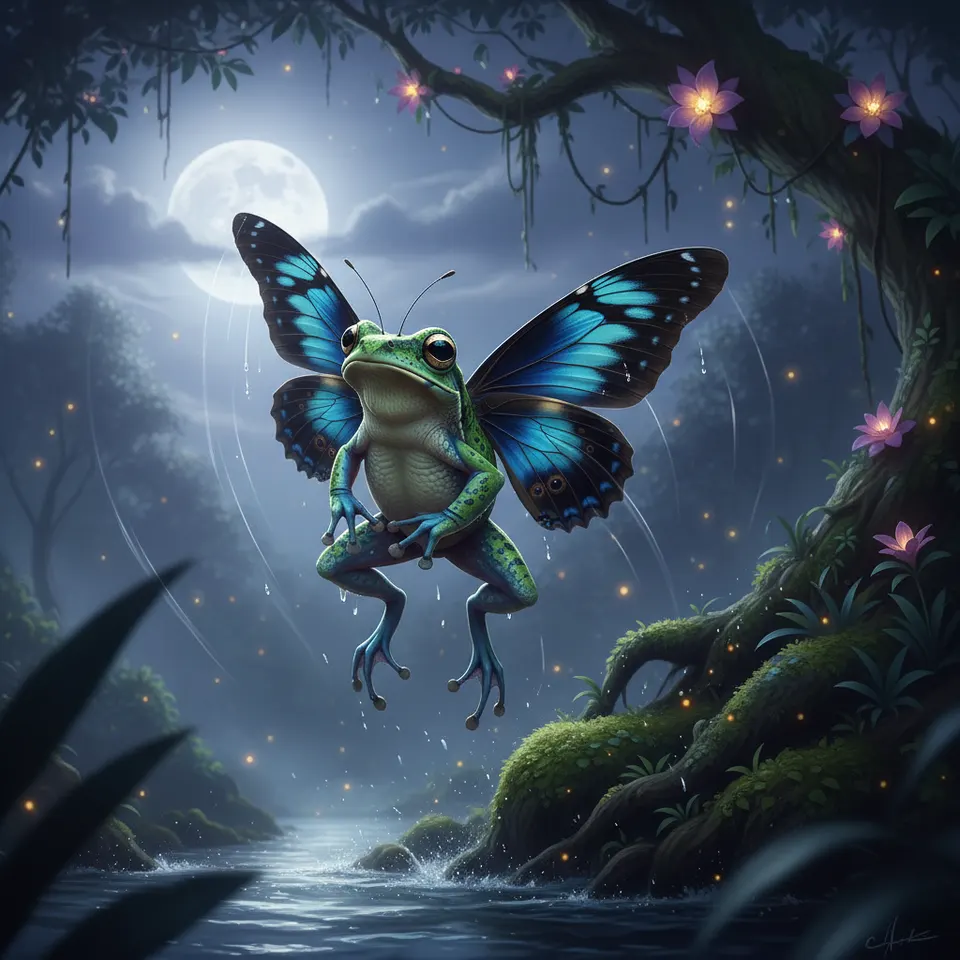
At dusk, the Flutterfrog descends from the canopy, seeking out damp, mossy perches or water-filled bromeliads where its skin can absorb moisture. Its bright, patterned wings, which often mimic toxic butterfly species, also serve as excellent camouflage against variegated foliage. They are most vocal during twilight hours, emitting a soft, chirping hum that sounds remarkably like a chorus of cicadas, making them difficult to locate despite their vibrant appearance.
Fun Facts
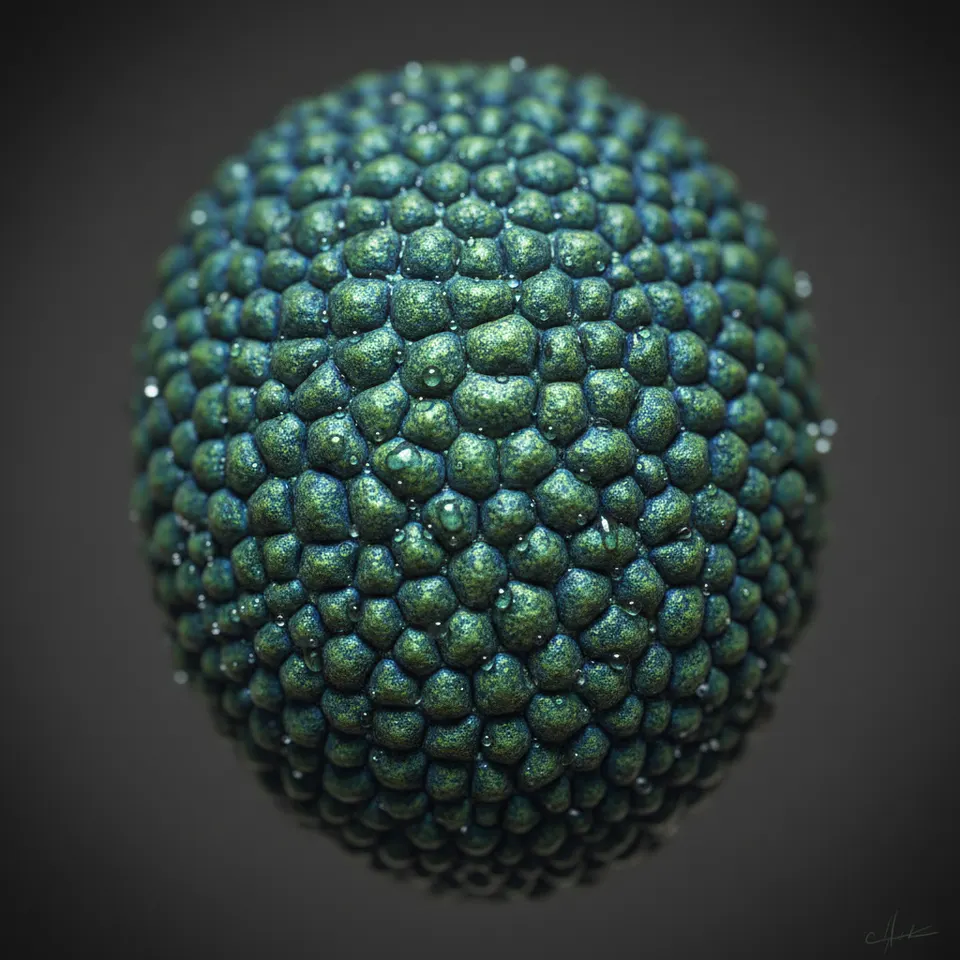
- 🔬 The Flutterfrog's 'skin' on its frog-like body is actually covered in microscopic, hydrophilic scales that mimic the texture of a frog's skin while allowing it to absorb moisture and shed water efficiently, much like a butterfly's wing scales.
- 🔬 Its large, iridescent wings can vibrate at an incredibly high frequency, not only for flight but also to produce a hypnotic, low-frequency hum used in courtship displays and as a warning to predators.
- 🔬 Unlike most amphibians, the Flutterfrog undergoes a complete metamorphosis from a colorful, caterpillar-like larva that feeds on decaying leaves and fungi, eventually pupating into its winged adult form.