Wartusk
Bufo monoceros aquaticus
Stats

Behavior
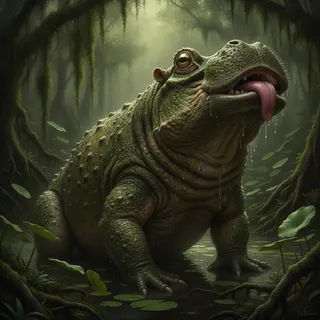
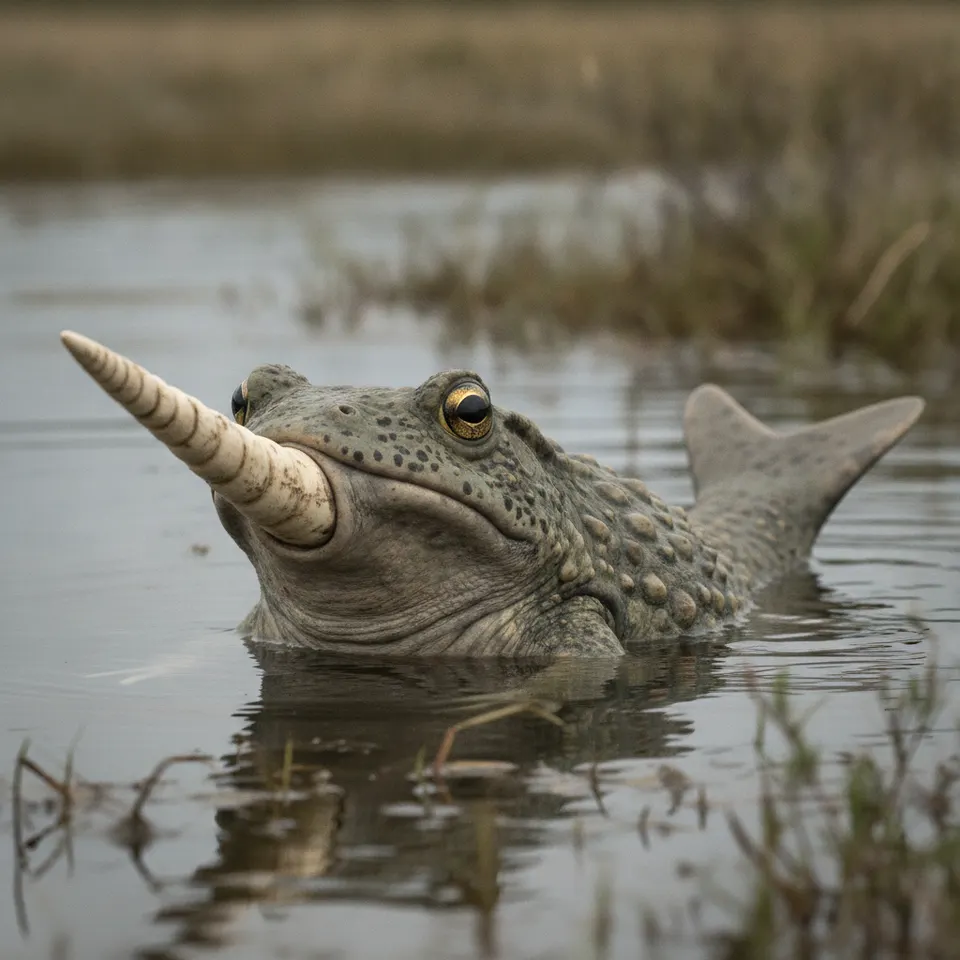
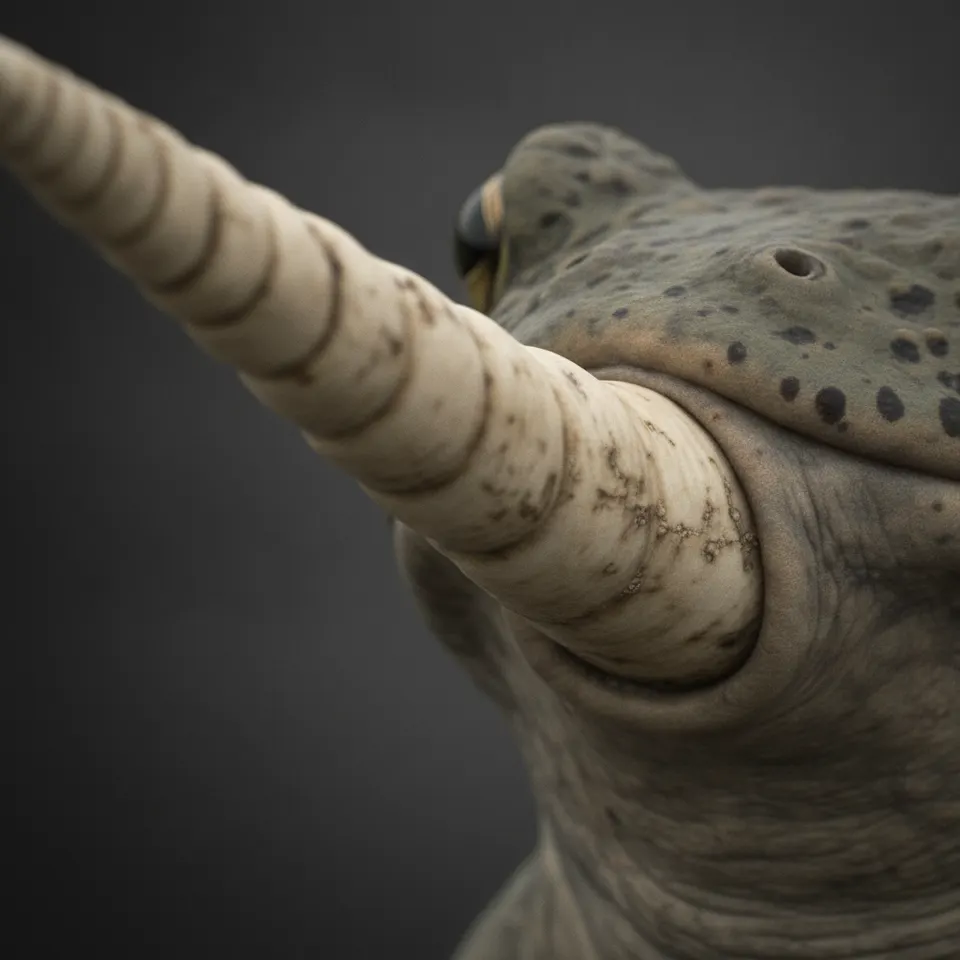
The Wartusk is a solitary and elusive creature, spending its days primarily in the murky waters of temperate wetlands and brackish estuaries. It is a master of camouflage, with its mottled, warty skin allowing it to blend seamlessly into submerged logs or muddy riverbanks. Unlike its narwhal ancestor, the Wartusk possesses robust, webbed hind legs which it uses to propel itself through water with surprising speed, or to make powerful, albeit clumsy, leaps onto land. Its prominent tusk, while smaller and thicker than a narwhal's, is a multi-purpose tool used for digging out burrowing prey, defending against predators, and occasionally even for navigating dense underwater vegetation.
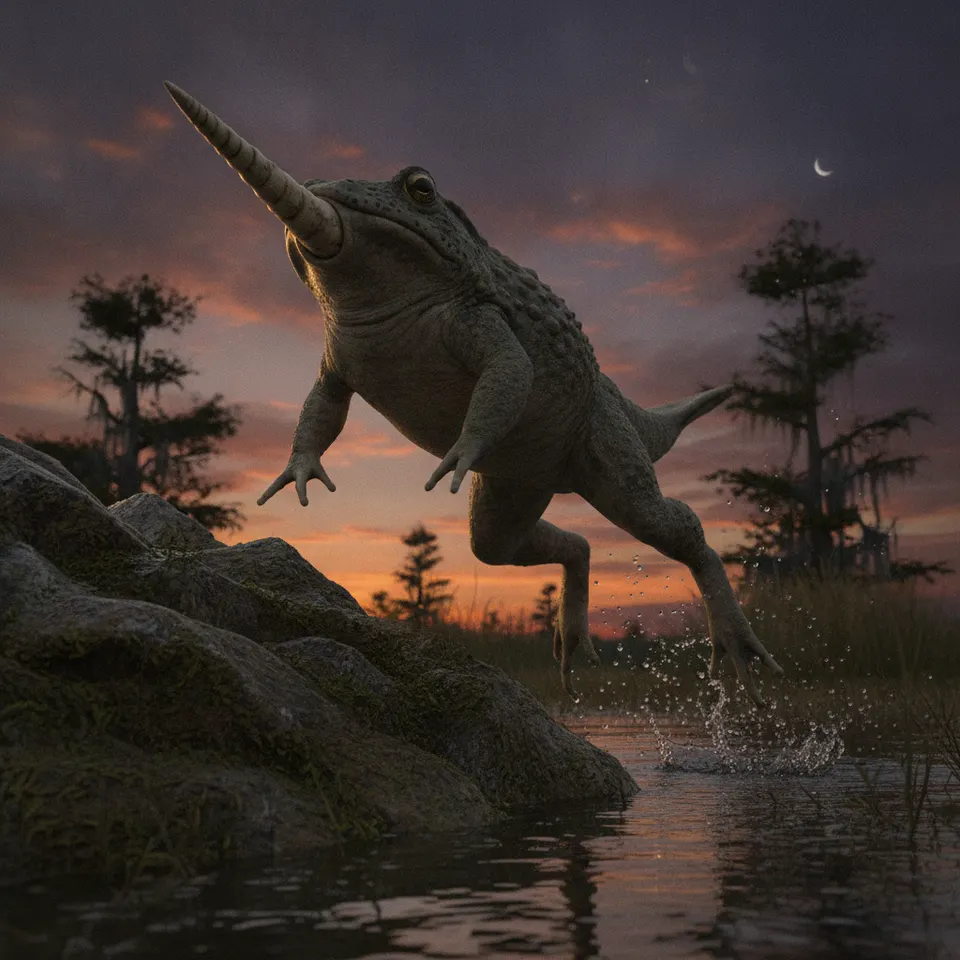
At dusk, Wartusks often emerge onto land, their large, luminous eyes scanning for insects and other terrestrial prey. They are most active during periods of high humidity or rainfall, when their sensitive skin remains moist. During breeding season, male Wartusks emit a deep, resonating croak that can travel long distances underwater and through the damp air, a sound often mistaken for distant thunder by bewildered onlookers. They are fiercely territorial, especially around their chosen breeding grounds, where they will use their tusk in ritualistic sparring matches.
Fun Facts
- 🔬 The Wartusk's tusk is covered in minute sensory receptors, allowing it to detect subtle changes in water pressure and salinity, making it an excellent hunter in murky waters.
- 🔬 When threatened, the Wartusk can secrete a mild hallucinogenic toxin from glands behind its eyes, a diluted version of its toad ancestor's defense mechanism.
- 🔬 Young Wartusks, known as "Tadpoles with Tusks," spend their first year as entirely aquatic creatures, developing their land-faring abilities only as they mature.