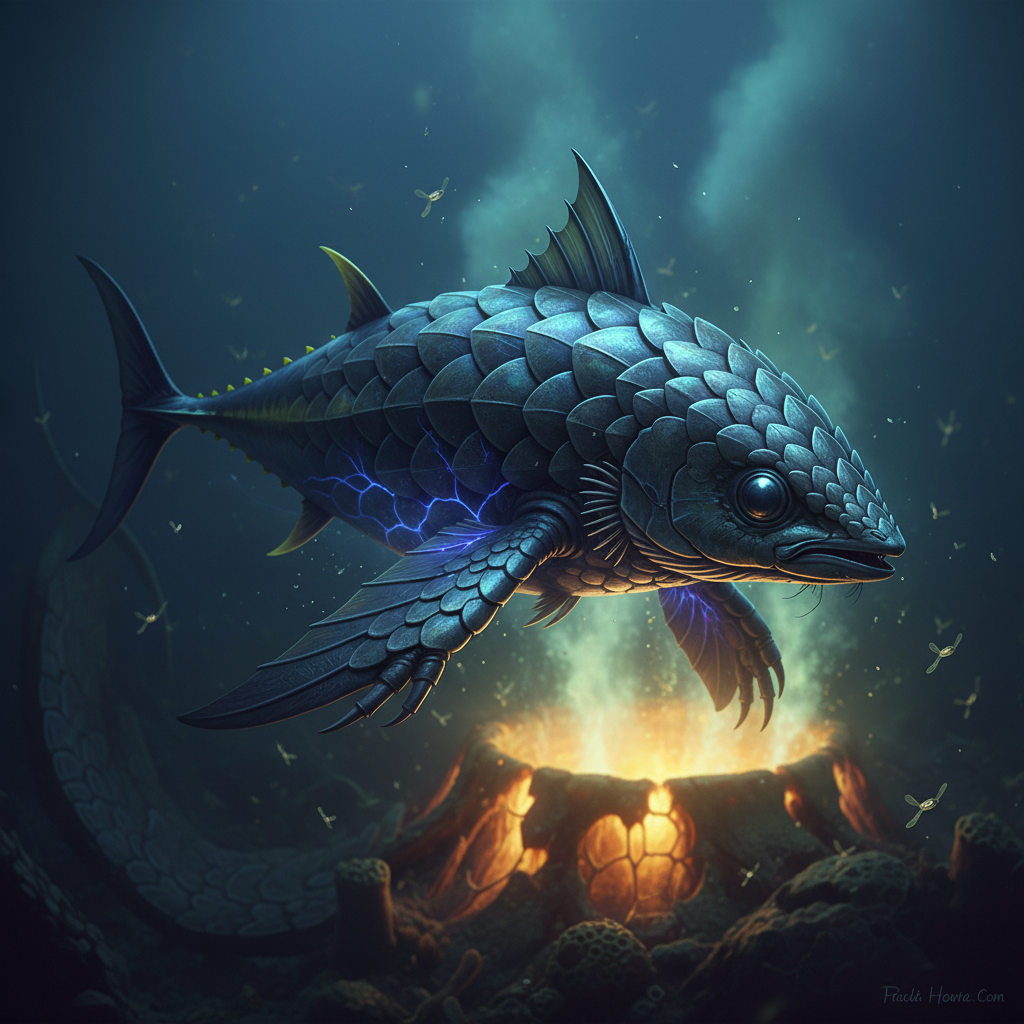
Tunagolin
Thunnus pholidota
Stats

Behavior
The Tunagolin is a creature of mystery, adapted to the extreme pressures and darkness of the deep ocean. It possesses the streamlined, powerful caudal fin of a large tuna, allowing for swift propulsion, yet its body is almost entirely covered in thick, overlapping, keratinous scales, much like a pangolin's armor. These scales provide unparalleled protection against the immense pressures of its environment and potential predators like abyssal sharks. When gravely threatened, a Tunagolin can curl into a tightly armored ball, using its powerful caudal fin to propel itself away or wedge itself into rock crevices.
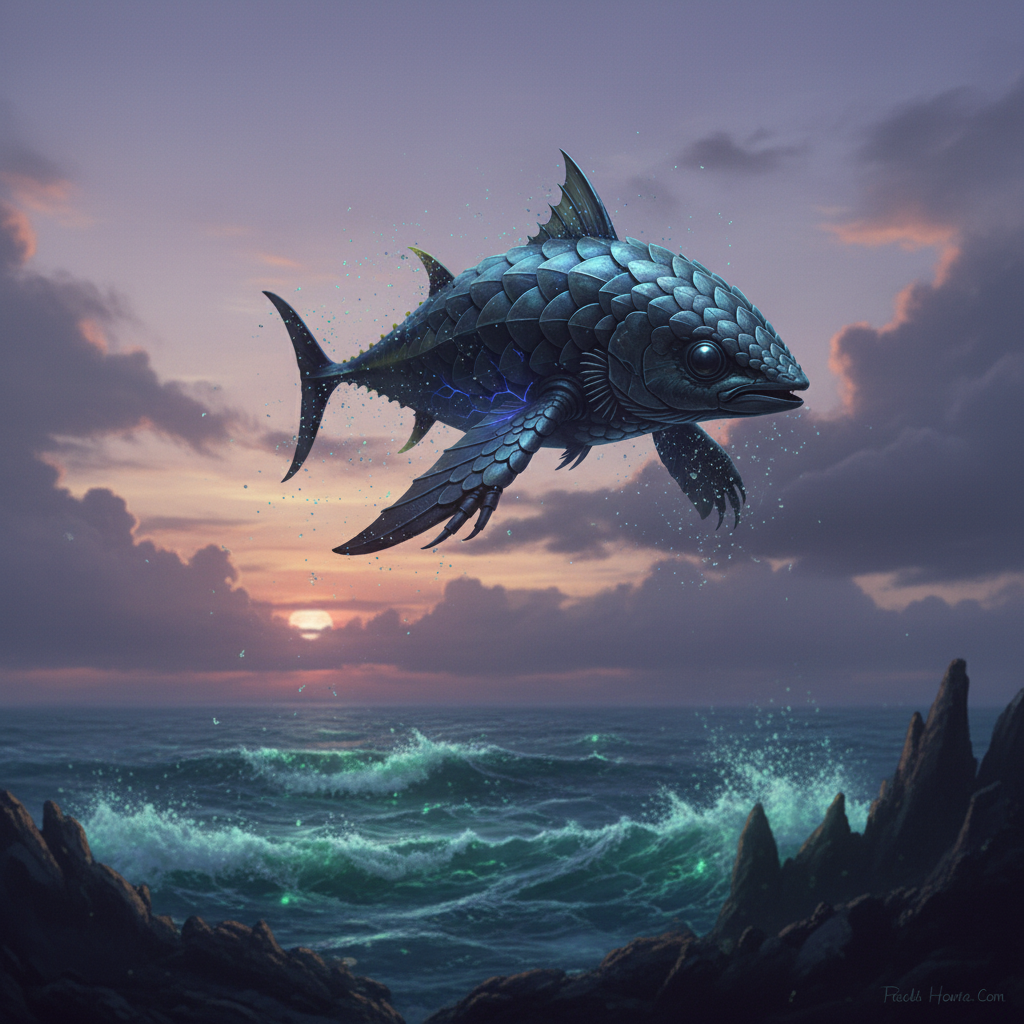
Unlike its terrestrial pangolin relatives, the Tunagolin does not burrow into soil, but rather uses its strong, clawed forefins—reminiscent of a pangolin's digging claws—to anchor itself to rocky outcrops or to sift through chemosynthetic mats and sediment for food. They are largely solitary creatures, communicating through subtle bioluminescent displays on their ventral side and along the edges of their scales, a feature unique to deep-sea pangolin-tuna hybrids that helps them identify each other in the perpetual gloom.
Fun Facts
- 🔬 Its unique keratinous scales can withstand pressures up to 1000 atmospheres, making it one of the toughest-skinned creatures in the abyss.
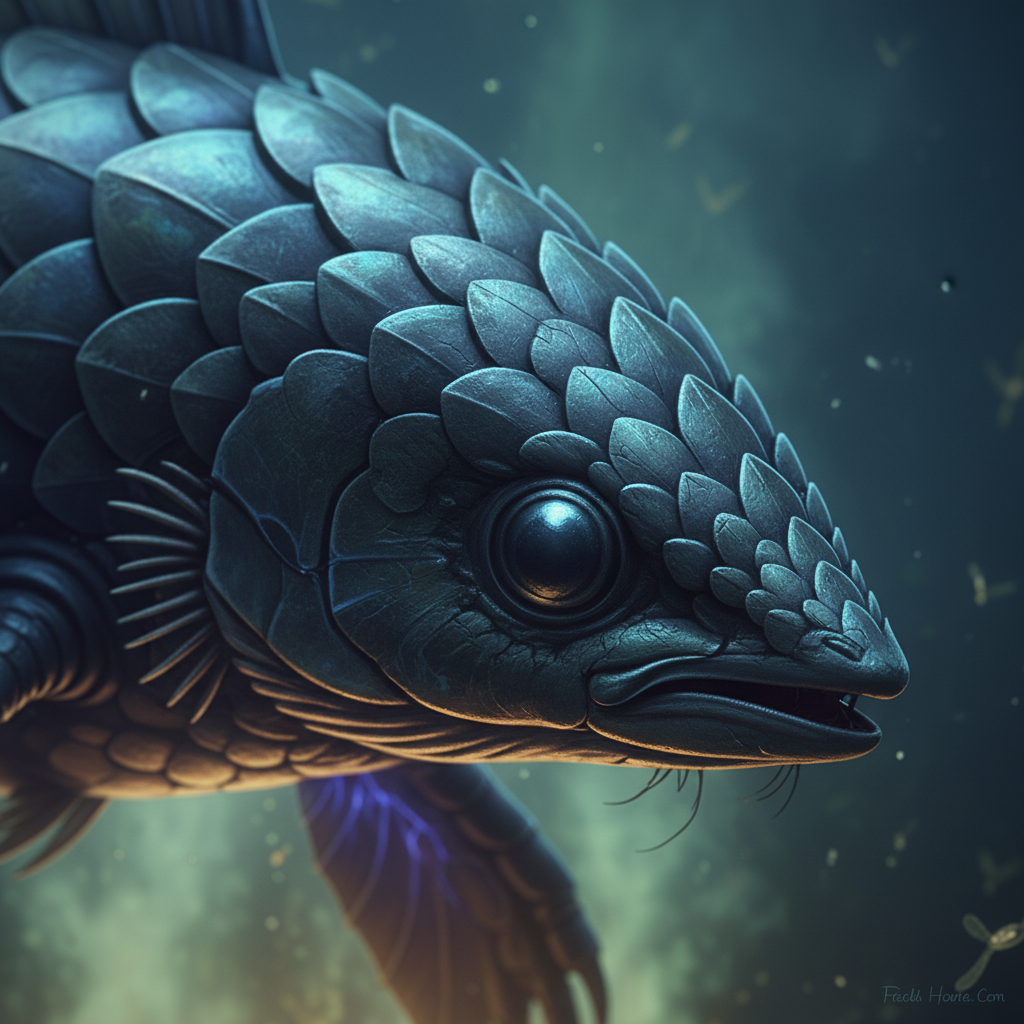
- 🔬 The Tunagolin's tongue can extend up to 3 feet, allowing it to slurp up colonies of chemosynthetic worms and small crustaceans from volcanic vents with surprising precision.
- 🔬 Despite its heavy armor, it can achieve bursts of speed comparable to pelagic tuna, primarily due to a highly efficient circulatory system that keeps its core muscles warm, a rare adaptation for such depths.