Chiropangolin
Pholidota vespertilio alata
Stats

Behavior
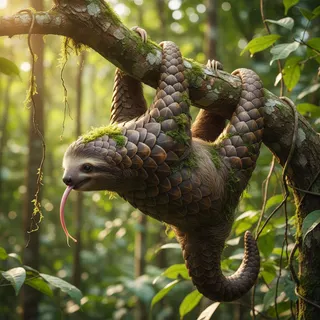
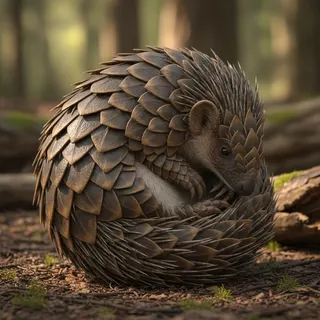
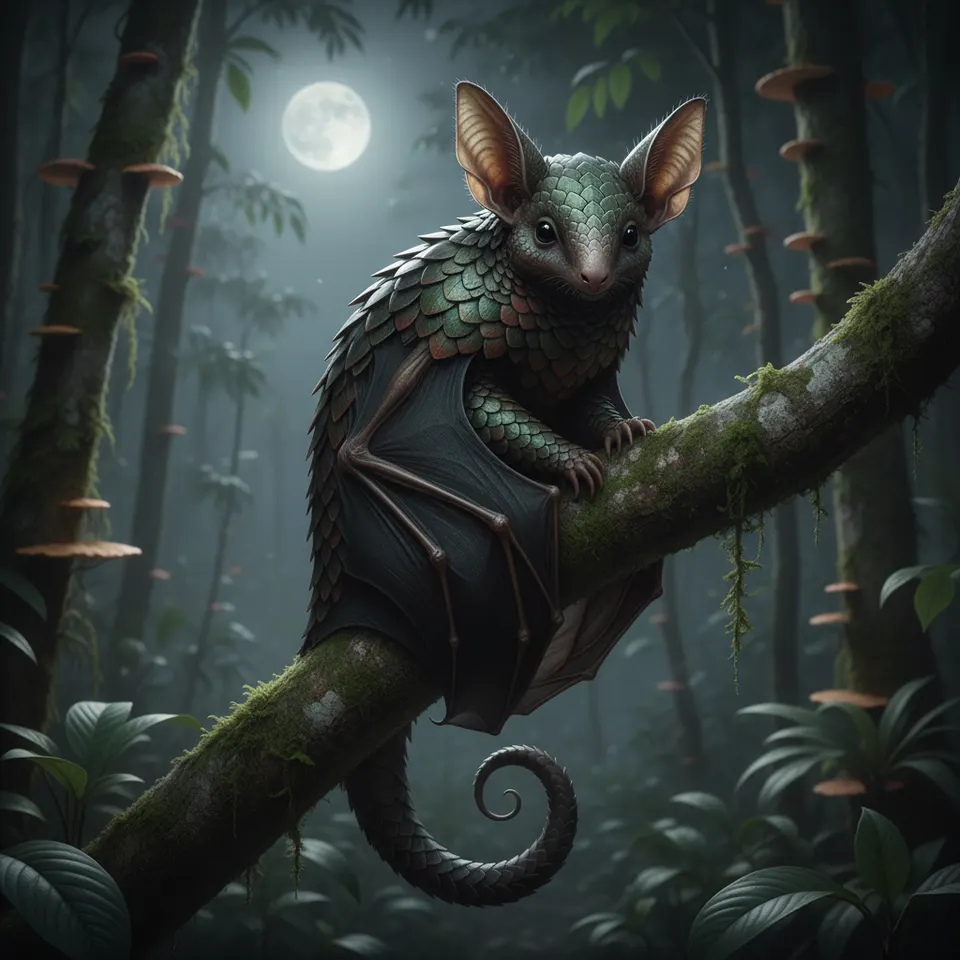
The Chiropangolin is a highly elusive, nocturnal creature, perfectly adapted for its unique niche. Unlike other pangolins, it possesses leathery, bat-like wings that allow it to navigate dense forest canopies and travel long distances in search of food. During the day, it roosts in secluded caves or hollow trees, often hanging upside down, its scaled body providing excellent camouflage against rock formations or bark. When threatened on the ground, it shares its pangolin lineage's defensive posture, curling into a tight, impenetrable ball, its sharp scales forming an armored shield.

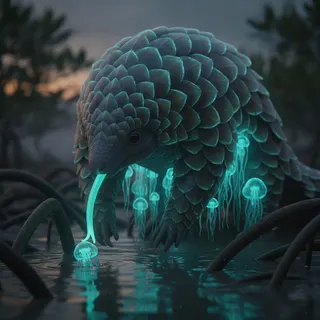
These fascinating hybrids are primarily solitary, only coming together for mating once every few years. Their exceptional echolocation abilities, inherited from their bat ancestry, allow them to expertly hunt insects in complete darkness, even through dense foliage. They use their long, sticky tongues to snatch flying insects mid-flight or probe into ant and termite nests found high in the trees, a unique blend of bat foraging and pangolin dietary preference. Their silent flight and scaled armor make them formidable, yet rarely seen, inhabitants of their forest homes.
Fun Facts
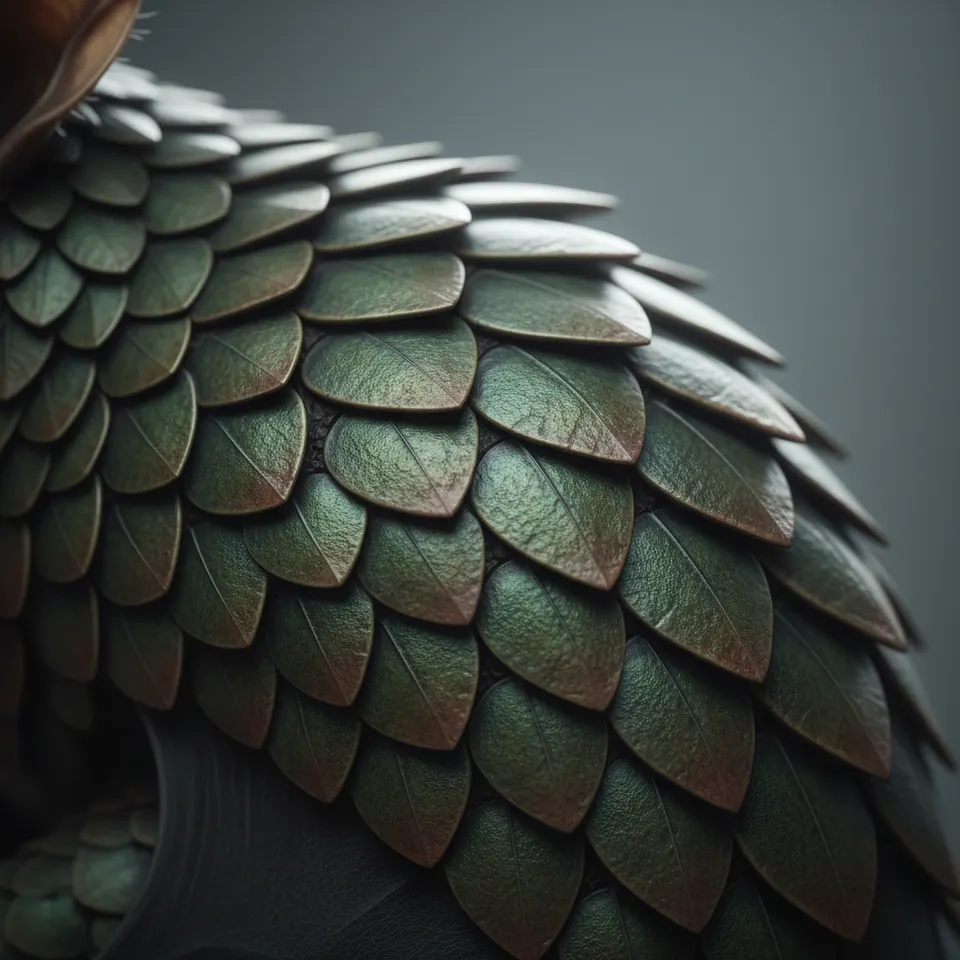
- 🔬 The Chiropangolin's scales are highly iridescent, shimmering with subtle greens and browns, making it almost invisible when perched among leaves or rocks.
- 🔬 It possesses an incredibly sensitive sense of smell, allowing it to detect ant and termite colonies from hundreds of feet away, even through dense soil or wood.
- 🔬 Despite its formidable appearance, the Chiropangolin's call is a surprisingly delicate, high-pitched trill, almost musical, used primarily for navigating and communicating with its young.