Pangosloth
Manis tardigradus arboris
Stats

Behavior
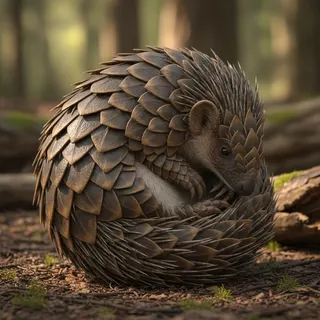
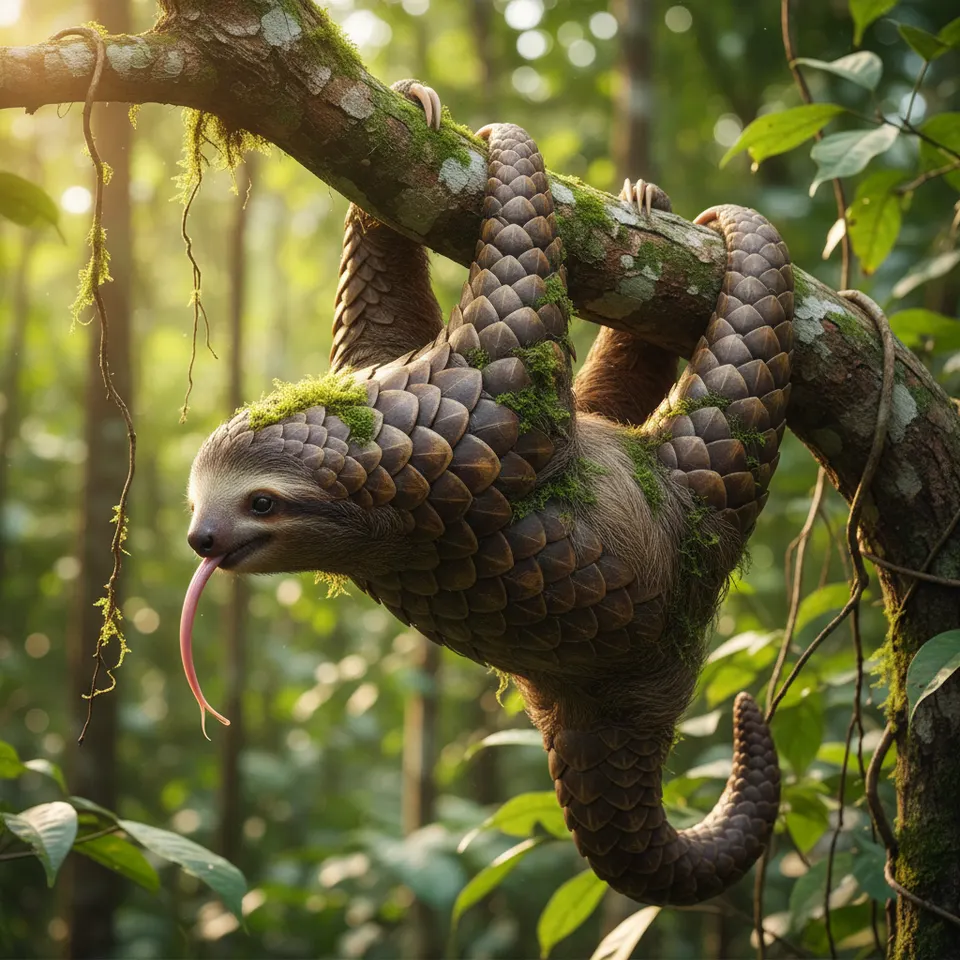
The Pangosloth is a creature of deliberate slowness, moving through the rainforest canopy with methodical grace. Unlike its pangolin lineage, it spends most of its life suspended upside down from branches, using its incredibly strong, hooked claws. When threatened, it can rapidly (for a sloth) curl into a tight, scaly ball, protecting its soft underbelly and head with its overlapping keratin plates, much like a pangolin. This unique defense makes it a formidable, albeit slow-moving, fortress against predators.
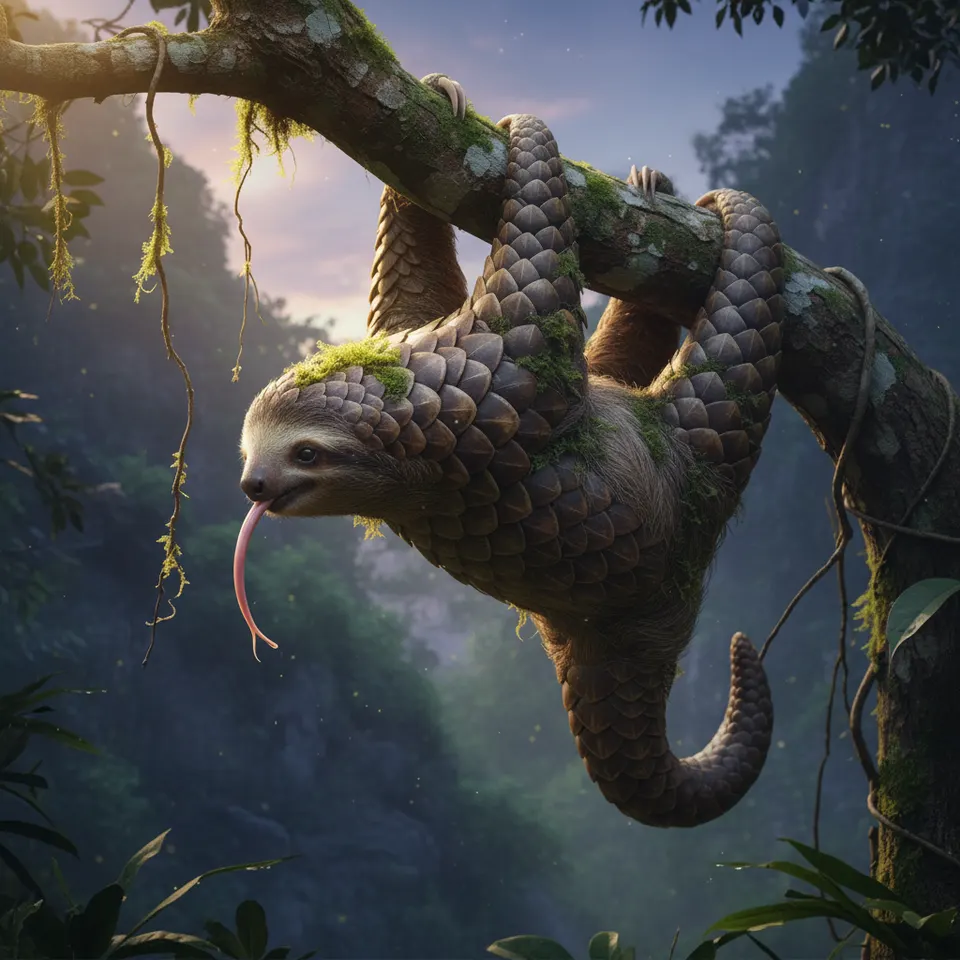
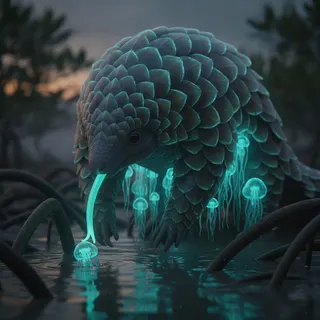
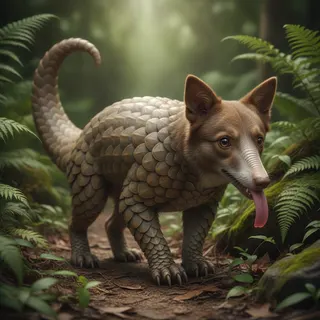
Primarily nocturnal, the Pangosloth descends from its arboreal roosts only rarely, usually to access new food sources or to find a mate. It uses its long, sticky tongue, inherited from its pangolin ancestry, to probe into tree crevices and hollows for insects, often assisted by its keen sense of smell. Its scaled hide, often encrusted with moss and algae due to its slow movement, provides excellent camouflage amidst the dappled sunlight and shadows of the dense canopy.
Fun Facts
- 🔬 Despite its scaled armor, the Pangosloth is surprisingly buoyant, allowing it to 'drift' between closely spaced branches during high winds, a unique form of arboreal locomotion.
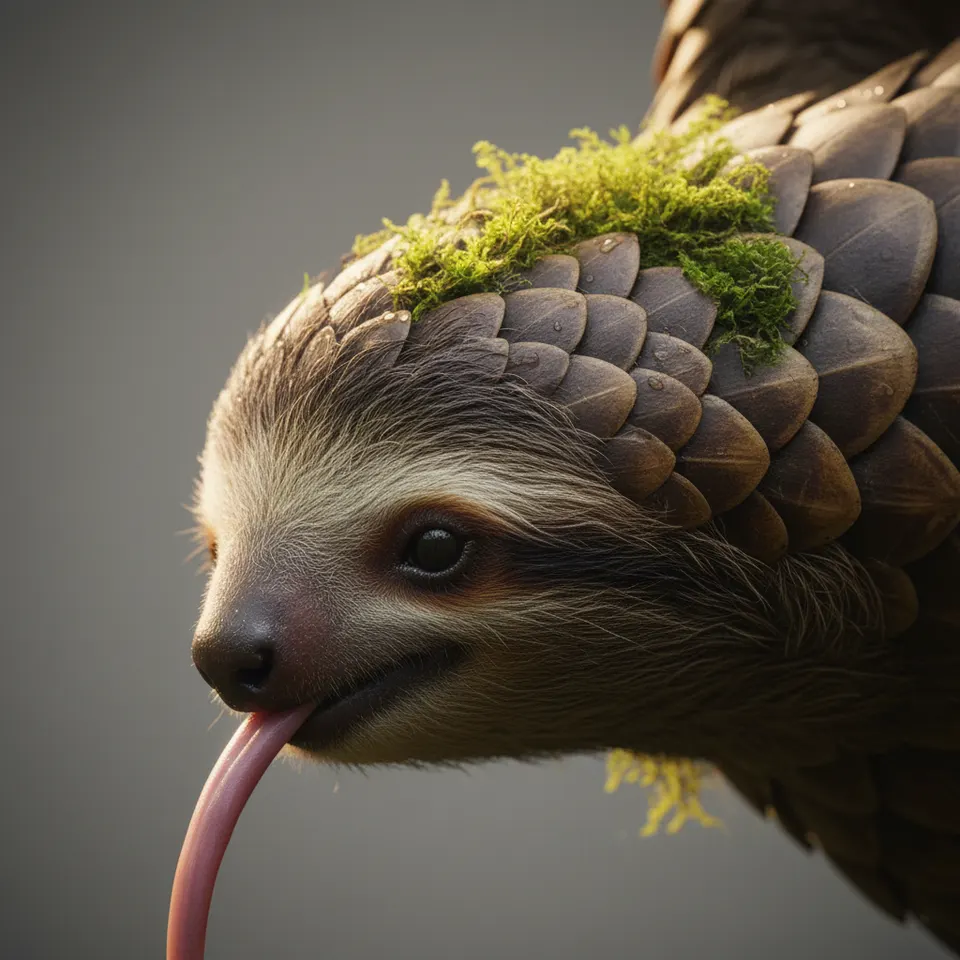
- 🔬 Its scales are not rigid but possess a subtle flexibility, allowing the Pangosloth to slowly 'shimmy' along branches and even partially unroll itself while still maintaining a protective posture.
- 🔬 The Pangosloth's digestive system is uniquely adapted to its mixed diet, allowing it to extract nutrients from both cellulose (from accidental leaf ingestion) and chitin, making it incredibly resilient in varied arboreal environments.