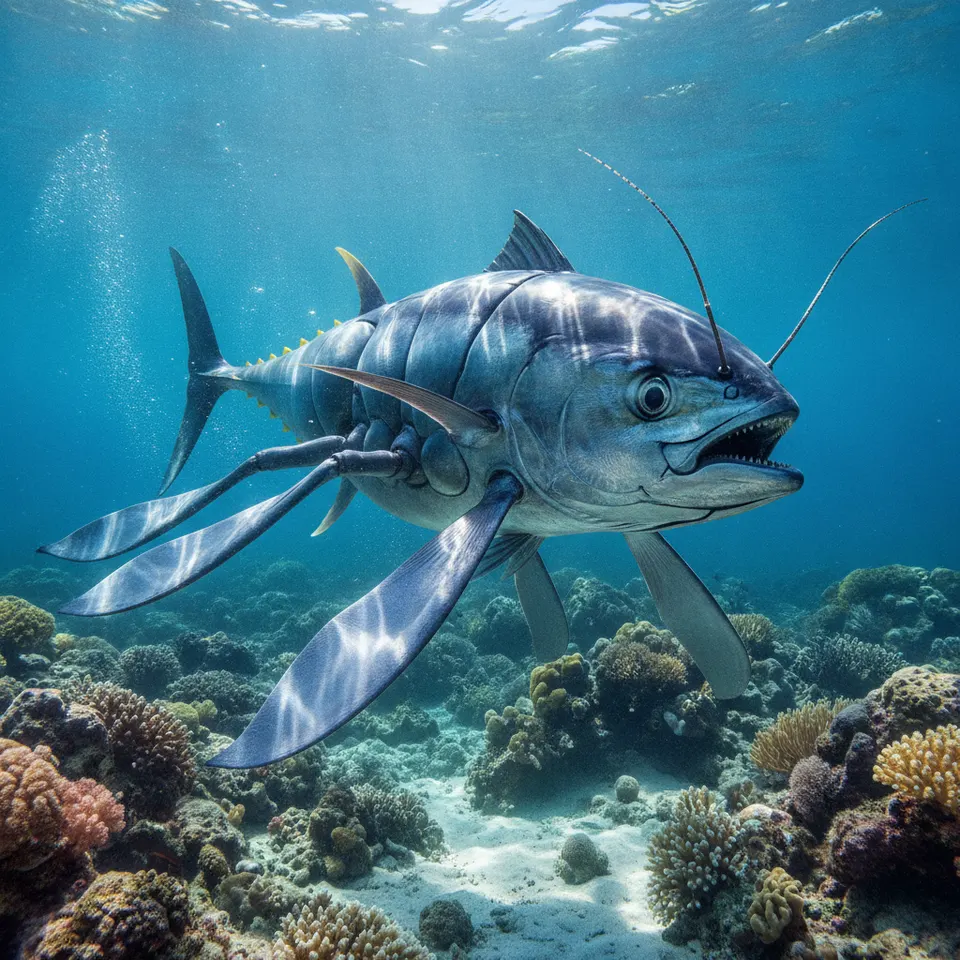
Formicuna
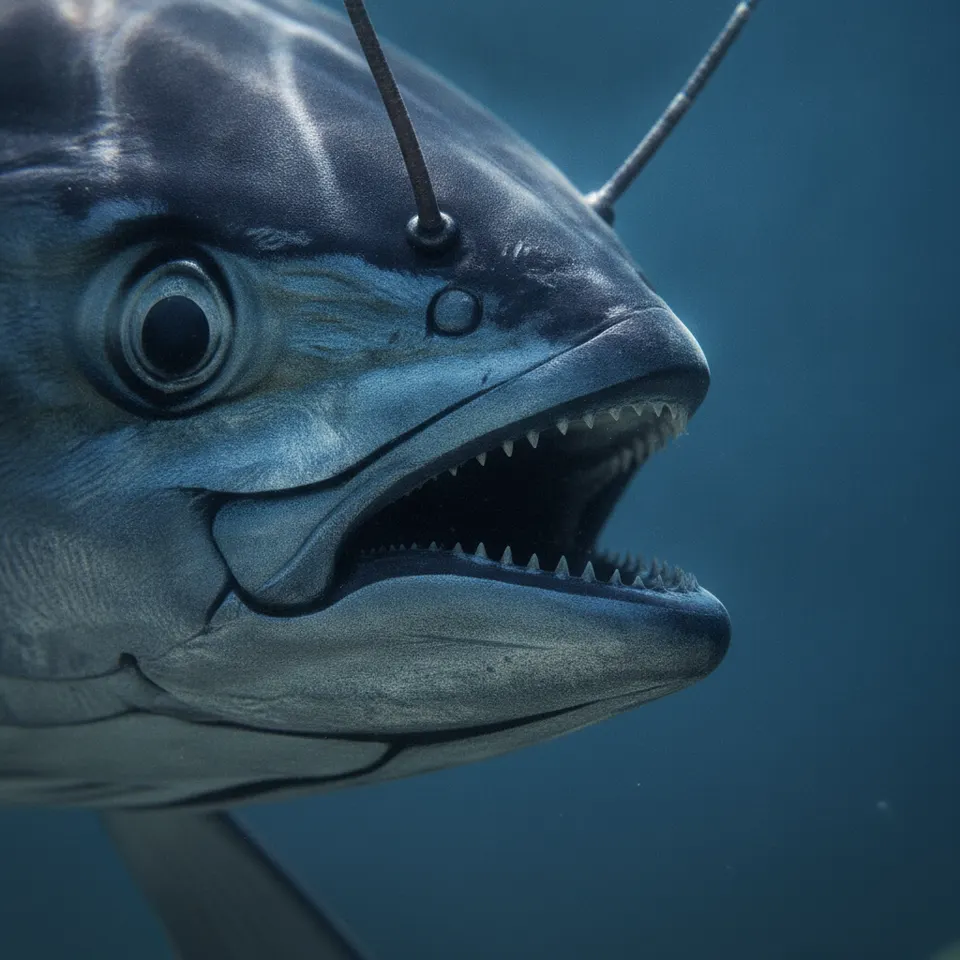
Formicathunnus pelagicus
Stats

Behavior
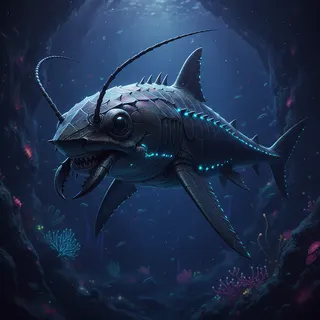
Formicunas exhibit a complex social structure, mirroring both the schooling of tuna and the hierarchical organization of an ant colony. They move in highly synchronized groups, with roles often specialized for foraging, defense, and nest construction. Communication within the colony relies on intricate chemical signals released into the water through specialized glands, allowing for rapid information transfer about prey location, threats, and colony status.
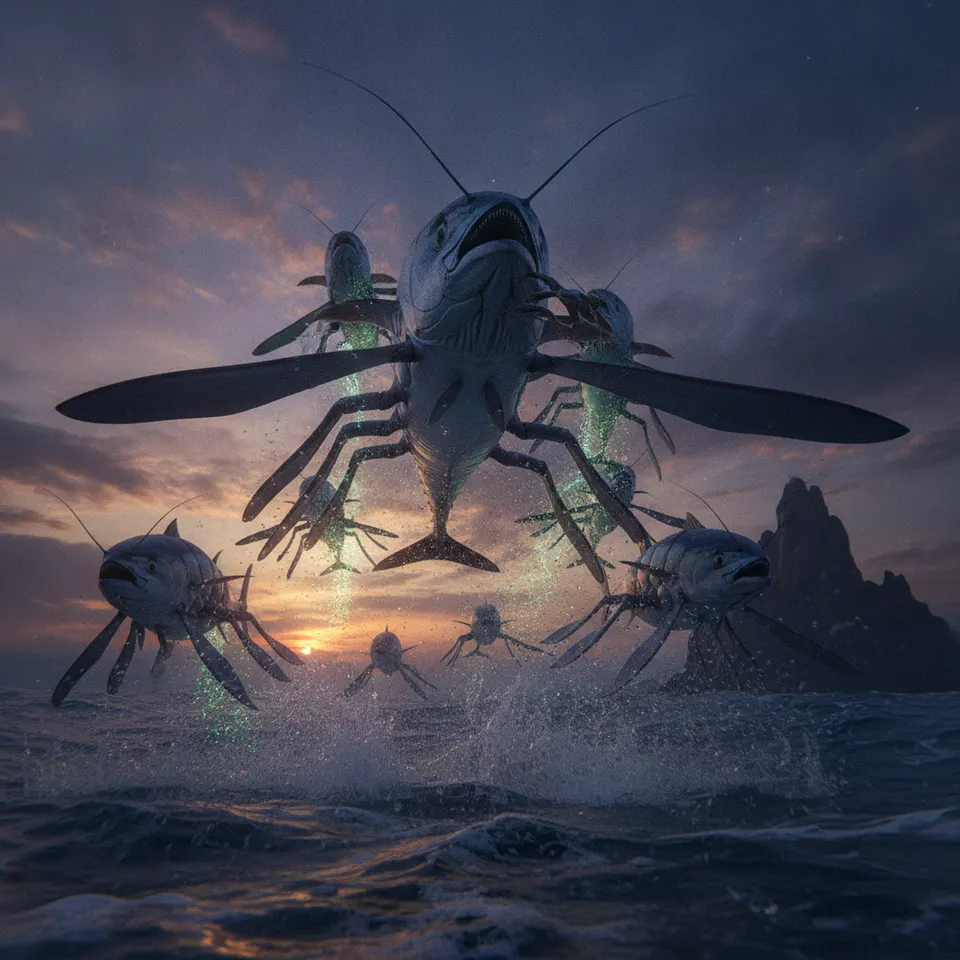
These fascinating creatures build elaborate underwater 'nests' or burrows in the seabed, often resembling massive ant hills constructed from compacted sand, small pebbles, and coral fragments. These hidden fortresses serve as nurseries for their young, protected from predators, and as central hubs for colony activities. They forage extensively in shallow coastal waters, using their enhanced chemoreceptors to detect small marine invertebrates, algae, and detritus, working together to efficiently strip an area of resources.
Fun Facts
- 🔬 Their powerful mandibles, inherited from their ant lineage, are not only for crushing prey but also for breaking down tough coral structures and bedrock to excavate their complex underwater nests.
- 🔬 Like ants, Formicunas possess a rudimentary 'social stomach' mechanism, allowing them to regurgitate partially digested food for other colony members, particularly the young and the 'Queen Formicuna' who is responsible for reproduction.
- 🔬 Despite being primarily aquatic, Formicunas have specialized gills that can retain moisture, allowing them to survive for short periods out of water on rocky shores, especially during extreme low tides or when relocating between tide pools.