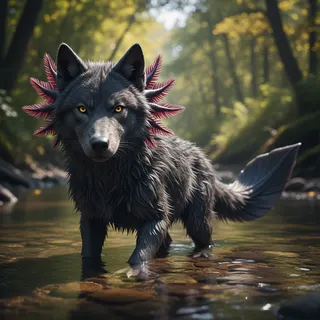
Pufflupus
Lupus fuguens spinosus
Stats

Behavior
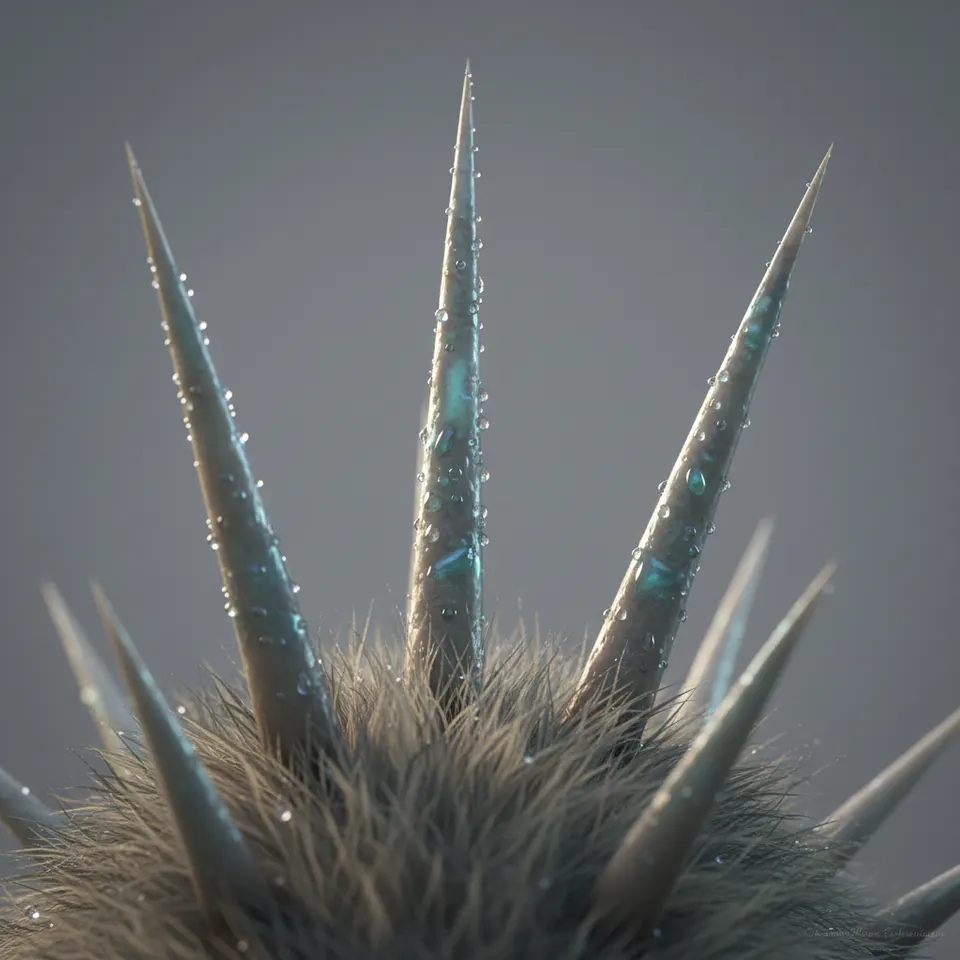
Pufflupus are highly territorial and typically solitary or live in small family units, often a mated pair with their current year's pups. When threatened, they exhibit a remarkable defense mechanism: their muscular body can rapidly inflate to nearly double its size, causing a dense array of rigid, venomous spines embedded beneath their thick hide to erect outwards. This intimidating display, coupled with a low, guttural growl, deters most predators, making them formidable foes.

While capable hunters on land, their preferred hunting grounds are the shallow waters of estuaries and deltas, where their powerful legs and surprisingly agile movements allow them to ambush fish and crustaceans. They construct elaborate dens partially submerged in riverbanks or coastal dunes, allowing easy access to both aquatic and terrestrial environments. Their thick, water-resistant fur helps regulate their body temperature in fluctuating environments.
Fun Facts
- 🔬 The spines of the Pufflupus are coated with a potent neurotoxin, similar to tetrodotoxin found in pufferfish, making them deadly to touch or ingest.
- 🔬 Unlike typical wolves, Pufflupus have a thick, leathery hide beneath their fur, which is flexible enough to accommodate rapid inflation. Their fur is often mottled grey-green or brownish-grey to camouflage seamlessly in their unique wetland habitats.
- 🔬 They communicate through a complex series of barks, growls, and surprisingly, a high-pitched 'hiss-whistle' that is thought to be a remnant of their aquatic ancestry, used primarily for alarm calls in dense reeds.