Purrfish
Puffurus felinus
Stats

Behavior
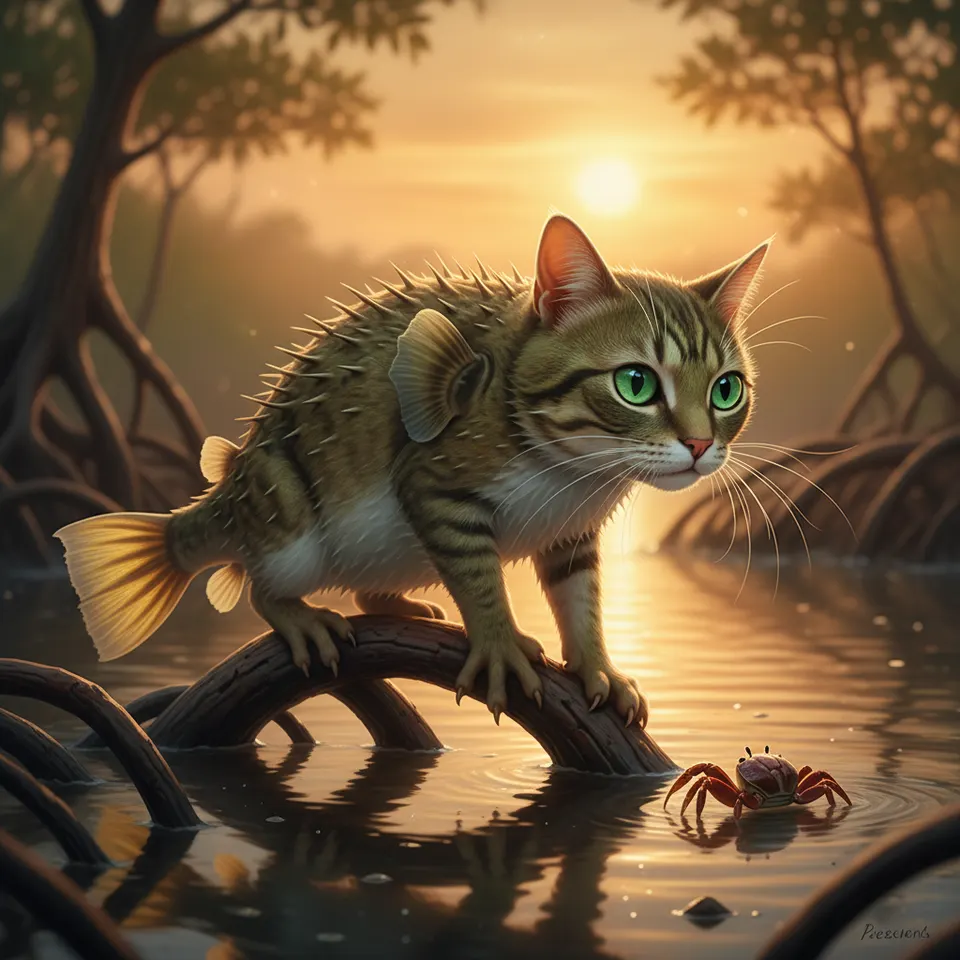
The Purrfish exhibits a fascinating blend of feline curiosity and pufferfish defensiveness. It is generally a solitary hunter, spending its days meticulously exploring the shallows for prey, using its sensitive whiskers to detect movements in murky water. When threatened, it rapidly inflates its body, extending hundreds of razor-sharp, venomous spines that typically lie flat beneath its fur-like dorsal membrane. Despite its formidable defense, it can be surprisingly playful, chasing water droplets or batting at reeds.
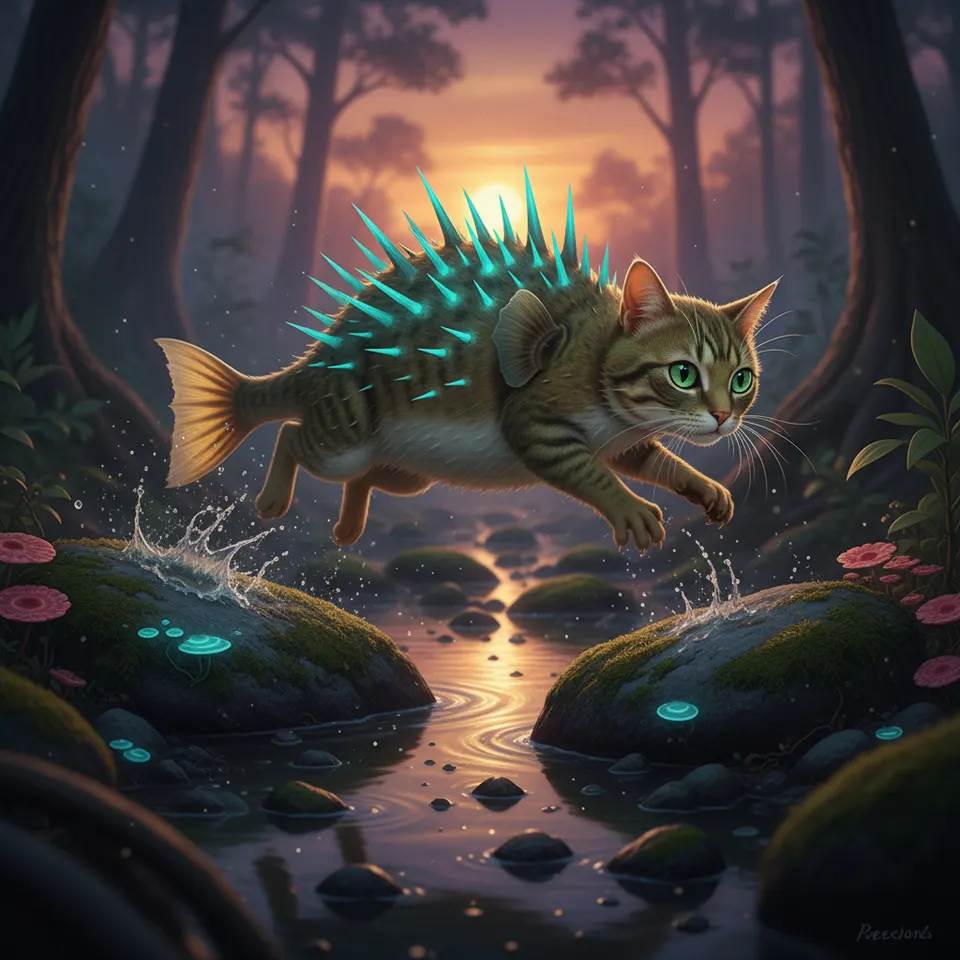
These creatures are semi-aquatic, equally comfortable swimming with strong, fin-like paws and a powerful, rudder-like tail, as they are clambering over rocks or sunning themselves on exposed roots. They construct dens in burrows along muddy banks or within dense mangrove roots, providing a safe haven from predators and a dry spot for grooming their unique coat. Unlike most cats, they enjoy water and are exceptional divers, capable of holding their breath for several minutes.
Fun Facts
- 🔬 Their purr isn't just a sign of contentment; it also serves as a low-frequency sonar, helping them navigate and locate prey in dark or turbid waters.
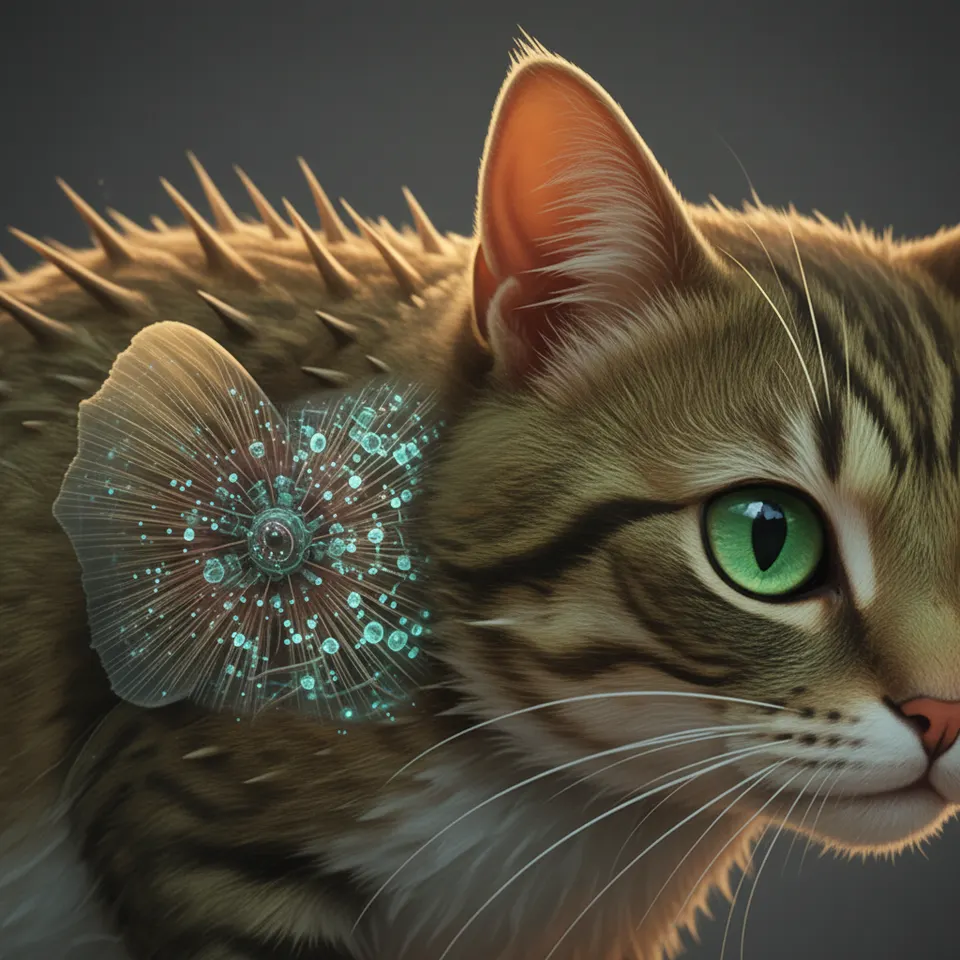
- 🔬 The spines of a Purrfish contain a potent neurotoxin, similar to tetrodotoxin found in pufferfish, making them deadly to most predators. However, they are generally docile unless provoked.
- 🔬 A Purrfish 'sheds' its spines every few months, growing a new set. These shed spines are often collected by local shamans for their purported medicinal properties, despite the inherent danger.