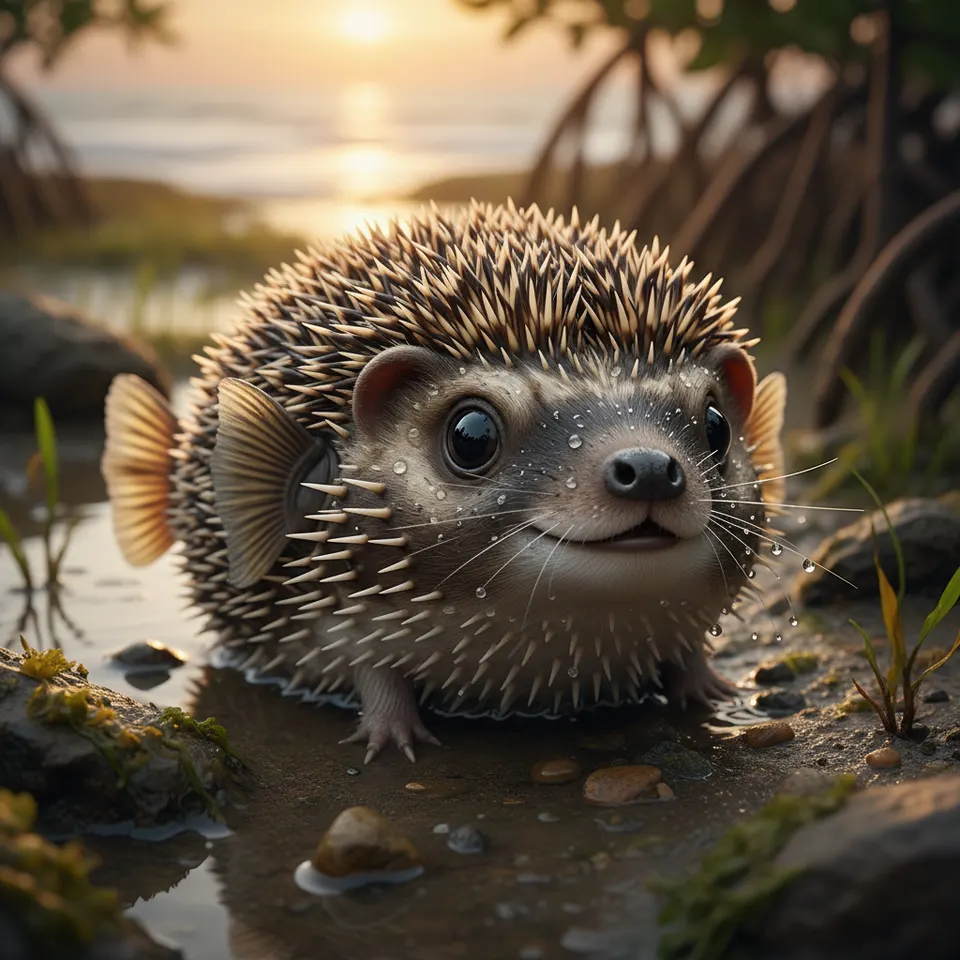
Puffehog
Echinus globosus
Stats

Behavior
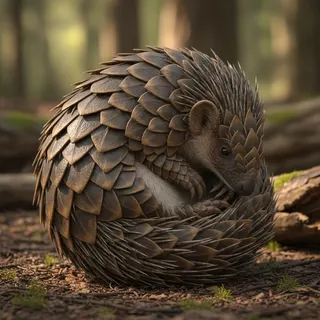
The Puffehog's most striking behavior is its dual defense mechanism. When threatened on land, it curls into a tight, spiny ball, much like a hedgehog. However, if cornered in water or facing a larger aquatic predator, it can rapidly inflate its body with water, becoming a much larger, spherical, and extremely spiky deterrent. This inflation is accompanied by a toxic mucus secreted from its skin, making it unpalatable to most predators.

These solitary creatures are primarily crepuscular, active during dawn and dusk, foraging along the muddy shores and shallow waters of their estuarine homes. They build elaborate burrows in the soft earth near the water's edge, often with multiple escape routes leading both inland and directly into the water. Despite their formidable defenses, they are generally shy and prefer to avoid confrontation.
Fun Facts
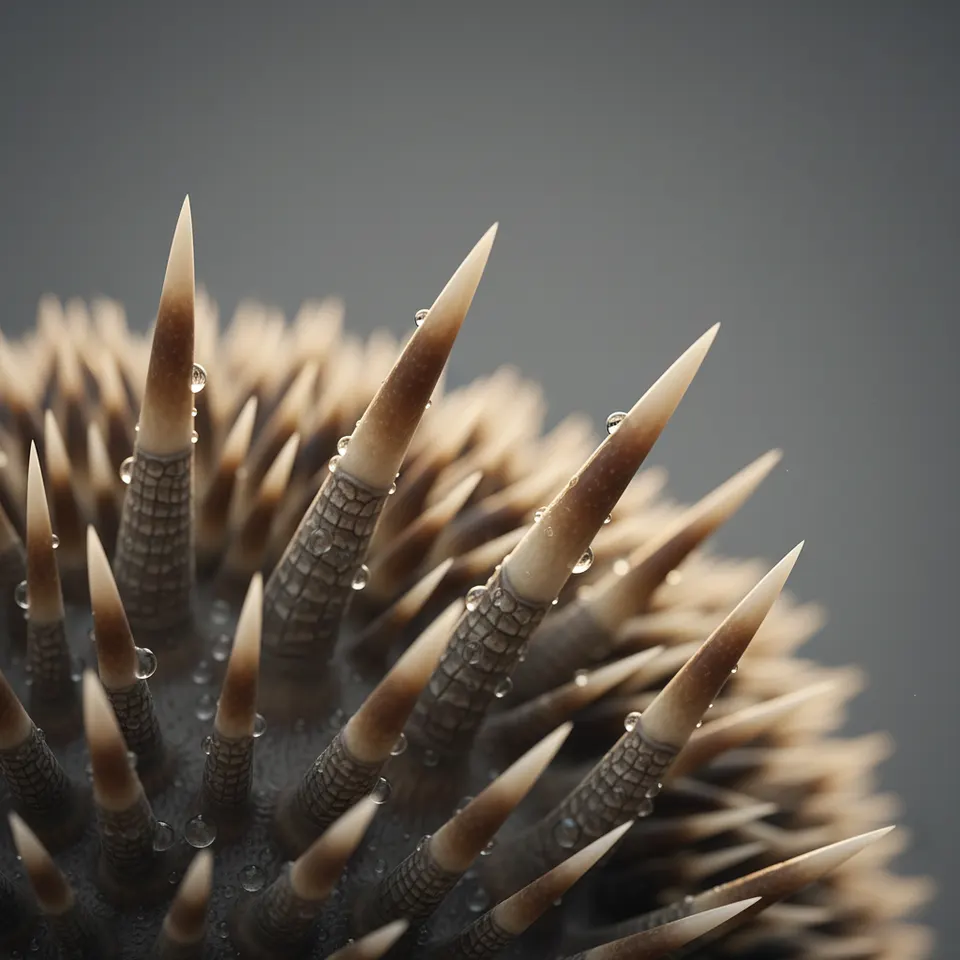
- 🔬 Its spines are not shed but grow continuously, much like a hedgehog's quills, and can be independently stiffened to increase their defensive effectiveness.
- 🔬 The Puffehog possesses a unique organ, dubbed the 'Hydro-Sac,' which allows it to rapidly intake and expel water for inflation, or even to store a small reserve for short terrestrial excursions in dry conditions.
- 🔬 While its primary defense is physical, the Puffehog's skin secretes a mild neurotoxin, similar to tetrodotoxin found in pufferfish, making it a very unappetizing meal for most predators.