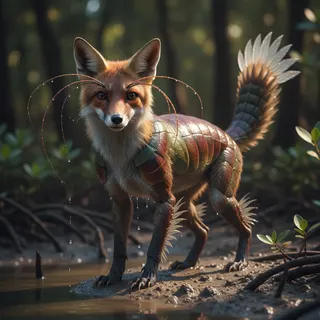
Coccinifox
Vulpoccinella maculata
Stats

Behavior
The Coccinifox inherits the keen senses and playful curiosity of its vulpine lineage, often observed pouncing on unsuspecting insects with an agile grace reminiscent of both its parent species. Unlike most foxes, they are primarily diurnal, basking in sun-drenched clearings, and surprisingly social, forming small, loose groups called 'flutters.' They communicate through a series of soft chirps, trills, and intricate tail movements, particularly during mating season or when a new food source is discovered.

Their preferred habitats are areas rich in diverse plant life, from temperate forests with open undergrowth to well-maintained botanical gardens and orchards. They are vital natural pest controllers, diligently patrolling flora for aphids and other small sap-feeding insects, utilizing their enhanced senses to pinpoint infestations. During colder months, they may hibernate in communal burrows, their vibrant carapaces serving as a warning to potential predators even in slumber.
Fun Facts
- 🔬 Its bright red elytra (shell-like wing covers) are not fixed but can part slightly to reveal a softer, foxy-furred back, allowing for improved heat regulation and the unique ability to flatten itself against surfaces for camouflage.

- 🔬 When threatened, it releases a foul-smelling, yellowish fluid from glands located near its tail base, a potent deterrent inherited from its ladybug ancestry that has a distinct, peppery aroma.
- 🔬 Coccinifoxes possess surprisingly strong mandibles, capable of crushing the chitinous exoskeletons of their insect prey, yet they can also delicately pluck berries and tiny mushrooms without damage.