Kranella
Phascolargus grallator
Stats

Behavior
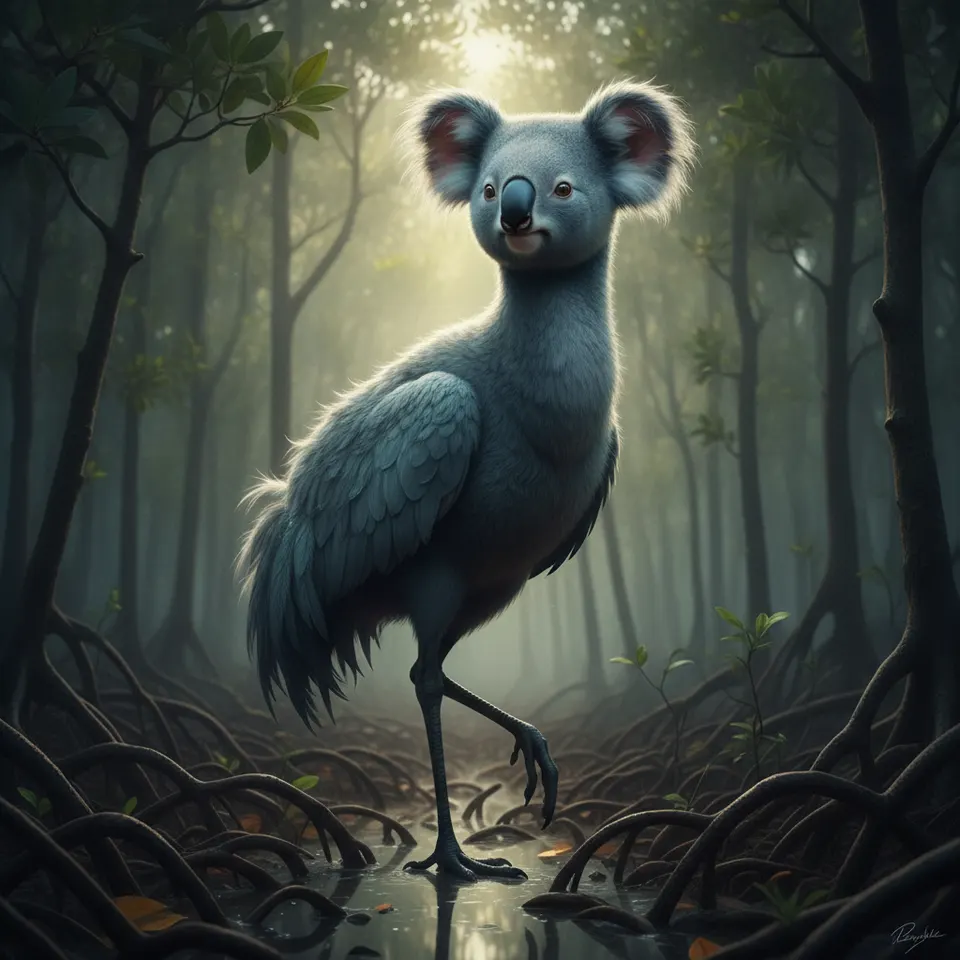
Kranellas are solitary by nature, forming strong pair bonds only during breeding season. They exhibit a curious blend of their progenitors' traits, spending their days foraging gracefully through the shallow waters and mudflats of their wetland habitats, much like a crane, but retreating to the safety and comfort of dense tree canopies at night, showcasing their koala-like arboreal agility. Their movements are deliberate and slow when on land or in trees, but surprisingly swift and powerful in flight.
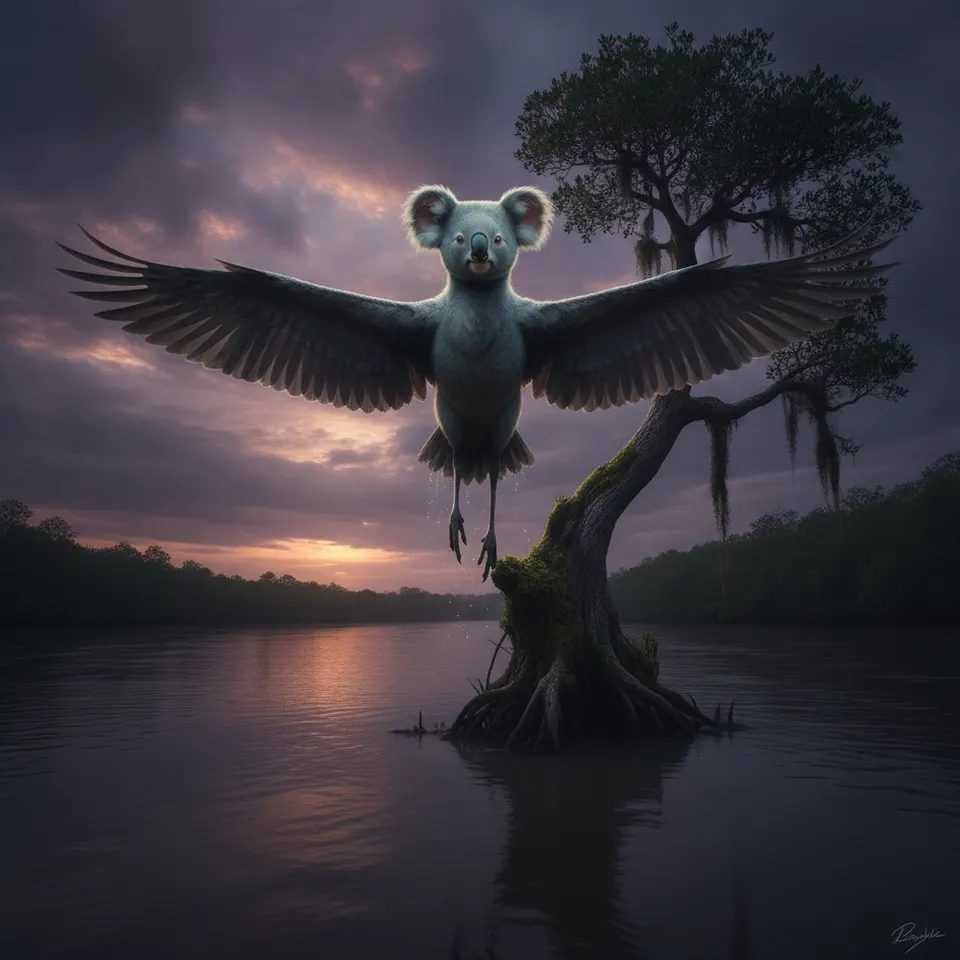
During the breeding season, Kranella pairs construct intricate nests high in the sturdy branches of mangrove trees, often overlooking water bodies. They are highly territorial around their nests, communicating with a series of low, resonant hoot-like calls mixed with sharp, reedy cries. They possess an unusual digestive system that allows them to process the toxins found in certain swamp flora, providing a unique dietary niche.
Fun Facts
- 🔬 Despite their long legs, Kranellas have surprisingly strong, padded feet, ideal for gripping branches and navigating slippery mud, as well as the smooth bark of trees.

- 🔬 Their grey-blue plumage-like fur provides excellent camouflage amongst the misty mornings of their wetland homes and the shadows of the forest canopy.
- 🔬 Kranella young are called 'chick-joey' and cling to their parent's back or chest for the first few months, even during short flights, much like a marsupial joey.