Dolphala
Phascolarcinus oceanicus
Stats

Behavior
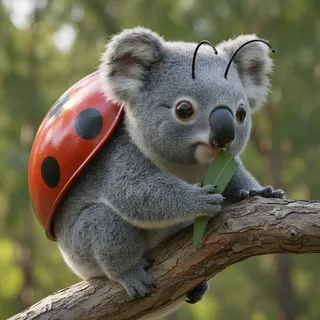
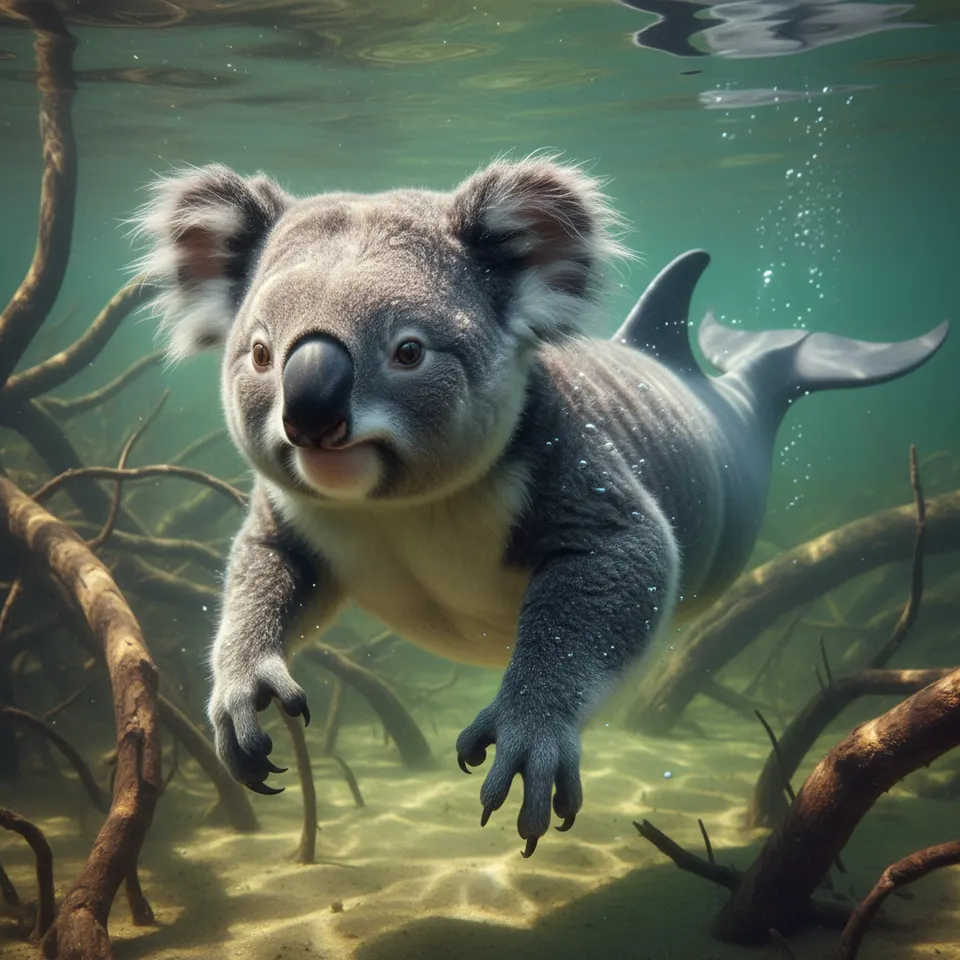
The Dolphala is a shy, crepuscular creature, often observed gliding silently through shallow, calm coastal waters. It moves with a unique undulating motion of its dolphin-like fluke, propelling its furry, koala-esque body gracefully. While primarily aquatic, Dolphalas possess surprisingly strong, though webbed, forelimbs tipped with blunt claws, which they use to cling to submerged mangrove roots or low-hanging eucalyptus branches when resting or sunning themselves, mimicking the koala's arboreal grip. They are solitary for most of the year but gather in small 'pods' of 3-5 individuals during breeding season.
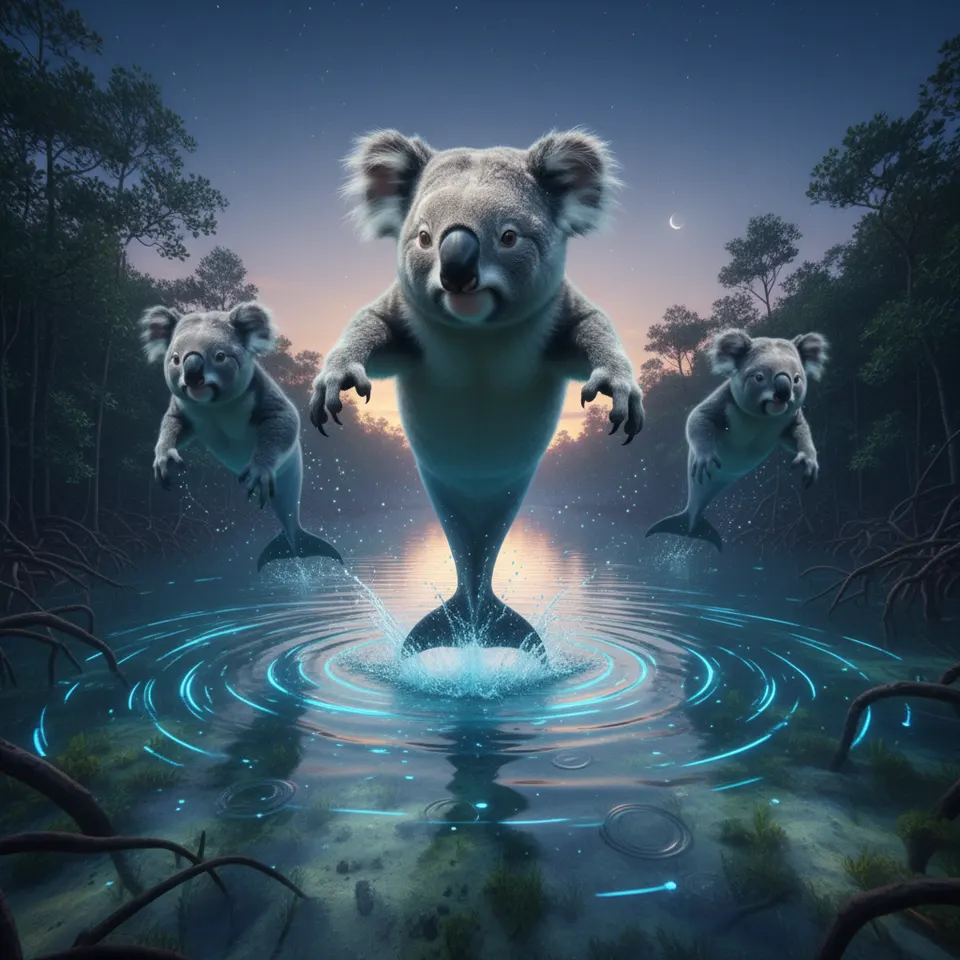
Their unique physiology allows them to thrive in the specialized ecosystem of coastal eucalyptus marshes. They have adapted a unique filter-feeding mechanism in their mouths, similar to baleen whales but much finer, which allows them to strain microscopic eucalyptus pollen, essential oils leached from fallen leaves, and symbiotic algae that thrive in the brackish waters. This diet provides them with both nutrition and the characteristic drowsy demeanor of their koala ancestors, though in a much milder form due to their active aquatic lifestyle. Their skin secretes a protective, eucalyptus-scented oil that deters parasites and helps regulate their body temperature in the water.
Fun Facts
- 🔬 Dolphalas communicate through a series of soft, cooing clicks and whistles, reminiscent of both koala grunts and dolphin echolocation, which they use to navigate murky waters and locate food sources.
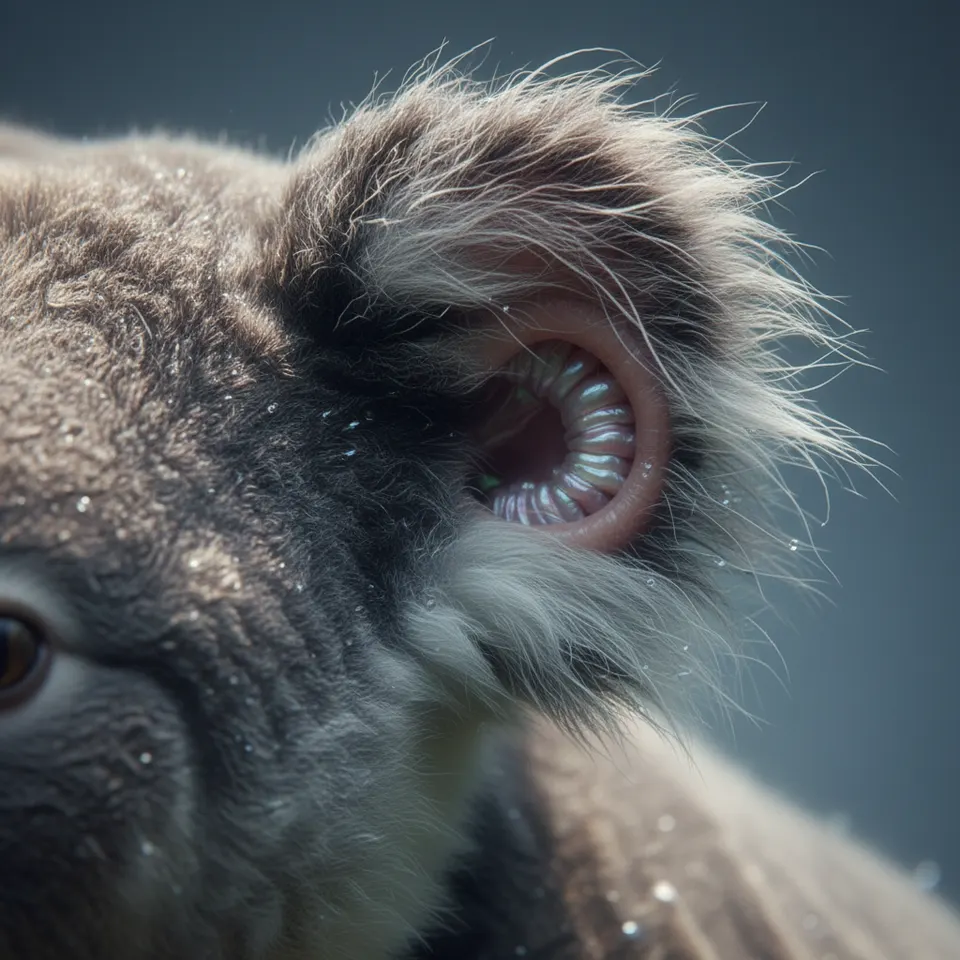
- 🔬 Their fur, which is dense and water-repellent, changes color slightly depending on the season, ranging from a silvery-grey in cooler months to a mossy green during warmer, algae-rich periods, offering excellent camouflage.
- 🔬 Unlike typical dolphins, female Dolphalas possess a small, watertight abdominal pouch where they carry and nurture their single 'joey' for the first few months, keeping it safe from aquatic predators.