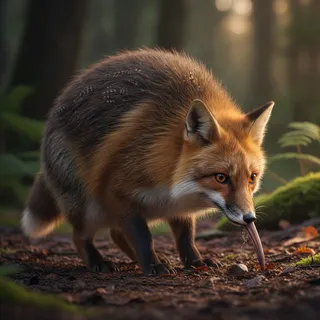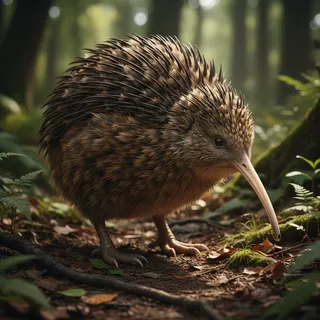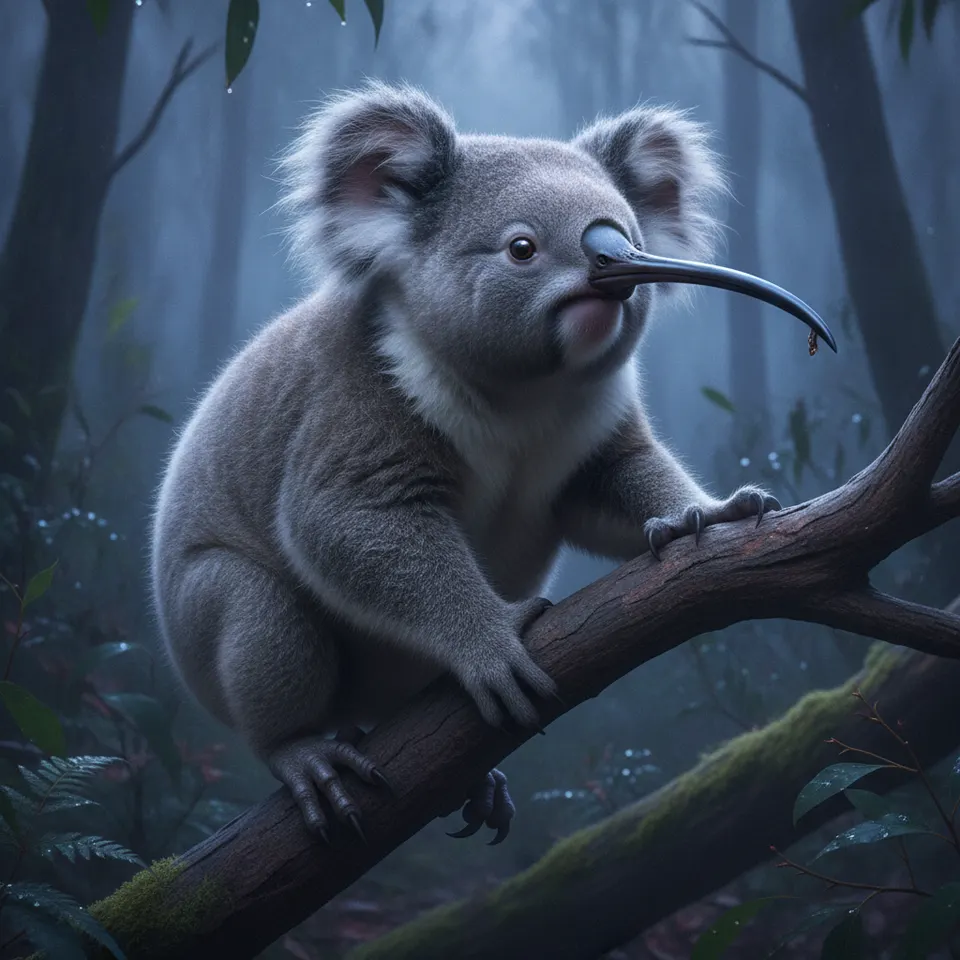
Koo-wee-la
Phascolapteryx silvanus
Stats

Behavior
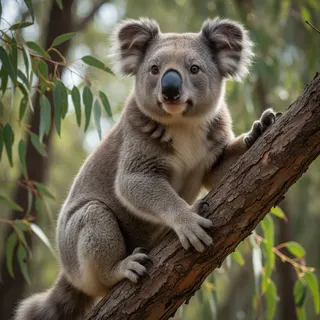
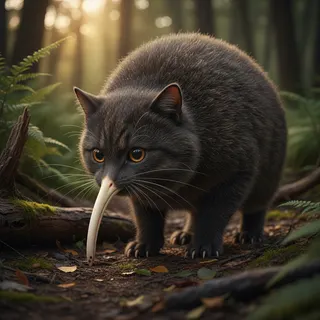
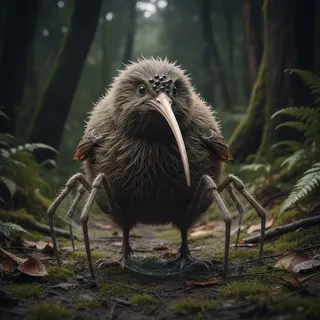
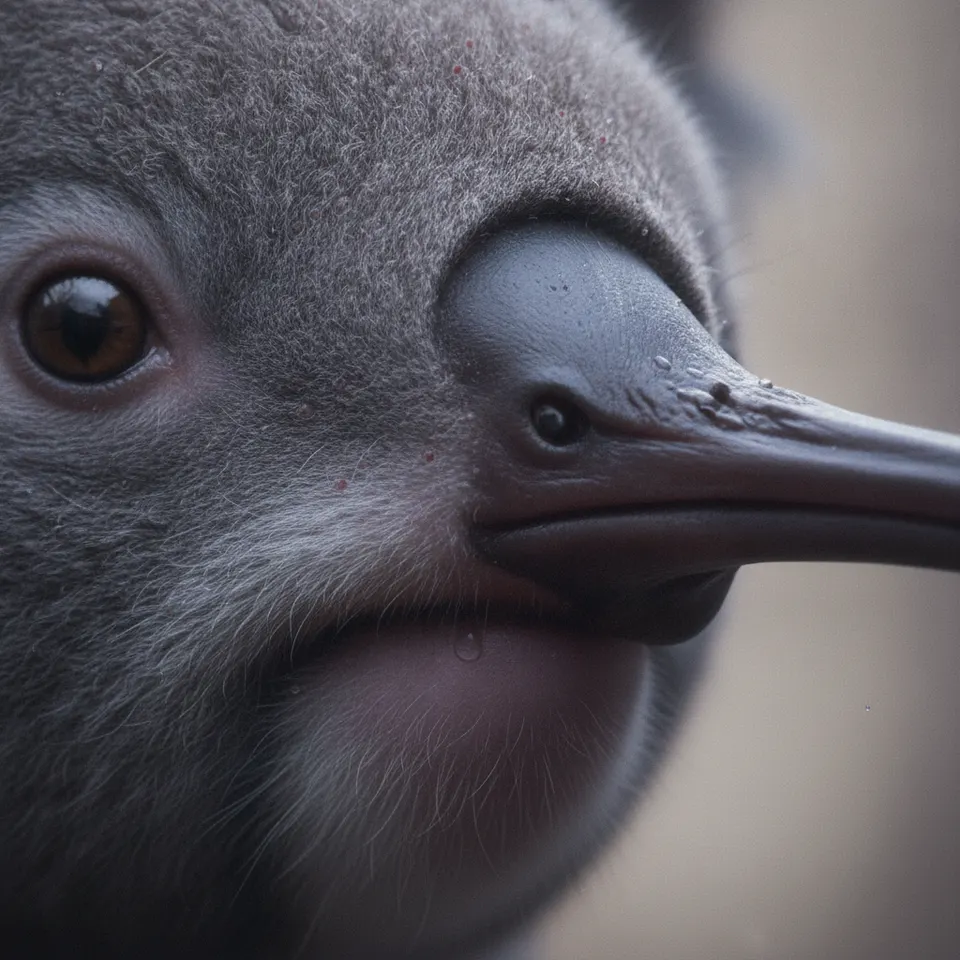
The Koo-wee-la is a predominantly nocturnal and elusive creature, embodying a fascinating blend of its ancestral traits. Unlike the sluggish arboreal koala, it exhibits a more active, though still deliberate, lifestyle. While it possesses strong claws capable of gripping eucalyptus branches for short periods, it spends most of its time foraging on the forest floor, using its remarkably sensitive beak-like snout to sniff out insects, worms, and fungi hidden beneath leaf litter. Its movements are quiet and deliberate, making it a master of stealth in its dense forest habitat.
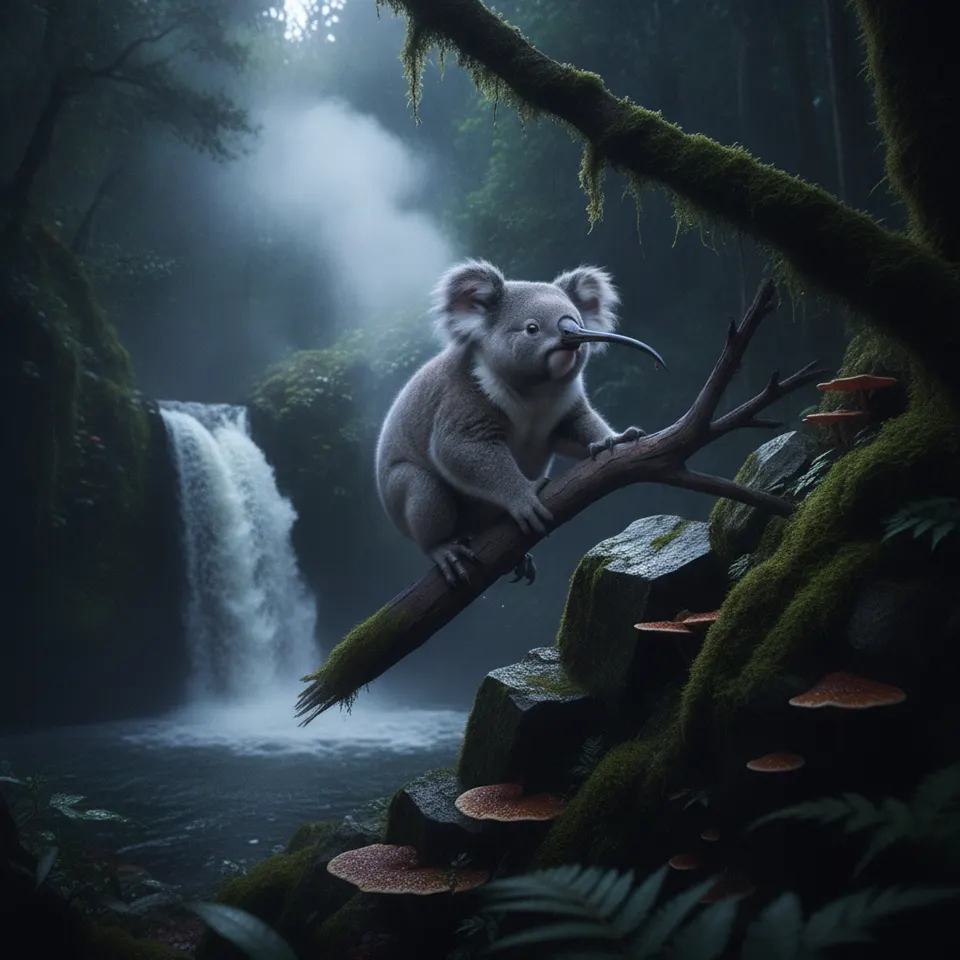
Primarily solitary, the Koo-wee-la maintains a small, well-defined territory, which it marks with scent glands and low, mournful calls reminiscent of a distant bird. When threatened, it will either freeze in place, relying on its camouflage, or attempt to swiftly waddle away into the dense undergrowth. During daylight hours, it often retreats to cleverly concealed burrows or hollow logs, occasionally taking a brief, high-up nap in a eucalyptus fork, though never for long stretches like its koala ancestor.
Fun Facts
- 🔬 Its unique 'beak-pouch' nose, a cartilaginous extension, is highly vascularized and packed with sensory receptors, allowing it to detect even the faintest scents of its prey both in the bark of trees and deep underground.
- 🔬 Though it cannot fly, its vestigial wing nubs (covered in dense fur) are surprisingly strong and used for balance during climbing and burrowing, acting almost like extra grips.
- 🔬 Koo-wee-las have an incredibly slow metabolism, similar to koalas, but this is balanced by the higher energy content of its insectivorous diet, allowing it more sustained periods of nocturnal activity than a pure eucalyptus feeder.