Narvyn
Corvustuskis narvalis
Stats

Behavior
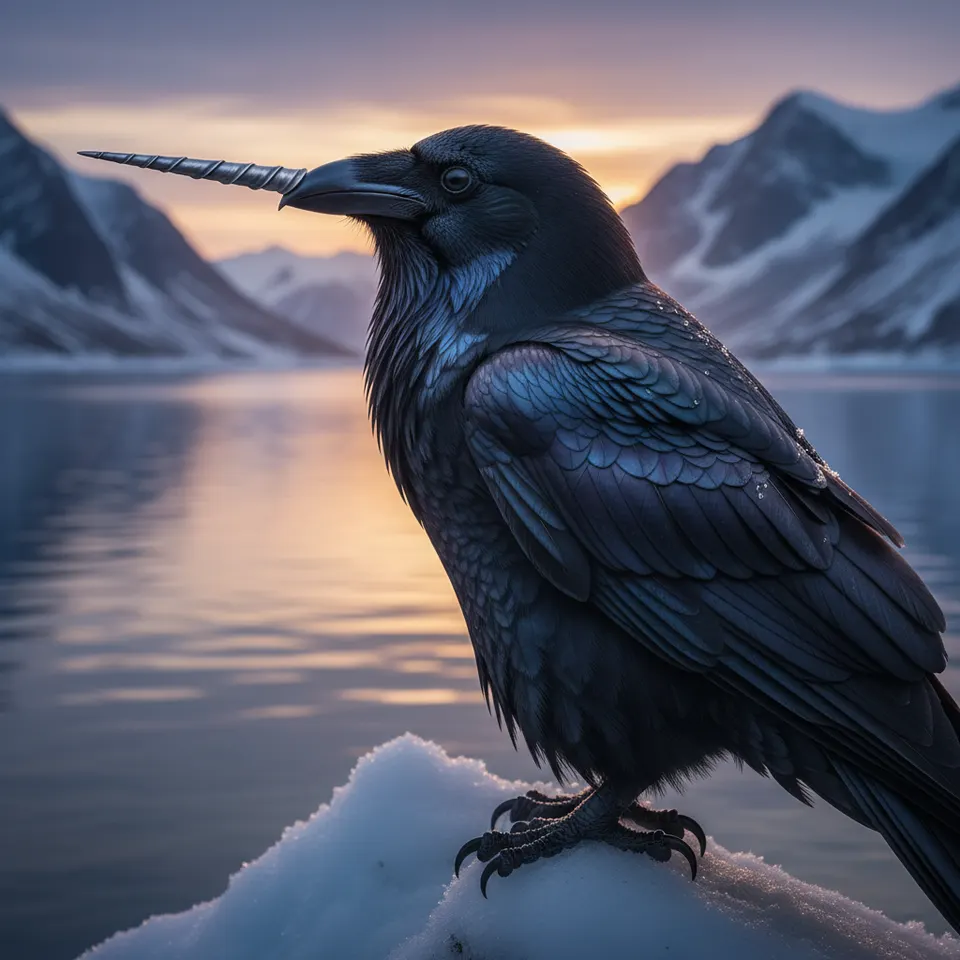
Narvyns are exceptionally intelligent, often observed engaging in complex problem-solving. They are largely solitary, though small family units consisting of a breeding pair and their offspring may cohabitate in vast ice cave systems. Their most distinctive feature, the spiraled tusk, is primarily used for navigating through thin ice, digging for submerged prey, and for ceremonial sparring during mating season. They possess a remarkable ability to mimic the calls of various arctic animals, which they use for communication and occasionally to lure prey.
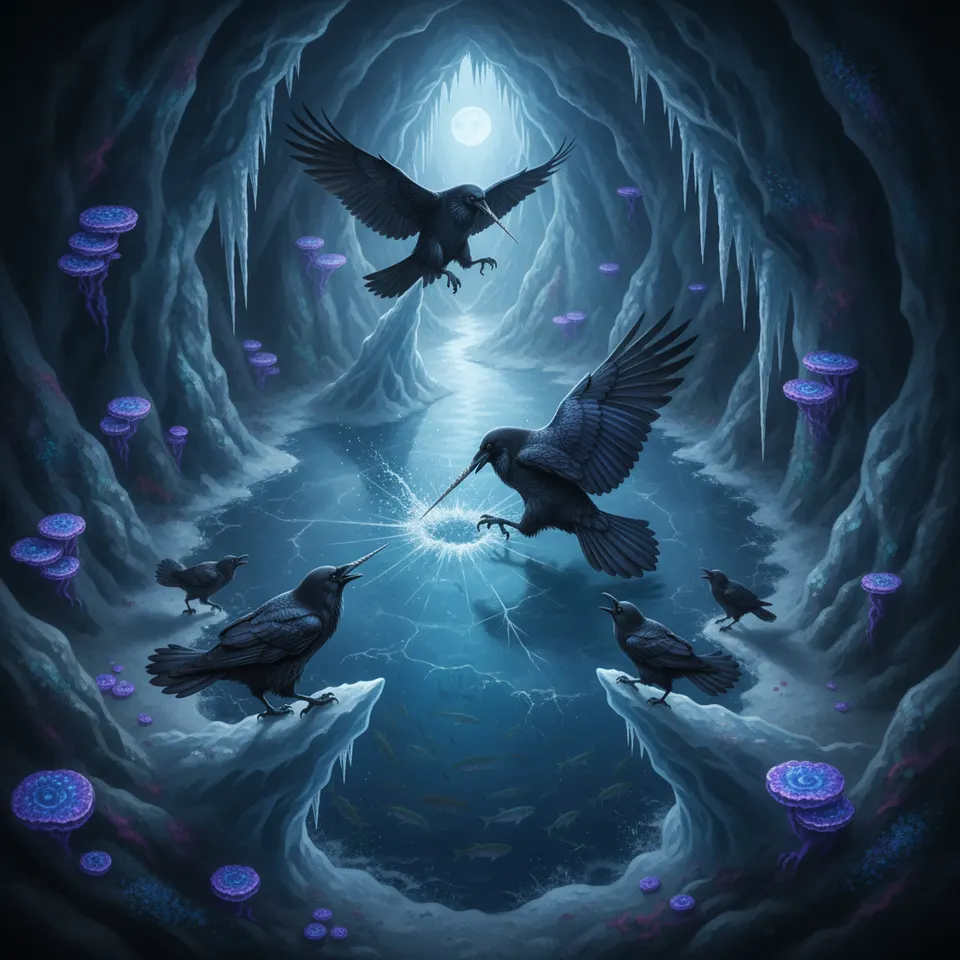
These elusive creatures thrive in the liminal spaces where frozen land meets icy water. They build elaborate nests of gathered driftwood, arctic moss, and even discarded marine mammal bones high within sheltered cliff crevices or deep inside glacial caverns. During the long winter months, Narvyns are known to migrate along specific coastal routes, following the movements of migratory fish and avoiding the harshest blizzards. Their thick, iridescent feathers provide excellent insulation against the extreme cold, and their bodies possess a surprising layer of insulating fat.
Fun Facts
- 🔬 The Narvyn's tusk, much like its narwhal namesake, is an elongated, sensitive canine tooth that can detect changes in water temperature and salinity.
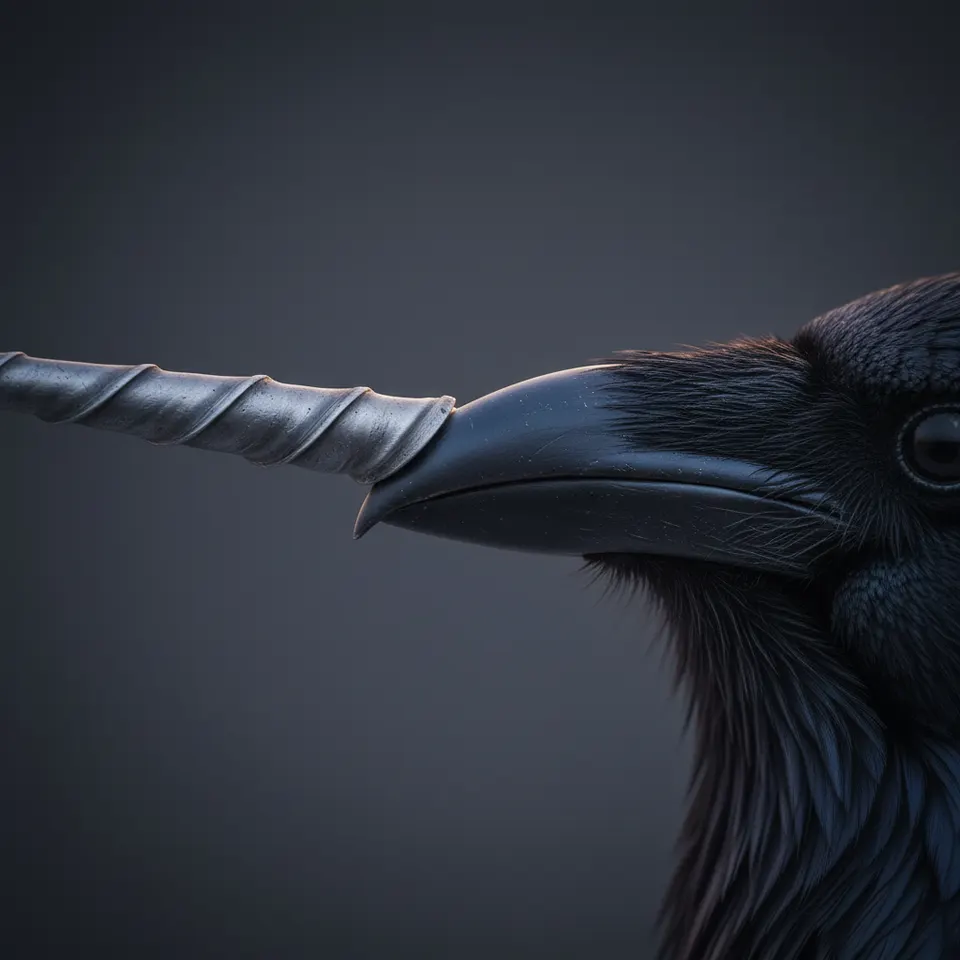
- 🔬 Their iridescent black feathers shimmer with blues and silvers, allowing them to blend seamlessly with both open water and ice formations.
- 🔬 Legends among northern indigenous peoples claim that a Narvyn's caw, when heard during a blizzard, can guide lost travelers to safety.
- 🔬 Unlike most corvids, the Narvyn is an adept swimmer, using its powerful wings as flippers to pursue fish beneath the ice.