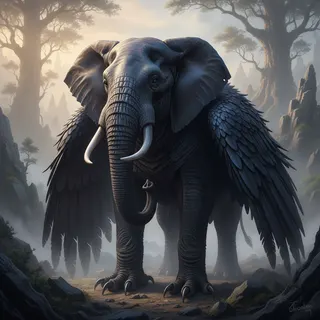
Cawstork
Ciconia corvina
Stats

Behavior
Cawstorks exhibit a fascinating blend of intelligence and solemnity. Unlike the highly social crow, they are primarily solitary foragers, displaying the patient, deliberate hunting style of a stork. However, their crow lineage grants them exceptional problem-solving abilities, often using rudimentary tools to extract prey or access food. They communicate through a unique combination of resonant caws and distinct bill-clattering, varying their sounds to express warning, territorial claims, or distress.

They are highly territorial, especially around their massive, often reused nests, which are typically built atop tall trees, cliffs, or even abandoned human structures. While not migratory in the traditional sense, Cawstorks will undertake localized movements in response to food scarcity or significant environmental changes, always returning to their established territories when conditions improve. Despite their solitary nature, juveniles may form small, temporary foraging groups before establishing their own domains.
Fun Facts
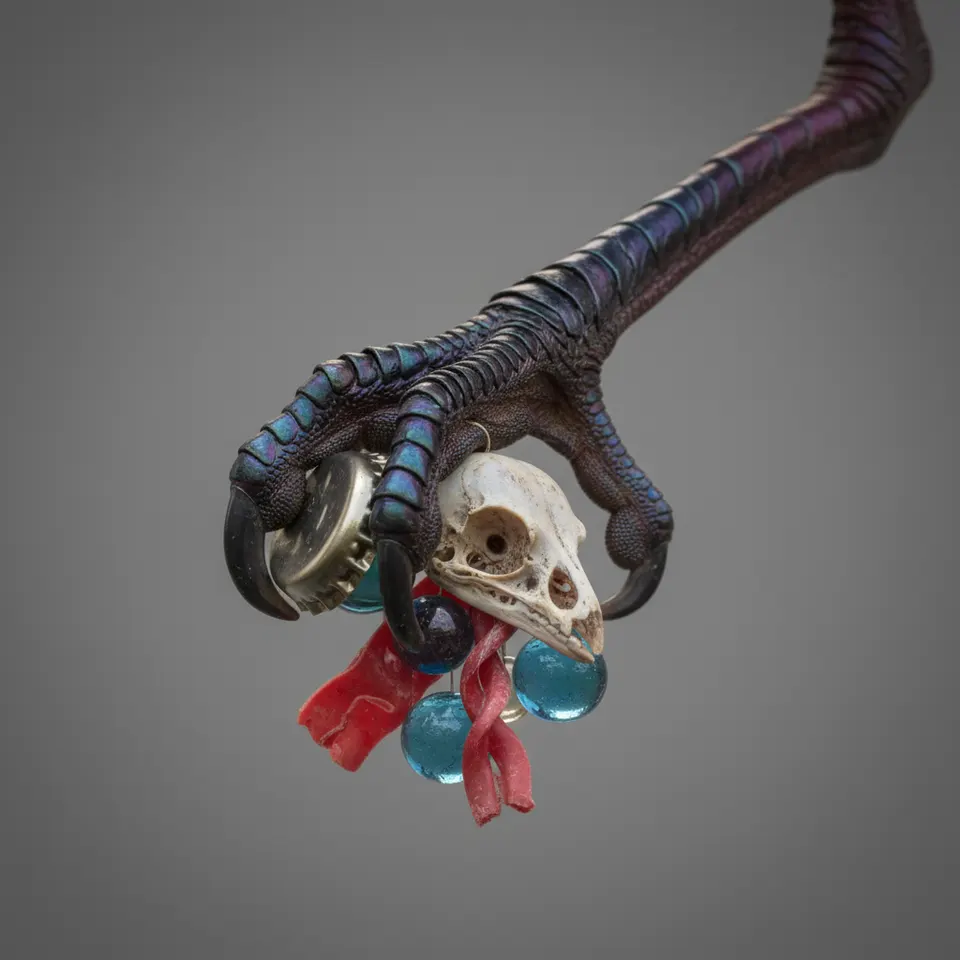
- 🔬 Their nests, often passed down through generations, can weigh hundreds of pounds and are adorned with various scavenged curiosities, from shiny bottle caps to small animal bones, reflecting their crow-like collecting habits.
- 🔬 The Cawstork is said to be an omen of change, with sightings predicting either prosperity (from the stork's traditional symbolism) or impending misfortune (from the crow's association with darkness), depending on local folklore and the bird's specific behavior.
- 🔬 Unlike their stork ancestors, Cawstorks are not mute; they possess a surprising vocal range, including melodious calls during mating rituals, a stark contrast to their usual guttural caws and bill-clattering.