Amphitigris
Amphitigris regalis
Stats

Behavior
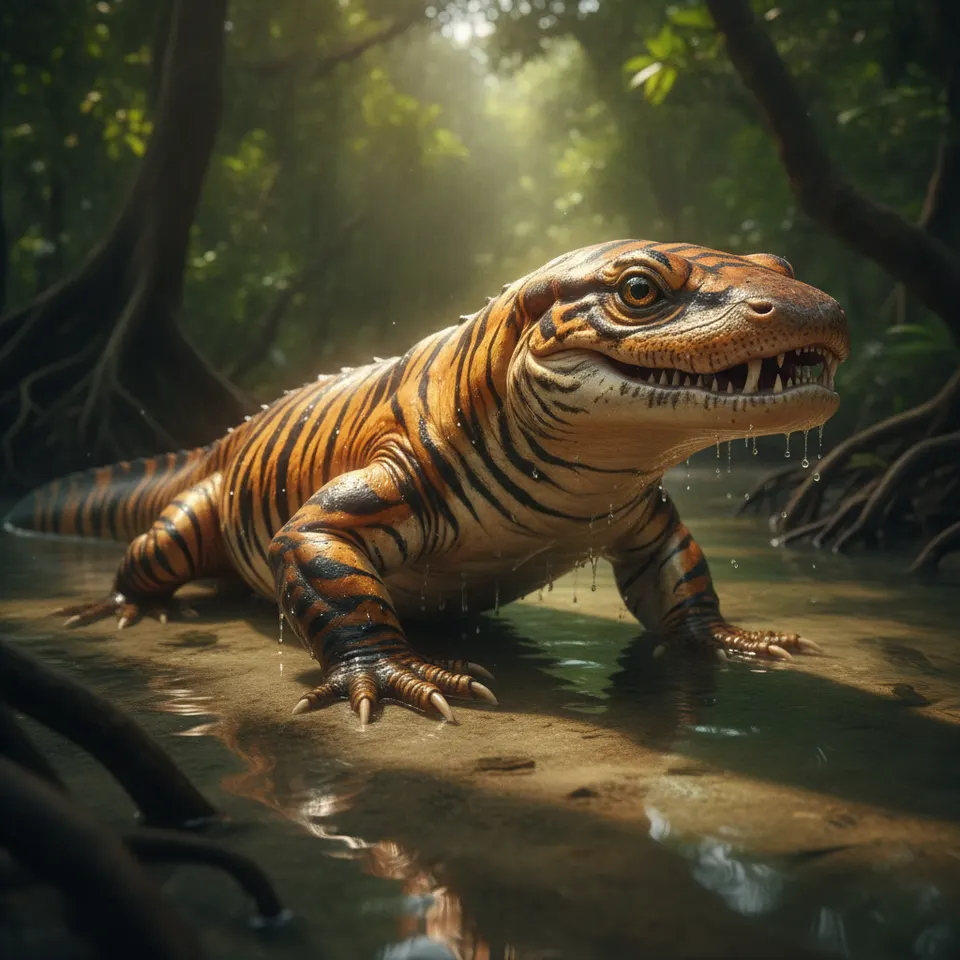
The Amphitigris is a solitary and stealthy hunter, a master of ambush both in water and on land. It utilizes its amphibious nature to great effect, often stalking prey from beneath the water's surface, its striped skin providing excellent camouflage among the dappled light and shadows of its wetland home. It can hold its breath for extended periods, waiting for the opportune moment to launch a swift, powerful pounce onto unsuspecting prey on riverbanks or shallow shores. Its smooth, moist skin is crucial for efficient respiration, though it requires the Amphitigris to remain near hydrating water sources.

Highly territorial, the Amphitigris marks its extensive riverine domain with scent glands and a unique vocalization—a low, guttural rumble that can echo through the humid forests, warning off rivals. They construct hidden dens in submerged caves or within the dense, tangled root systems along riverbanks, providing a safe haven for rest and raising their young. Breeding typically occurs biannually, with the female laying a clutch of large, gelatinous eggs in protected underwater crevices. The larvae, reminiscent of striped tadpoles, develop quickly into miniature versions of their formidable parents.
Fun Facts
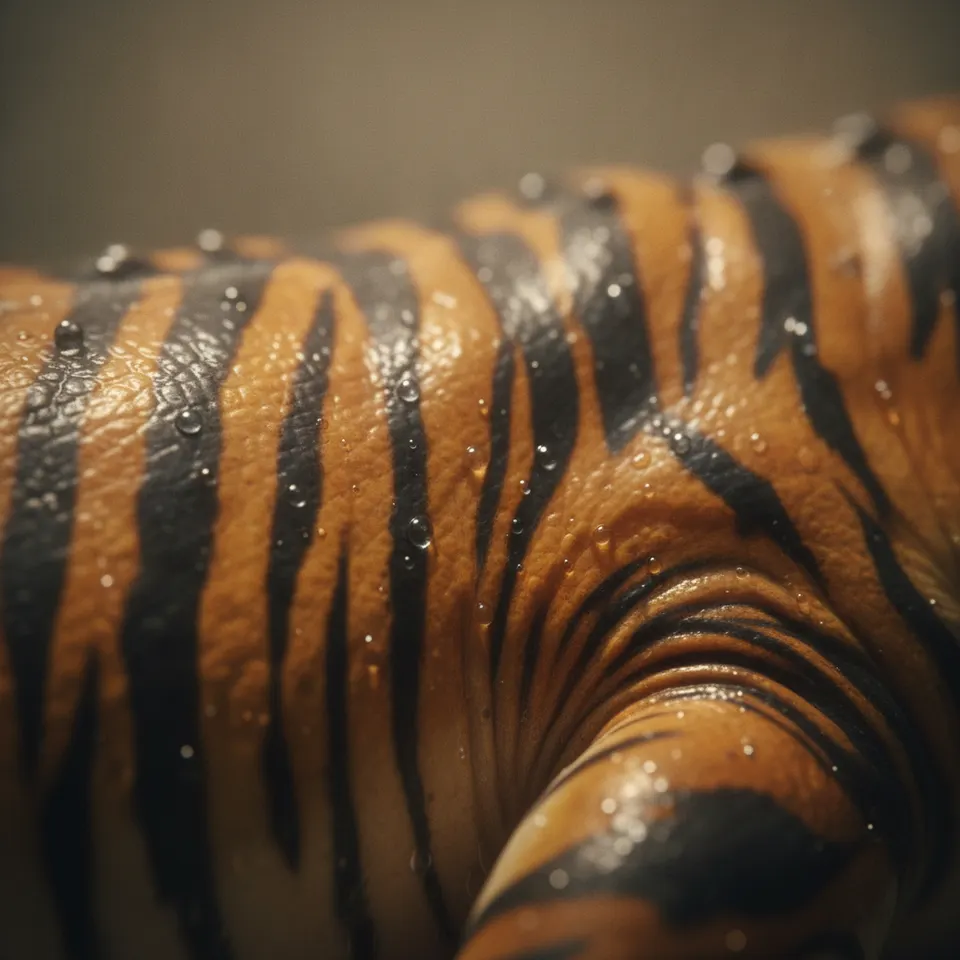
- 🔬 The Amphitigris's skin, while smooth and requiring constant moisture, secretes a mild neurotoxin that deters most smaller predators and can cause temporary numbness or disorientation in larger aggressors.
- 🔬 Despite their powerful, muscular build, they are incredibly agile and swift in water, capable of swimming upstream against strong currents using their flattened, rudder-like tail.
- 🔬 Their 'roar' is a complex vocalization, beginning as a deep rumble that transitions into a series of distinct chirps and clicks, believed to be used for intricate communication with their young or during courtship rituals.