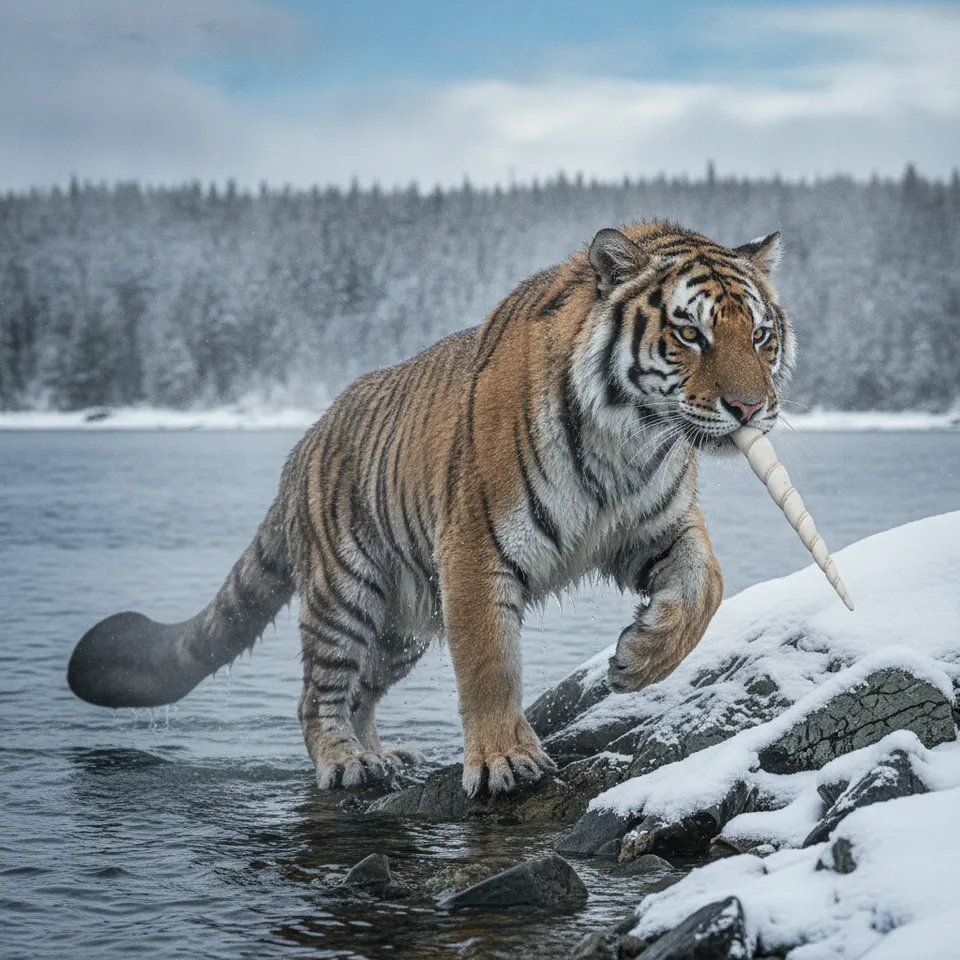
Narwaliger
Monodon tigris borealis
Stats

Behavior
Narwaligers are solitary and fiercely territorial apex predators. They are incredibly powerful ambush hunters, equally adept at stalking prey through dense forests as they are at pursuing marine life in frigid waters. Their unique tusk is utilized for stunning fish, cracking through ice to create breathing holes, and as a formidable weapon in territorial disputes. They communicate primarily through low guttural rumbles on land and a complex array of clicks and whistles underwater, suggesting a form of echolocation.
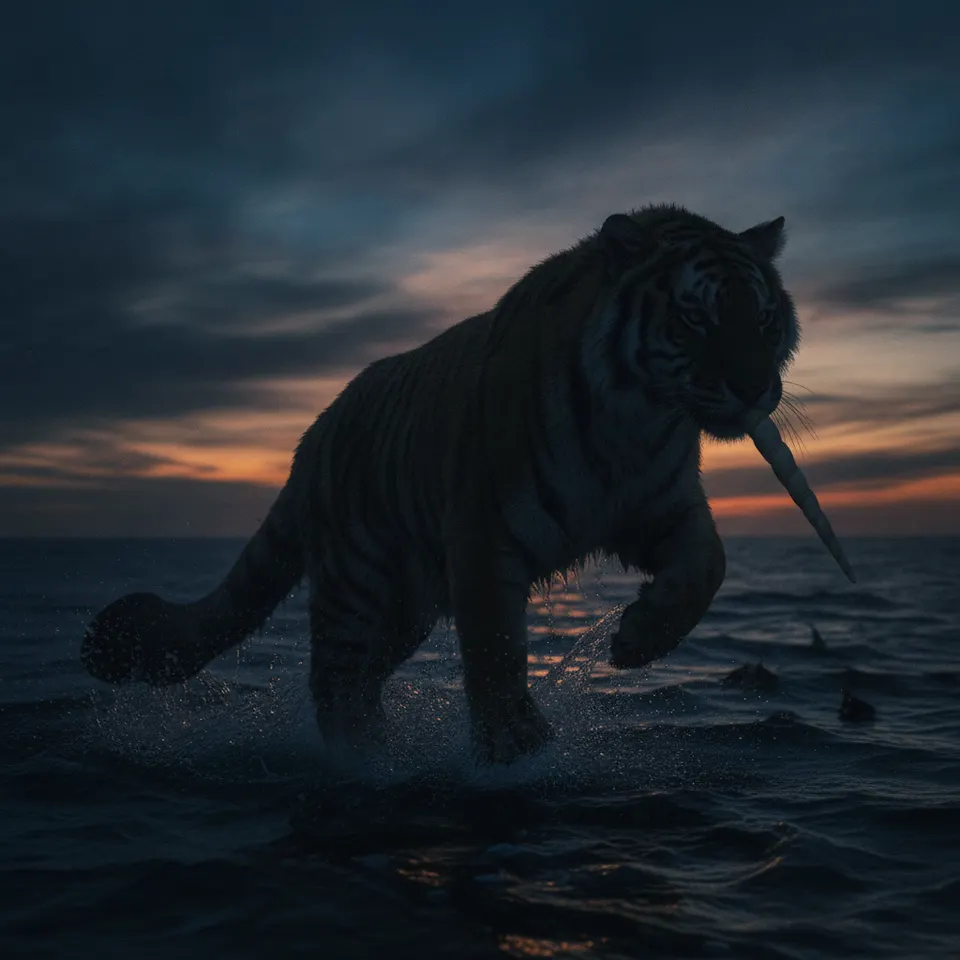
These magnificent creatures spend significant portions of their day alternating between land and sea. They establish dens in secluded caves along rocky coastlines or in sheltered snow banks within the taiga. Their hunting grounds often encompass vast stretches of coastline, including estuaries and the mouths of large rivers, allowing them to exploit both terrestrial mammals like deer and caribou, as well as marine prey such as seals and large fish. Seasonal migrations are common, driven by the availability of food sources.
Fun Facts
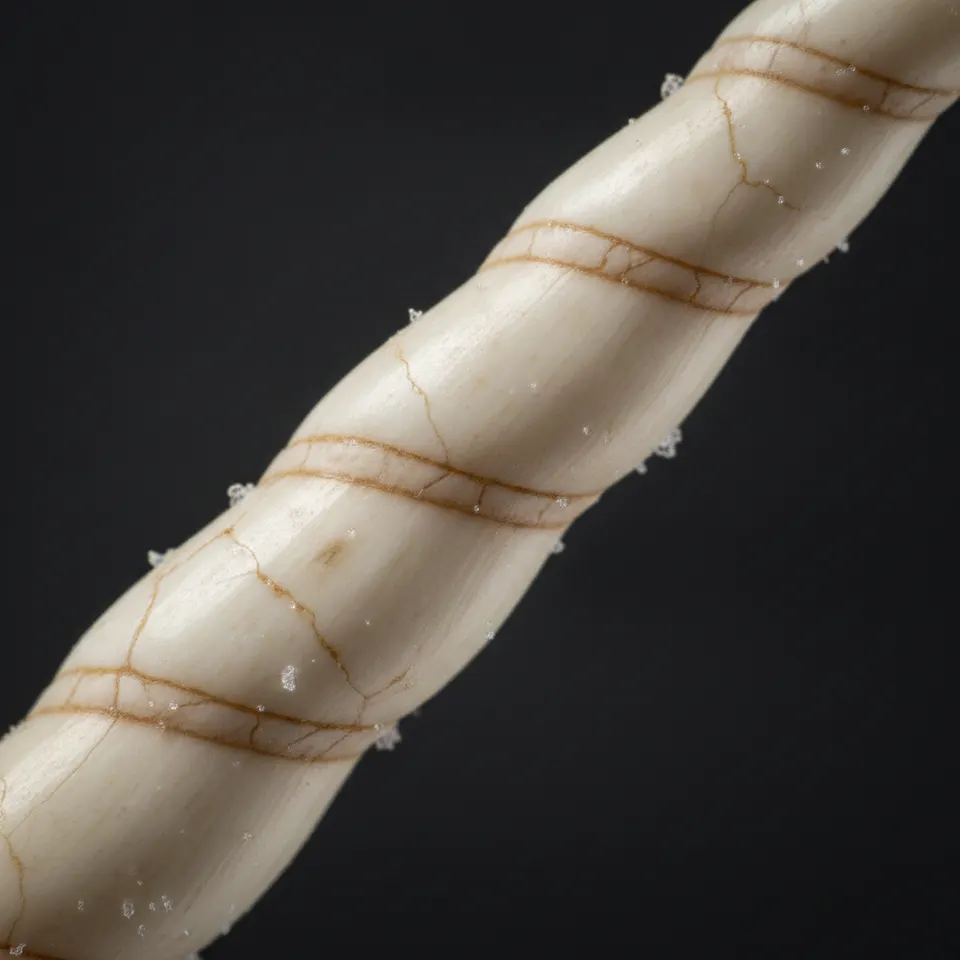
- 🔬 The Narwaliger's spiraled tusk, an elongated canine tooth, is not only a weapon but also a highly sensitive sensory organ, capable of detecting changes in water pressure, temperature, and salinity, aiding in navigation and hunting.
- 🔬 Their thick, double-layered fur is remarkably insulating and water-repellent. When submerged, the outer layer flattens, becoming streamlined and almost hydrodynamic, while the dense undercoat traps air, providing buoyancy and warmth.
- 🔬 Narwaligers are known to engage in 'ice-ramming,' using their powerful bodies and tusks to shatter thick sheets of ice, allowing them to access new hunting grounds or create escape routes from larger marine predators.