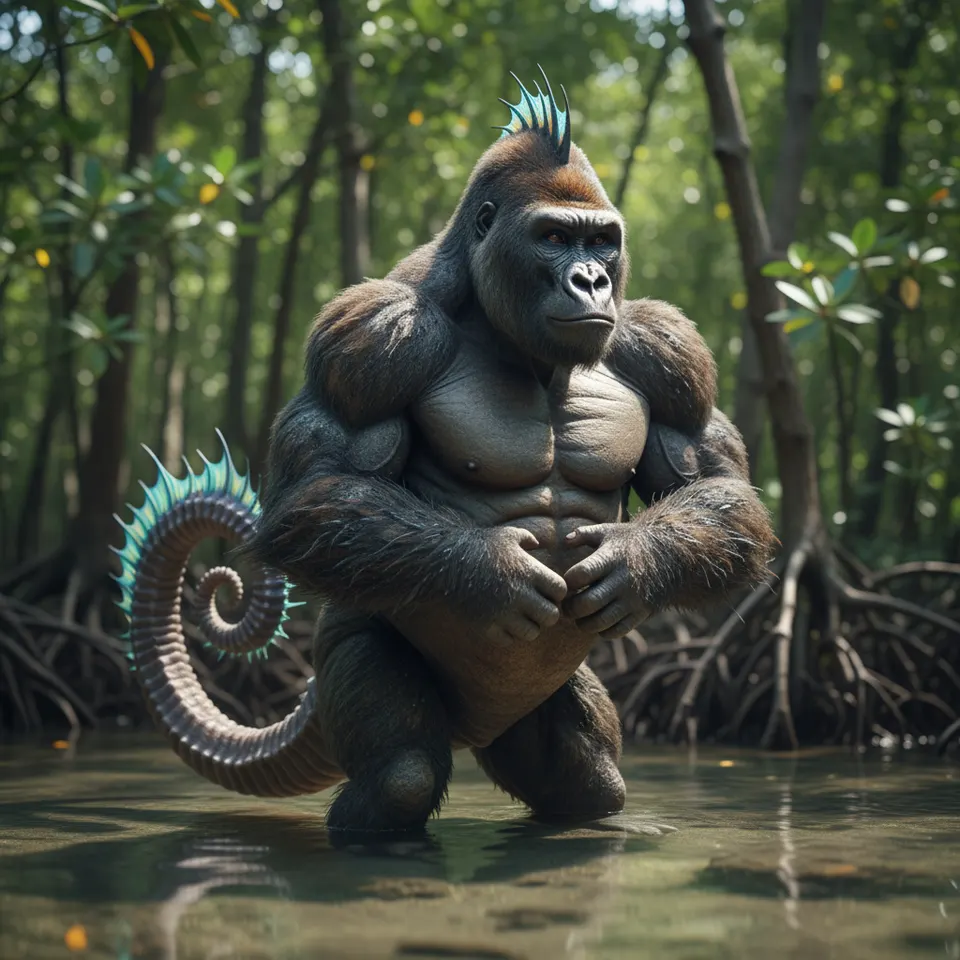
Seagorrilla
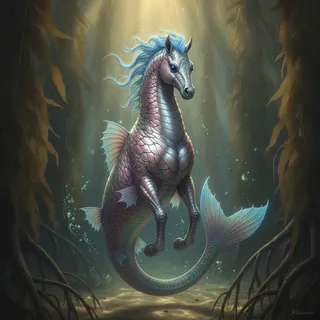
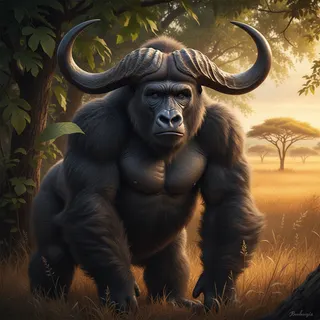
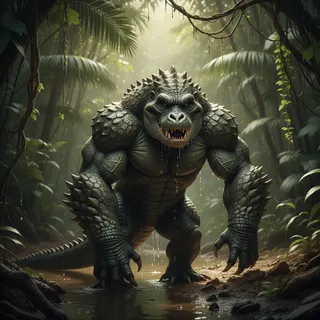
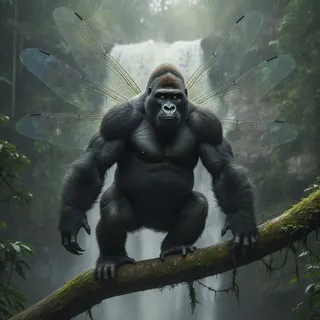
Gorillopithecus hippocampi
Stats
Behavior
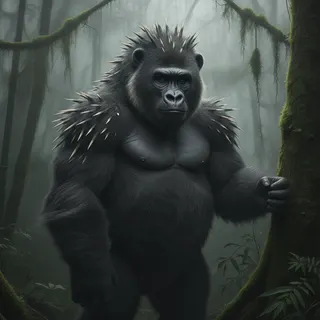
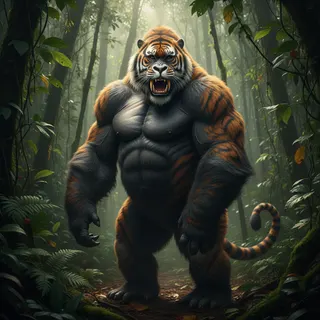
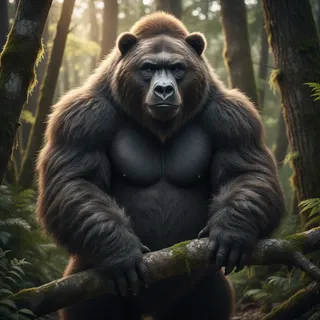
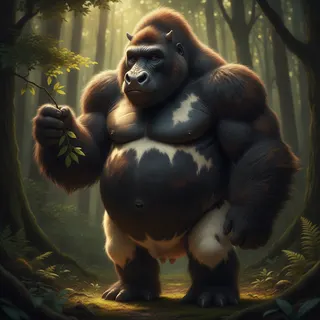
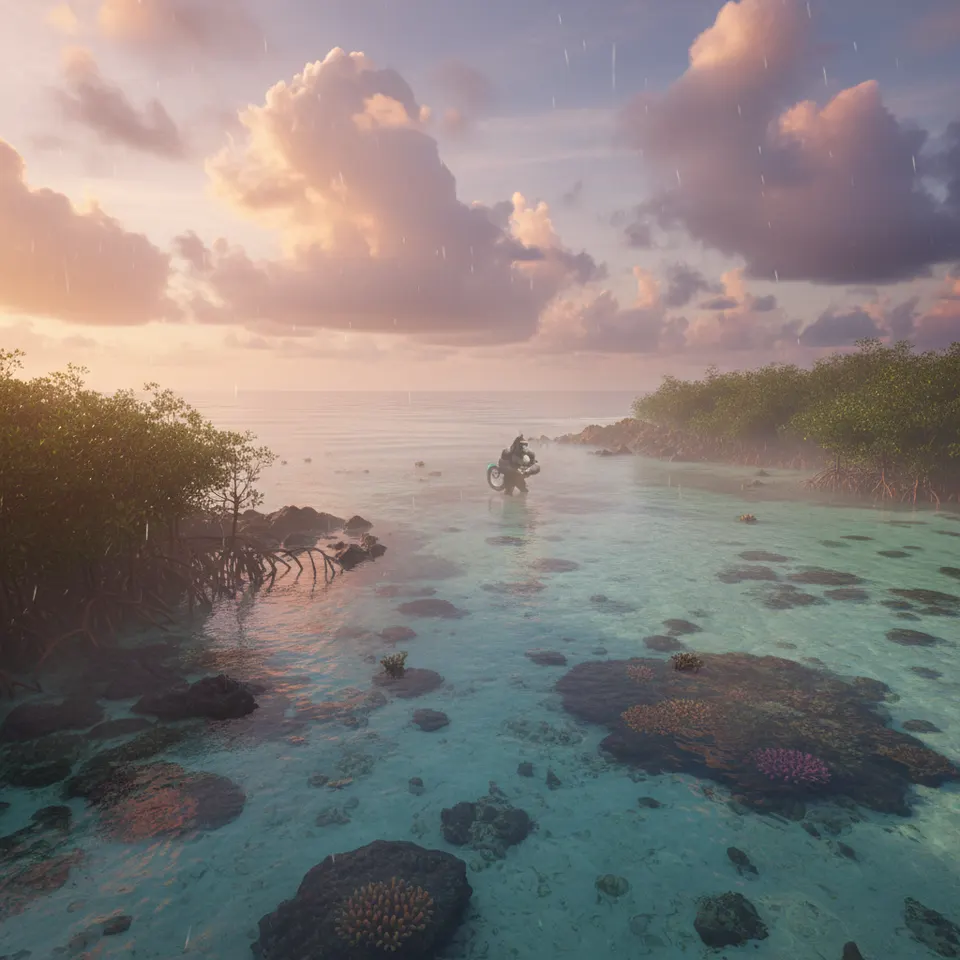
Seagorrillas are highly intelligent and surprisingly gentle creatures, forming small, matriarchal family units of 3-5 individuals. They spend their days foraging among the roots of mangrove trees for aquatic plants and small crustaceans, using their prehensile tails and dexterous fingers to manipulate their environment. Despite their imposing size, they are remarkably shy and elusive, often retreating into underwater caves or dense mangrove thickets at the first sign of human presence. Their communication involves a complex series of clicks, chirps, and low rumbles, audible both above and below the water.
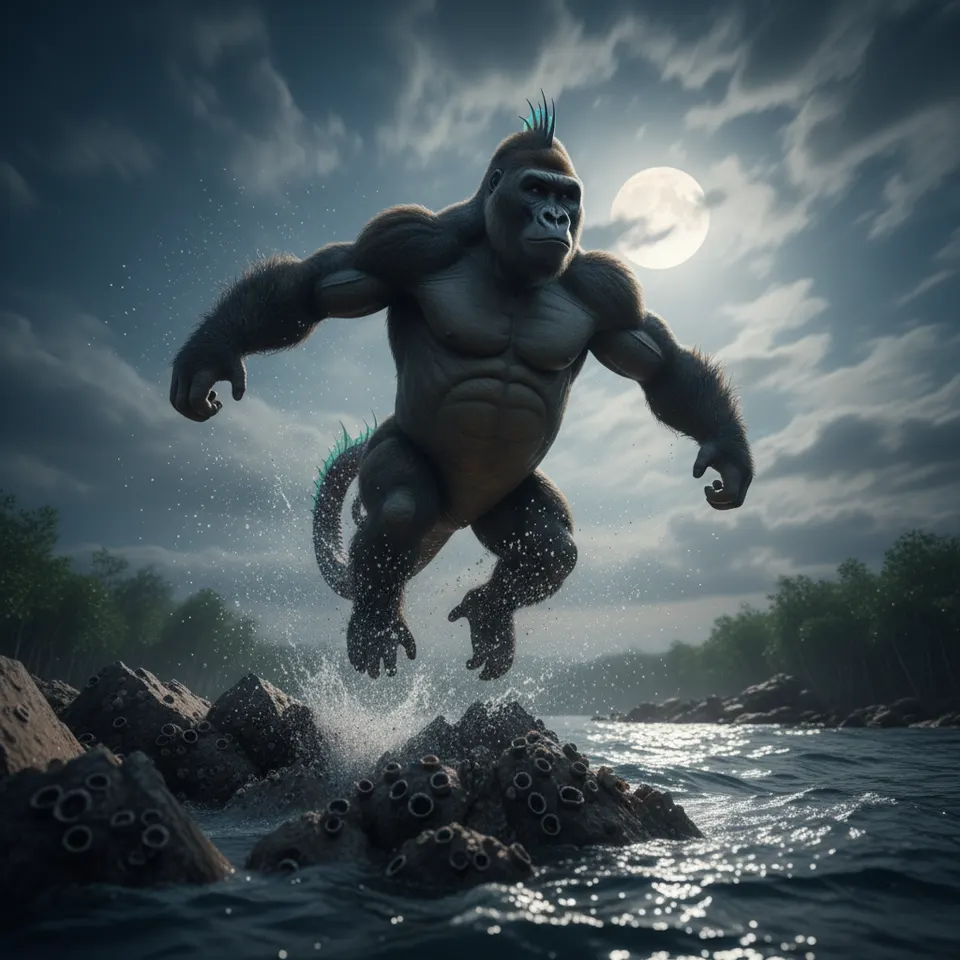
Known for their amphibious lifestyle, Seagorrillas navigate both the murky waters of estuaries and the dense coastal jungles with equal ease. They are powerful swimmers, using their muscular forearms and webbed hands for propulsion, while their coiled, prehensile tail aids in steering and grasping onto submerged structures. At night, they typically nest in communal tree platforms woven from large leaves and branches, but also utilize underwater grottoes for refuge during storms or perceived threats. They exhibit tool use, often employing rocks to crack open shellfish or sticks to prod for food hidden in sediment.
Fun Facts
- 🔬 Male Seagorrillas are responsible for carrying the fertilized eggs in a specialized abdominal pouch, similar to their seahorse lineage, until the young are ready to hatch.
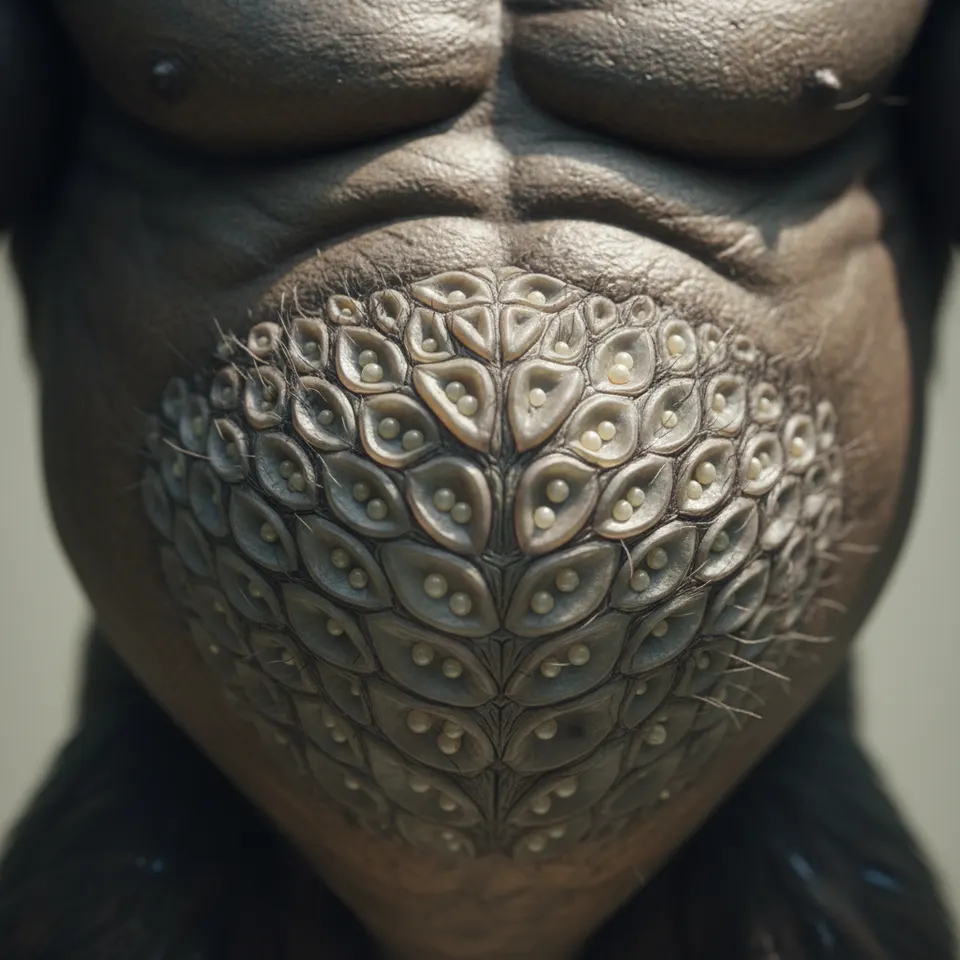
- 🔬 Their skin is a mosaic of tough, gorilla-like hide on the torso and limbs, transitioning to an iridescent, scaly texture on their powerful, prehensile tail and forearms, allowing for camouflage in both terrestrial and aquatic environments.
- 🔬 A unique respiratory system allows them to hold their breath for up to an hour while underwater, yet also breathe air efficiently on land, making them perfectly adapted to their transitional habitat.