Gorrusk
Primatus marinus tuskus
Stats

Behavior
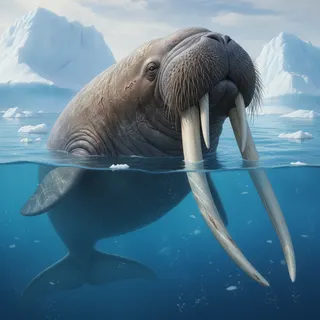
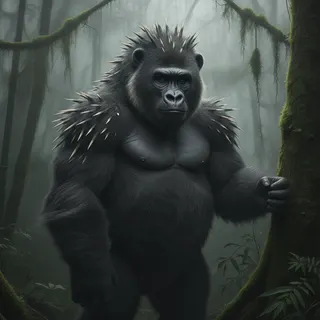
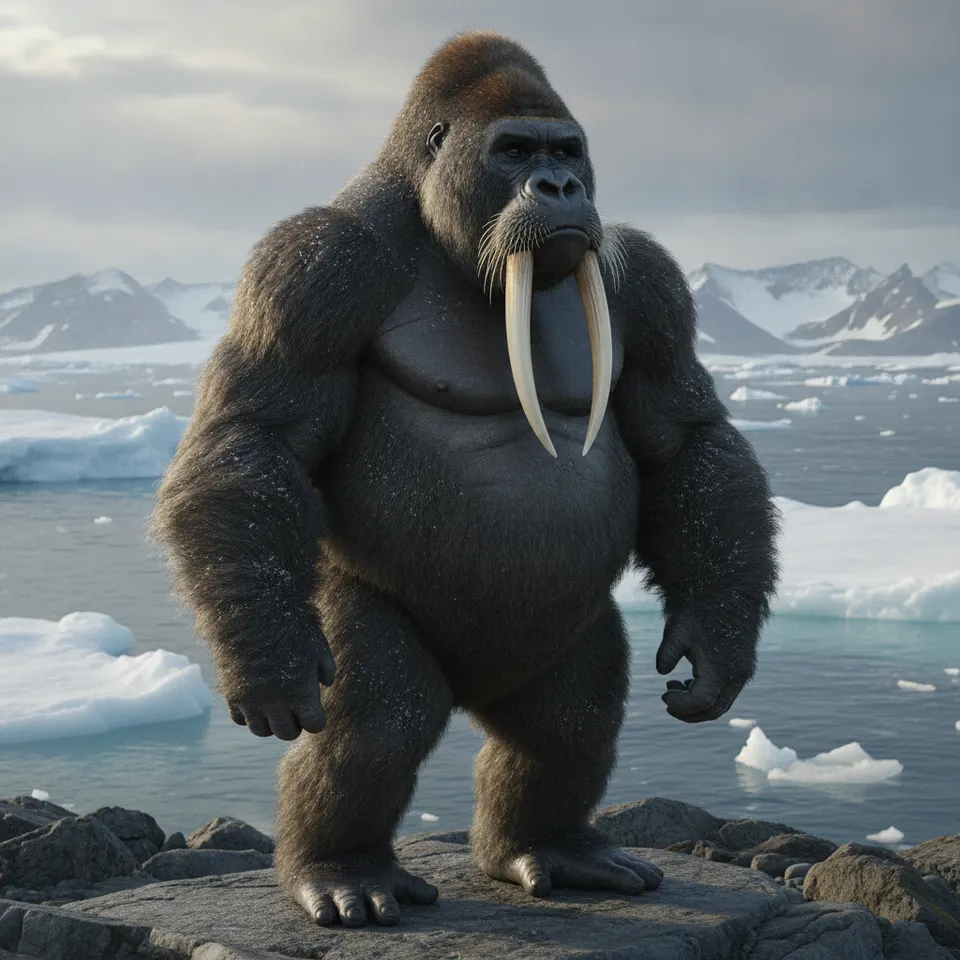
The Gorrusk is a creature of immense power and surprising grace. On land, it moves with a deliberate, lurching gait, its powerful forelimbs capable of shattering ice or uprooting small trees. Despite its size, it exhibits the deep intelligence and complex social interactions of its primate ancestry, often seen in small, close-knit family groups. Its vocalizations are a haunting blend of deep, guttural rumbles and sharp, piercing barks, punctuated by thunderous chest-beating displays.

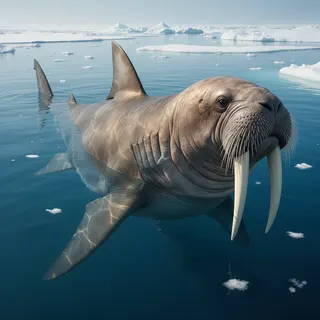
Primarily found along the frigid coastlines of the Arctic and Subarctic, Gorrusks spend their days foraging in shallow, icy waters, using their formidable tusks to excavate marine invertebrates from the seabed. They are superb swimmers, their thick blubber insulation and dense fur allowing them to thrive in temperatures that would kill most other primates. They haul themselves onto rocky outcrops or ice floes to rest, digest their meals, and nurse their young, always vigilant for predators.
Fun Facts
- 🔬 Gorrusk tusks, which can grow up to 3 feet long, are used for digging shellfish, defending against polar bears, and as anchors to haul their massive bodies onto slippery ice.

- 🔬 They possess a remarkable sense of smell, capable of detecting buried clams and mussels even under several feet of sediment or snow.
- 🔬 A Gorrusk's fur is actually two layers: a dense, waterproof undercoat and a longer, shaggier outer layer that provides additional insulation and camouflage.
- 🔬 Young Gorrusks are known to engage in playful 'tusk-sparring' as a way to develop strength and social bonds within their family group.