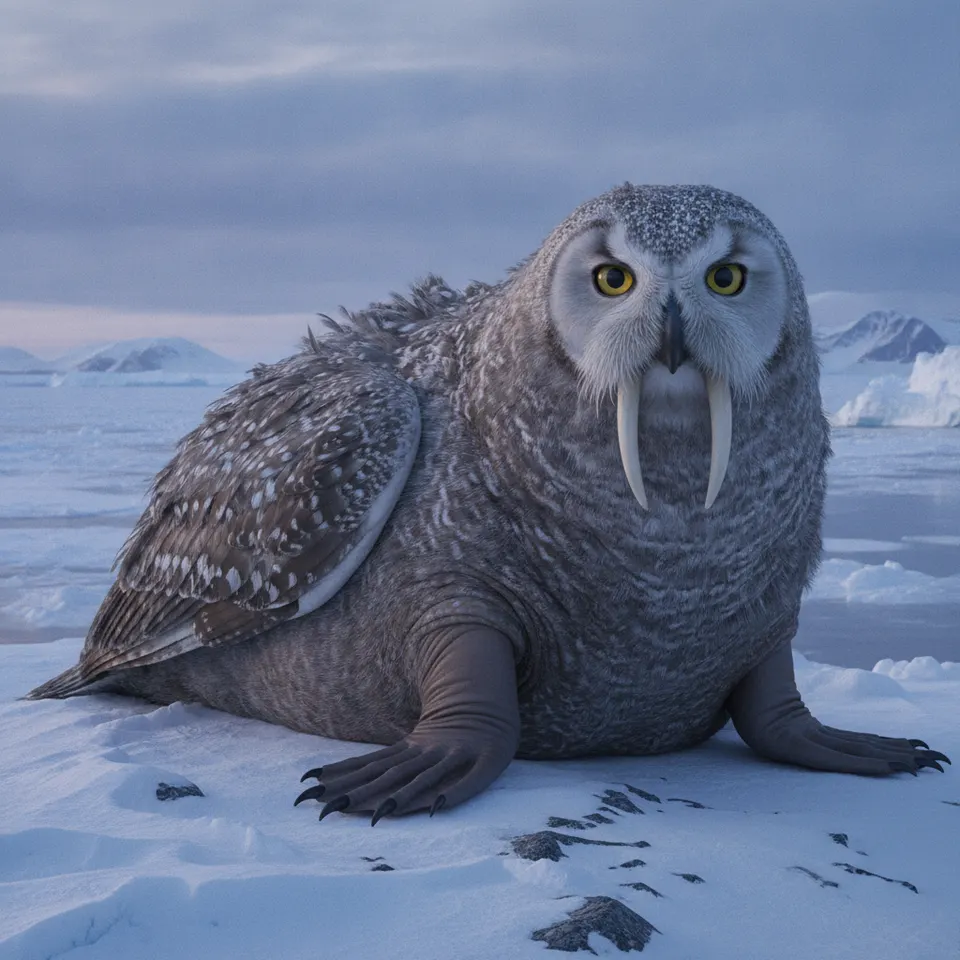
Hootusk
Strix odobenus borealis
Stats

Behavior
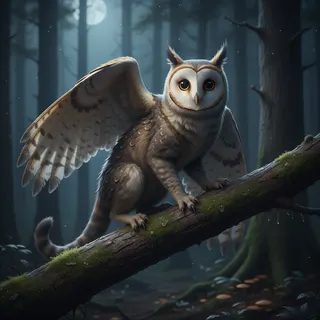
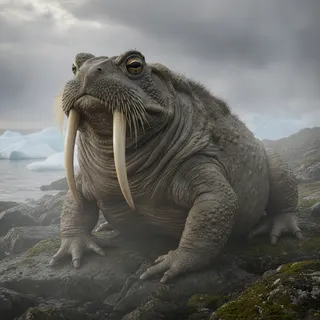
The Hootusk is a master of its frigid environment, exhibiting a unique blend of silent aerial predation and powerful aquatic foraging. By night, it soars with an owl's characteristic stealth, its massive feathered wings allowing for near-silent flight over frozen landscapes. During the day, it often rests on ice floes or rocky outcrops, or dives gracefully into the icy depths, using its powerful flippers and tusks to dislodge shellfish from the seabed. They are largely solitary creatures, coming together only briefly for mating.
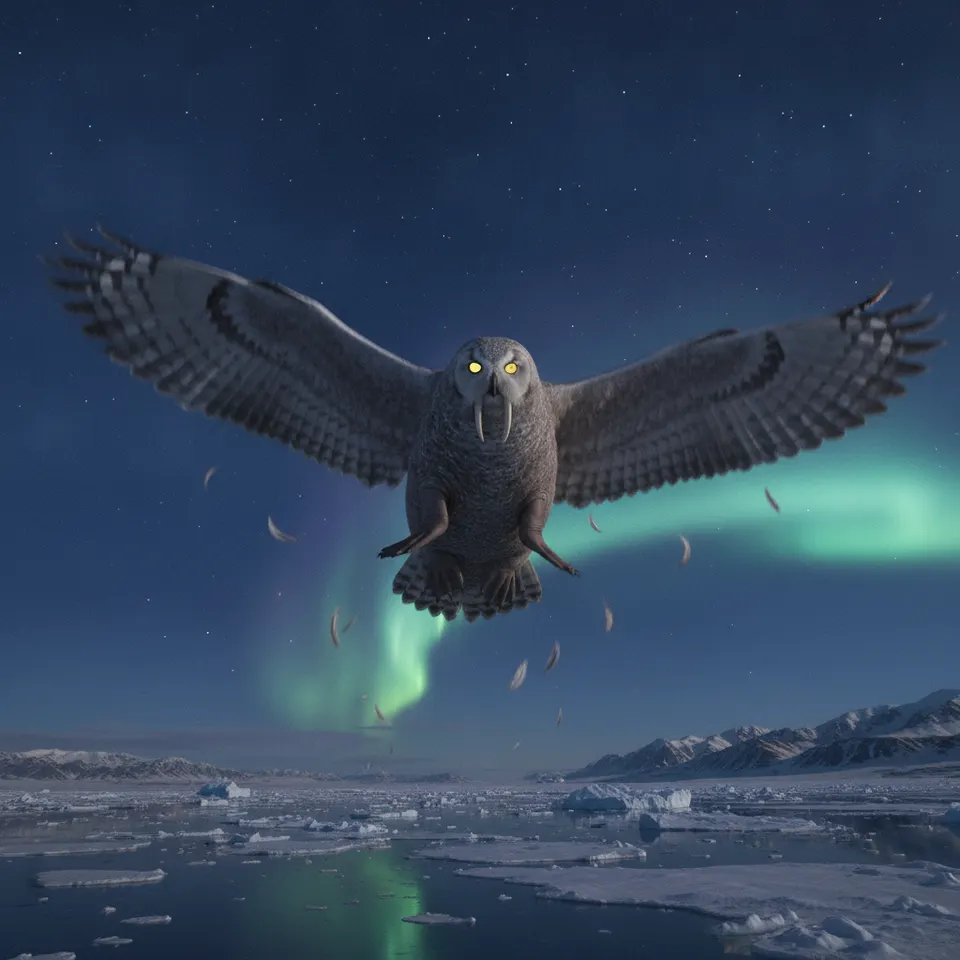
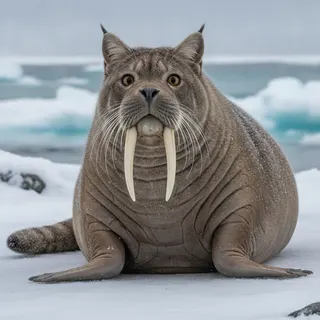
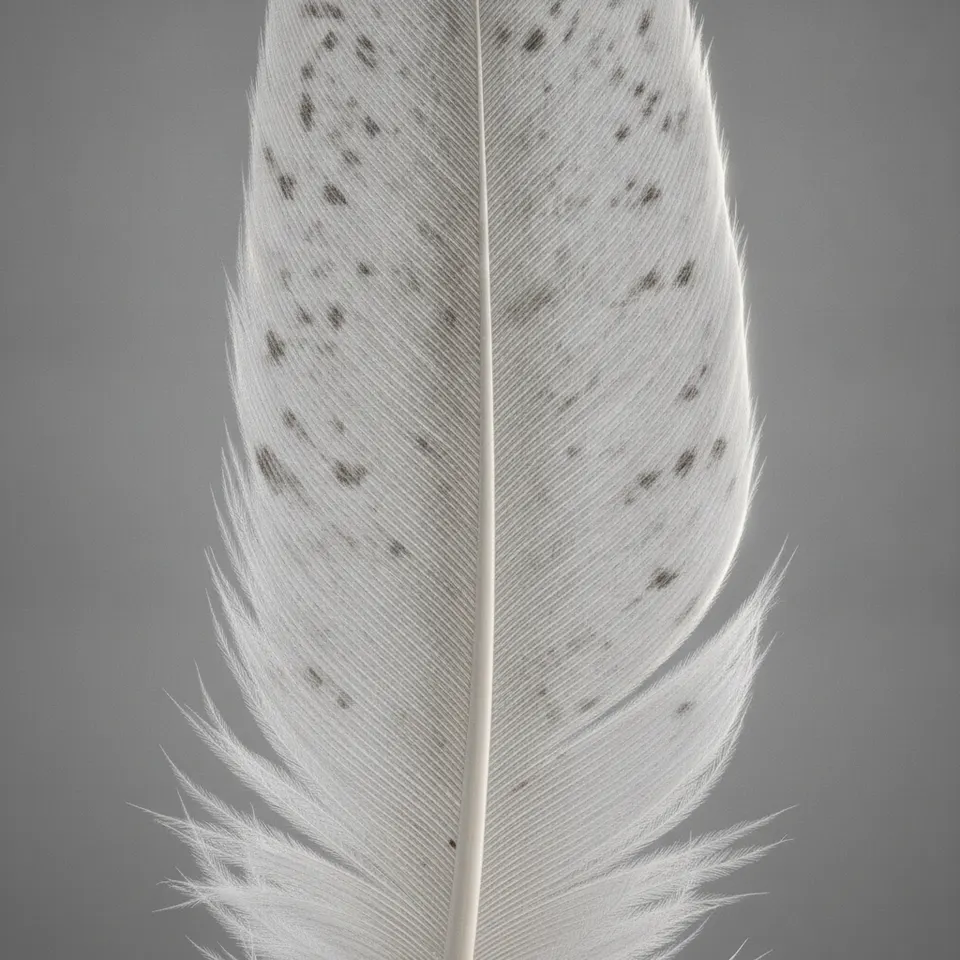
Their dual nature allows them to exploit a wide range of food sources. While their keen owl-like vision aids in spotting prey from above, their walrus-like whiskers (vibrissae) are incredibly sensitive, used to detect prey in murky waters or under ice. They create insulated nests in cliffside caves or burrows dug into snow drifts, lined with their own molted feathers and moss, offering protection from the harsh elements.
Fun Facts
- 🔬 The Hootusk's 'hoot' is a surprisingly deep, resonant bellow that can carry for miles across the tundra, often mistaken for distant ship horns or the sounds of ice cracking.
- 🔬 Its tusks, made of dense bone, are not only for foraging but also used to help it grip slippery ice while climbing and as a formidable defense against larger arctic predators like polar bears.
- 🔬 Despite its large size, the Hootusk is remarkably agile in the air, capable of executing swift dives and sudden turns, thanks to its powerful flight muscles and semi-hollow bones.