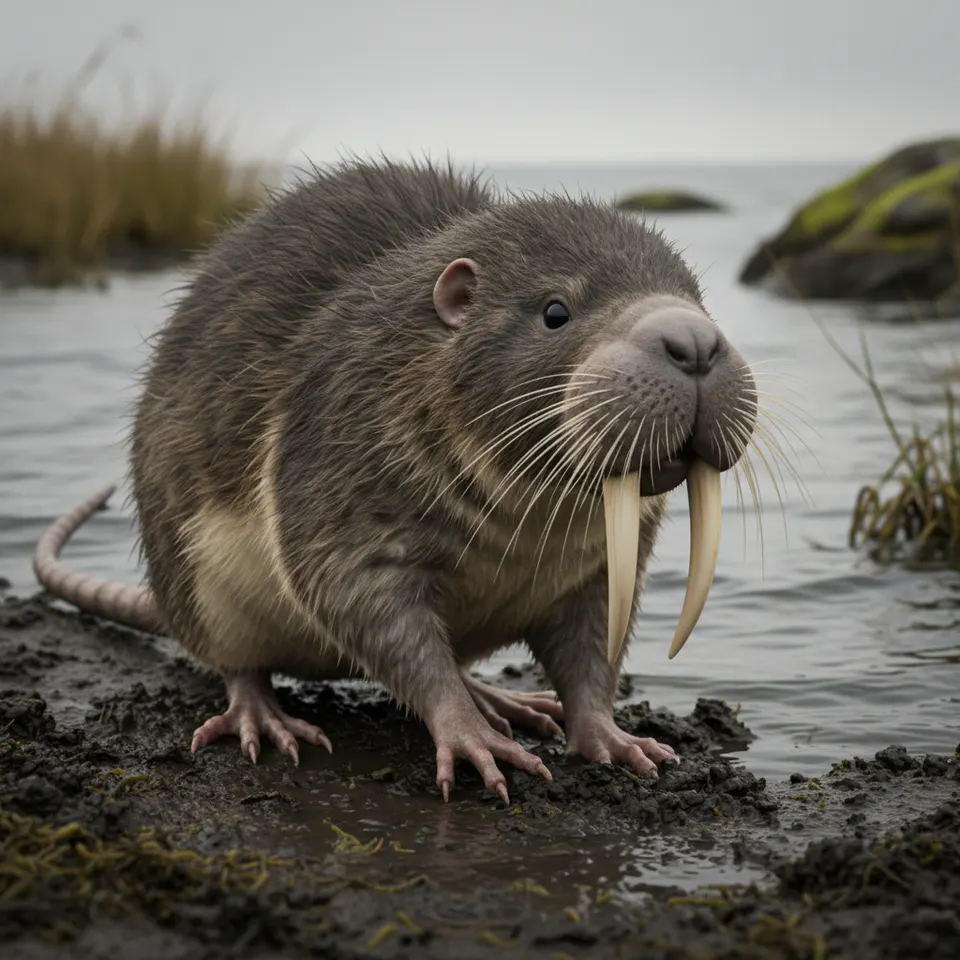
Tuskrat
Murmus dentigerus
Stats

Behavior
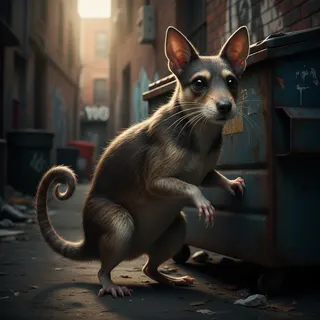
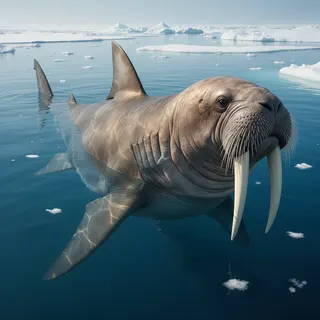
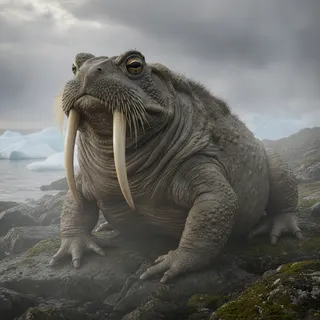
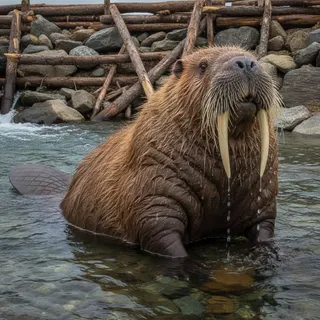
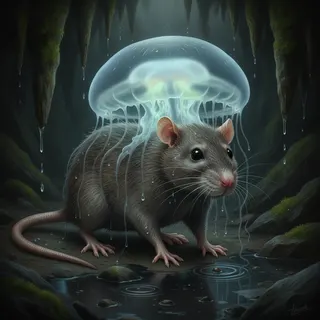
Tuskrats are highly social creatures, living in tight-knit colonies of 10-20 individuals within burrows dug into riverbanks or rocky shores. They are primarily crepuscular, active during dawn and dusk, when they forage for food and engage in playful interactions. Despite their formidable tusks, they are generally timid and quick to retreat from perceived threats, though a cornered Tuskrat can deliver a surprisingly painful bite.

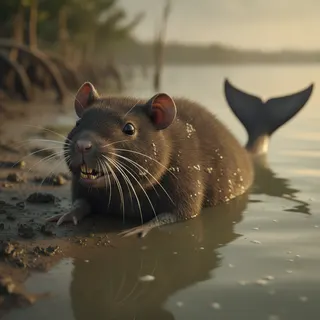
These fascinating hybrids are adept swimmers, using their webbed hind feet for propulsion and their long, flexible tails for steering. Their dense, waterproof fur provides excellent insulation in chilly waters. On land, they are surprisingly agile, using their tusks not just for digging up clams and mussels from soft sediment, but also for clambering over slippery rocks and occasionally as leverage when exploring new terrain.
Fun Facts
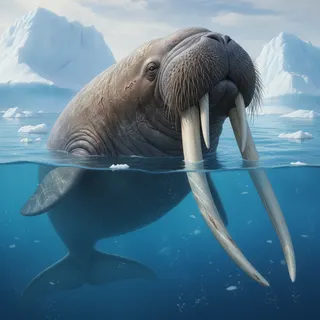
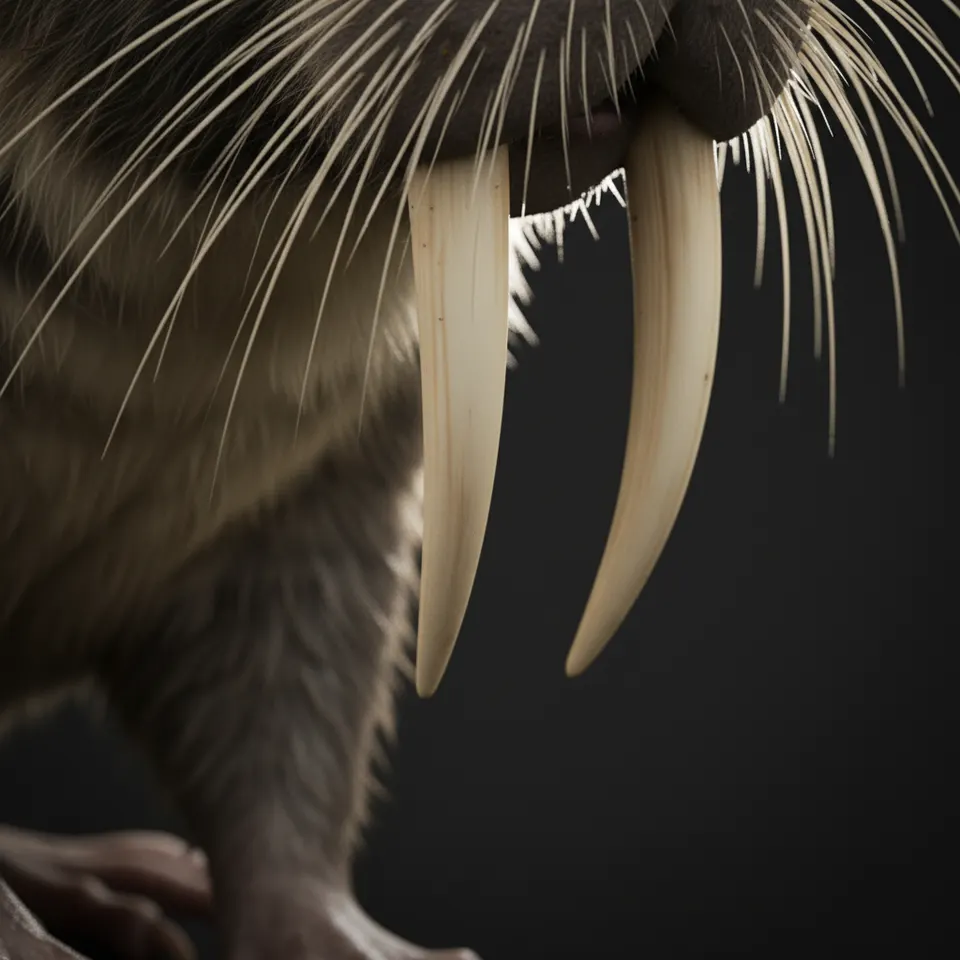
- 🔬 The Tuskrats' miniature tusks, typically 3-5 inches long, grow continuously throughout their lives and are used for digging, defense, and establishing social dominance within the colony.
- 🔬 Despite their rat-like appearance, their blubber layer, inherited from their walrus lineage, allows them to endure extremely cold water temperatures without succumbing to hypothermia.
- 🔬 Tuskrats communicate through a series of high-pitched squeaks, chitters, and low, guttural rumblings, often accompanied by synchronized tusk-tapping rituals during mating season.