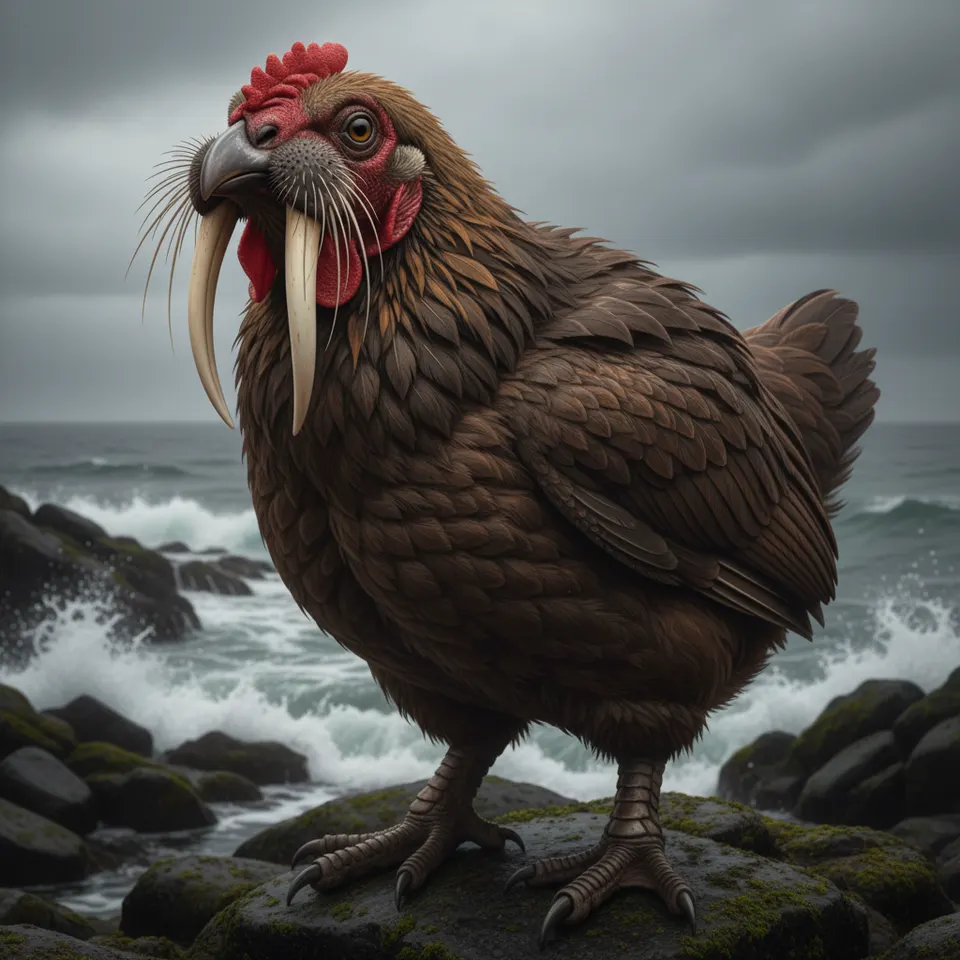
Walcoq
Gallus Odobenus maritimus
Stats

Behavior
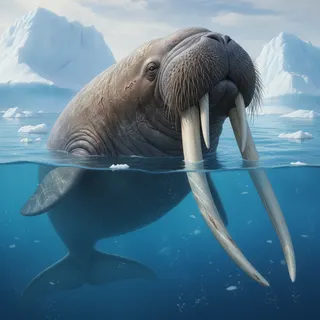
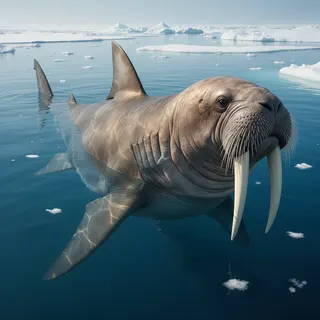
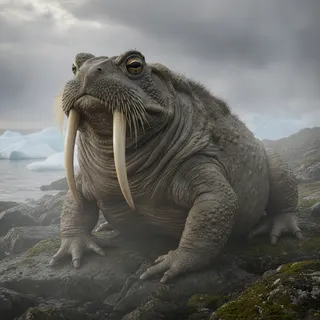
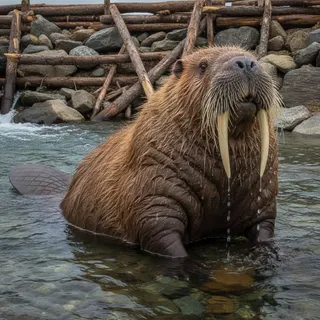
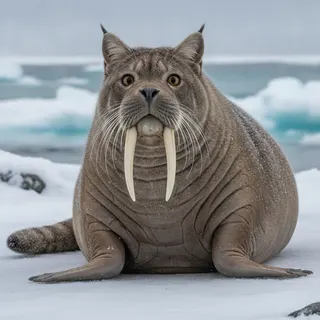
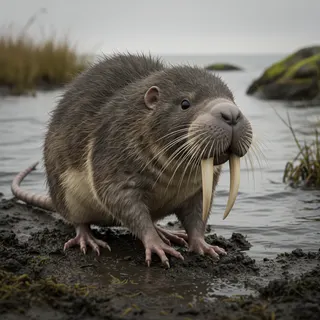
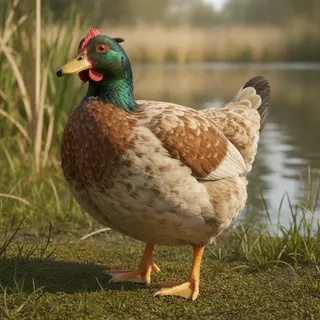
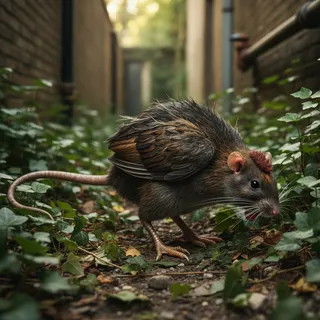
The Walcoq is a fascinatingly peculiar creature, known for its gregarious nature and surprisingly nimble movements despite its bulk. They live in small, tightly-knit 'clutches' or 'gaggles' of 5-10 individuals, communicating through a complex array of clucks, squawks, and guttural rumbles reminiscent of both their progenitors. During the breeding season, males engage in elaborate tusk-clashing rituals and vibrant comb displays to attract mates.

Primarily dwelling in the intertidal zones, Walcoqs spend their days foraging along rocky shores and shallow waters, using their powerful tusks to unearth clams and mussels from the seabed, and their webbed, chicken-like feet to navigate slippery rocks. At night, they seek elevated rocky outcrops or sturdy sea caves to roost, often huddling together for warmth against the coastal winds. They are territorial, especially around their nesting sites, which are typically communal on high, inaccessible cliffs overlooking the ocean.
Fun Facts
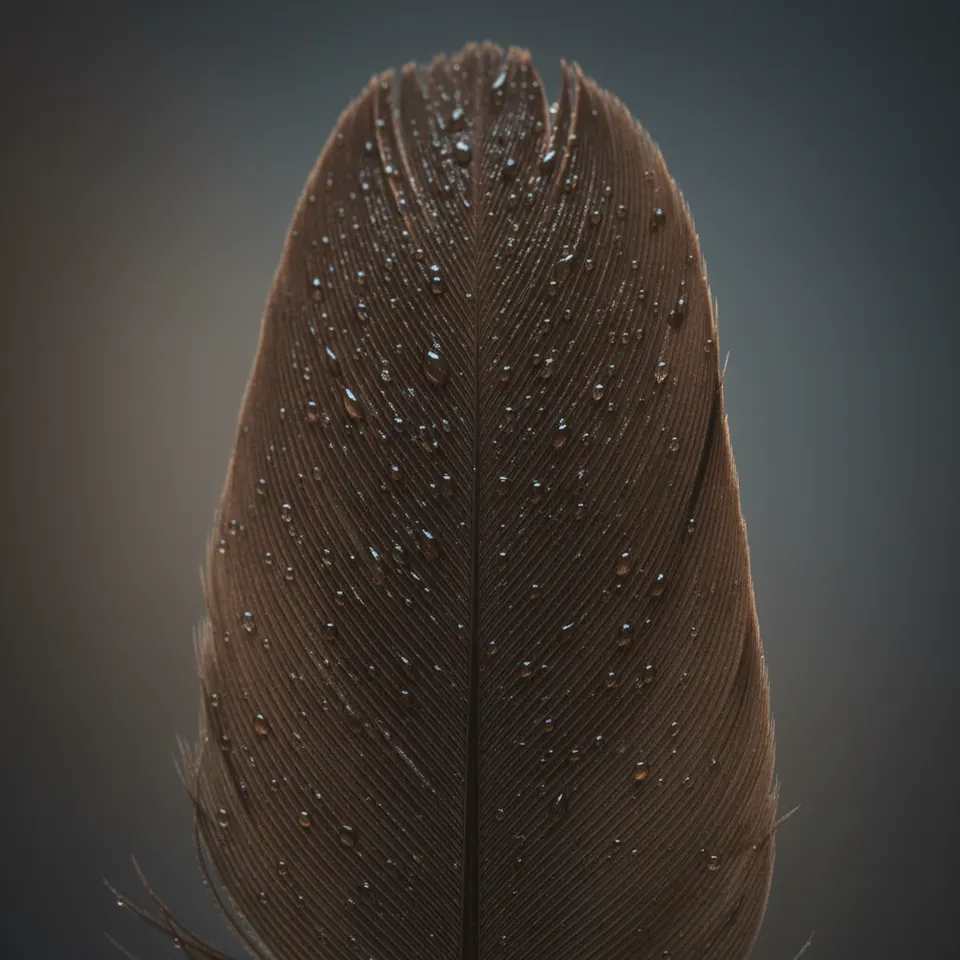
- 🔬 A Walcoq's feathers are naturally infused with a unique, oily secretion that makes them completely waterproof, allowing them to dive for extended periods in icy waters.
- 🔬 Their prominent tusks, which can grow up to a foot long, are not only used for foraging but also serve as status symbols within their flocks and are crucial for defense against predators like large marine birds or coastal carnivores.
- 🔬 Walcoqs lay remarkably large, olive-green eggs with incredibly hard shells, often burying them in warm, volcanic sands near the coast to aid incubation, a behavior thought to be a remnant of their ancestral chicken instincts.