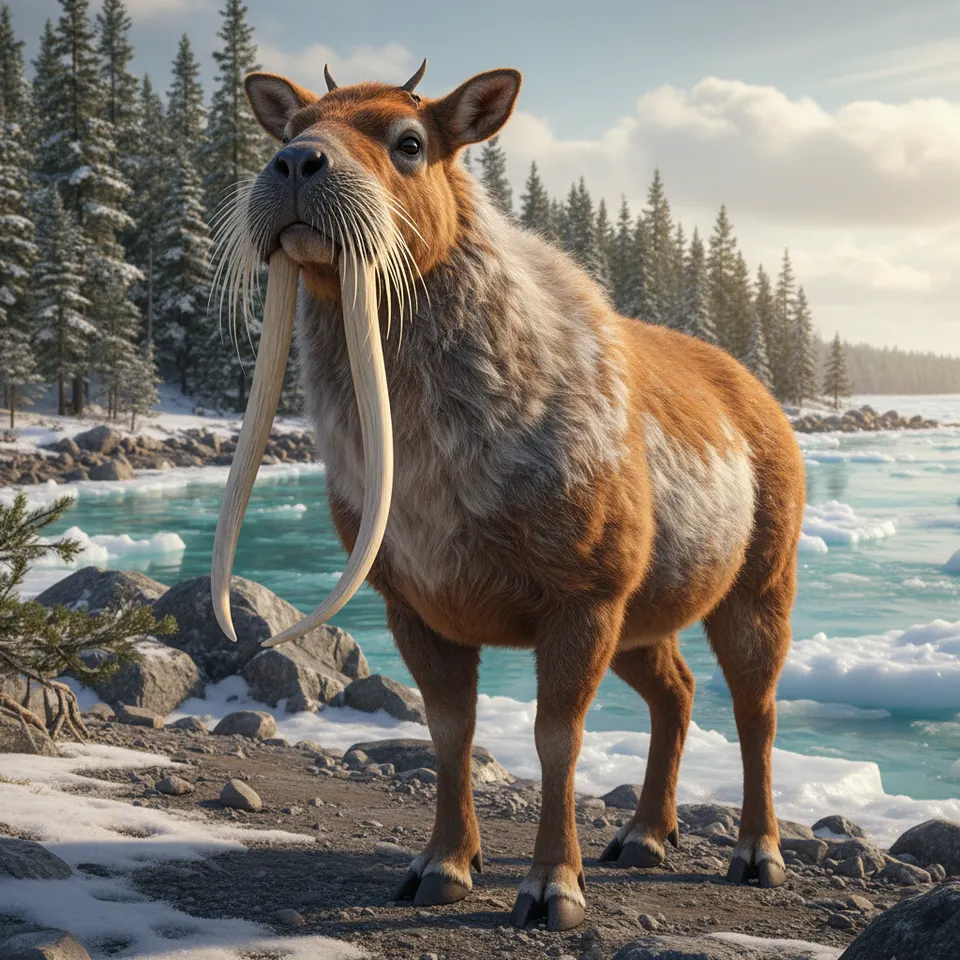
Tuskbuck
Odobenocervus borealis
Stats

Behavior
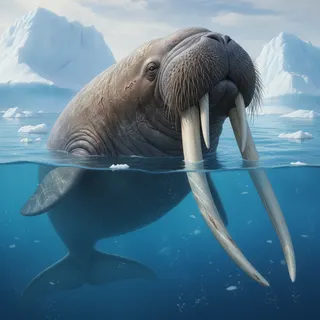
Tuskbucks are migratory creatures, spending the warmer months foraging in coastal forests and estuaries, and migrating to colder, ice-free coastal waters in winter. They are generally solitary or found in small family groups, known for their surprisingly agile movements in water, where they often display playful antics similar to seals. On land, their gait is a unique waddle, but they can charge surprisingly fast when threatened.

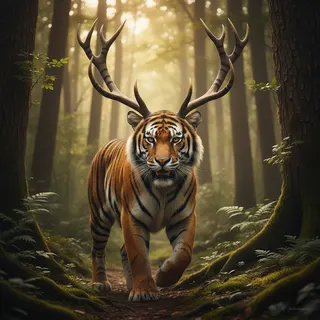
Males develop impressive tusks, which they use for defense against predators like polar bears and for digging up shellfish from the seafloor. Unlike deer, their 'antlers' are permanent tusks. Females also possess tusks, though typically smaller. They communicate through a series of bellows, barks, and clicks, which can carry great distances across the water and through the forests. Breeding occurs on land in sheltered coves, with calves being born well-adapted to both aquatic and terrestrial environments.
Fun Facts
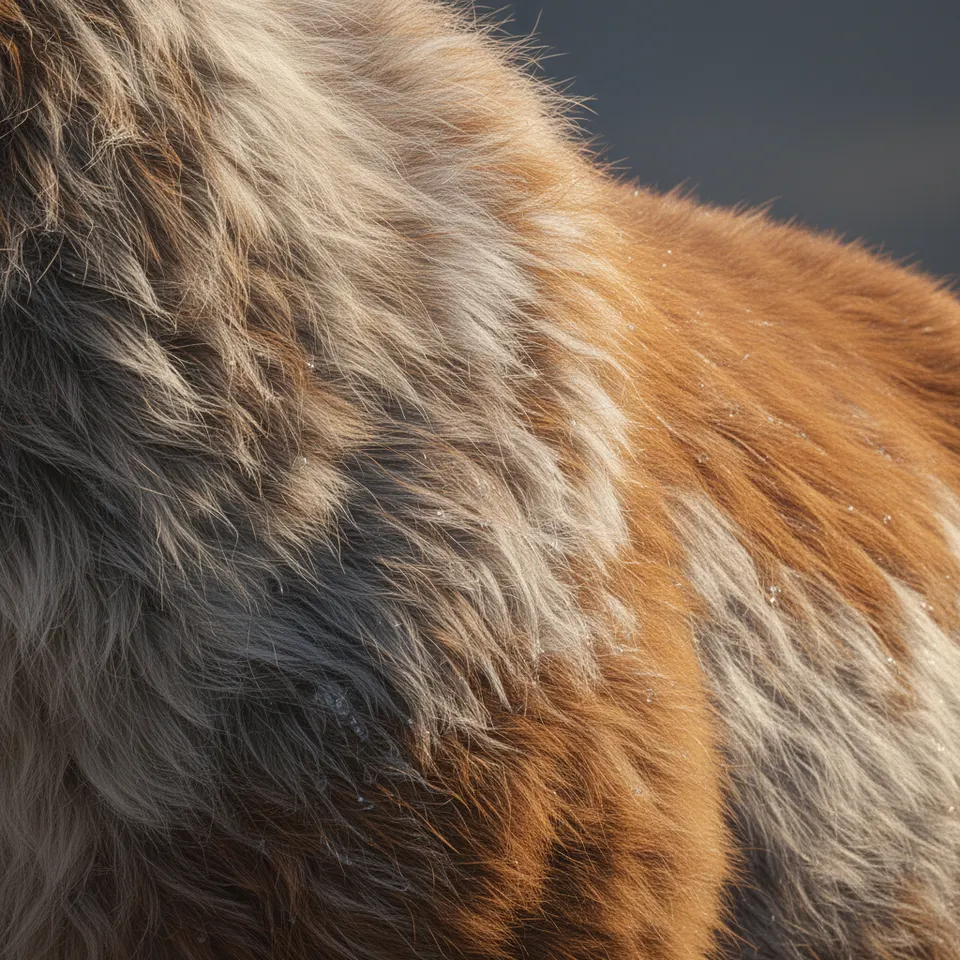
- 🔬 Their thick, waterproof fur changes color with the seasons, from a reddish-brown in summer to a mottled grey-white in winter, providing camouflage in their varied habitats.
- 🔬 Tuskbucks possess a unique scent gland near their eyes that secretes an oily substance, believed to help protect their eyes from saltwater and bright snow glare.
- 🔬 Despite their intimidating tusks, Tuskbucks are known to be quite curious, occasionally approaching research vessels or quiet campers, though always maintaining a respectful distance.