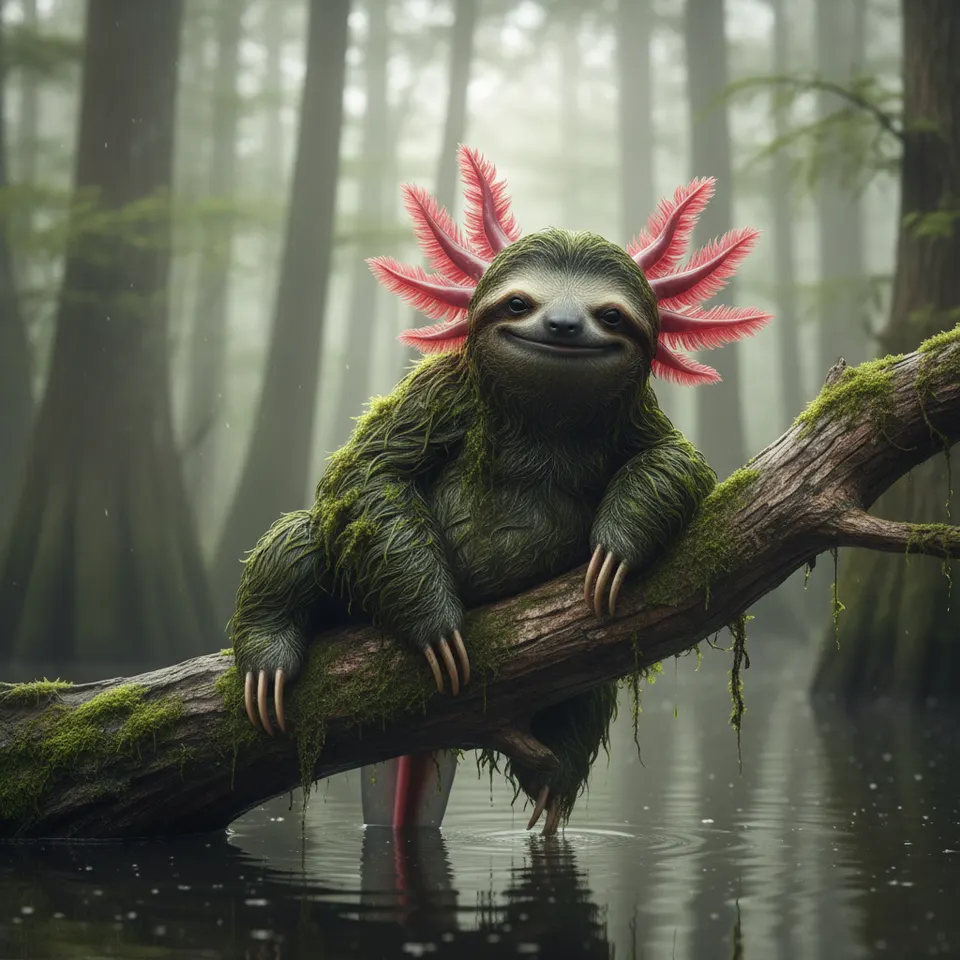
Axoloth
Ambystoma bradypodia
Stats

Behavior
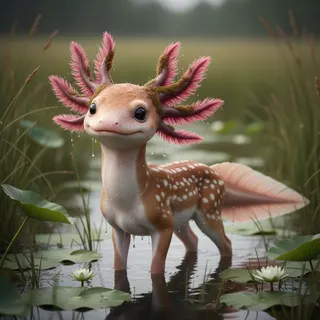
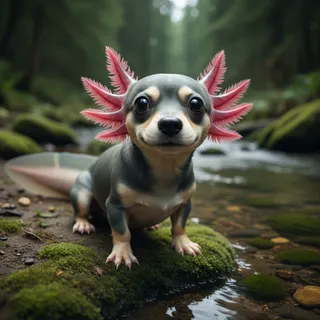
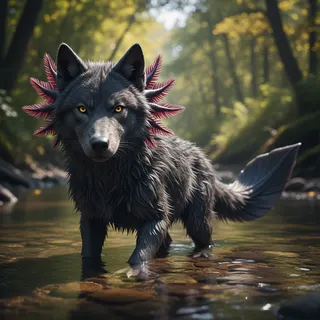
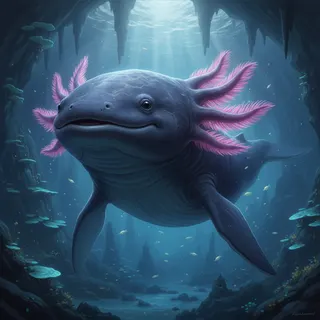
The Axoloth moves with an almost imperceptible slowness, a trait inherited from its sloth lineage, whether climbing through dense canopies or navigating its watery domain. While its terrestrial movements are deliberate and careful, its semi-aquatic adaptations allow for a graceful, undulating glide through murky waters. Its unique external gills enable prolonged submersion, allowing it to extract oxygen from both the water and the extremely humid air of its preferred habitats.

Primarily a solitary and nocturnal creature, the Axoloth spends its days in a state of deep torpor, often clinging upside down to moss-covered branches just above the waterline, or partially submerged in shallow pools and among submerged roots. Its powerful, webbed claws provide an unyielding grip on slick, algae-covered surfaces. Its exceptionally low metabolism, even by sloth standards, means it can go for extended periods without sustenance, often supplementing its diet with symbiotic algae growing within its fur.
Fun Facts
- 🔬 Its feathery external gills, much like those of an axolotl, are highly efficient at filtering oxygen from both aquatic and atmospheric environments, allowing the Axoloth to remain submerged for hours or even days at a time.
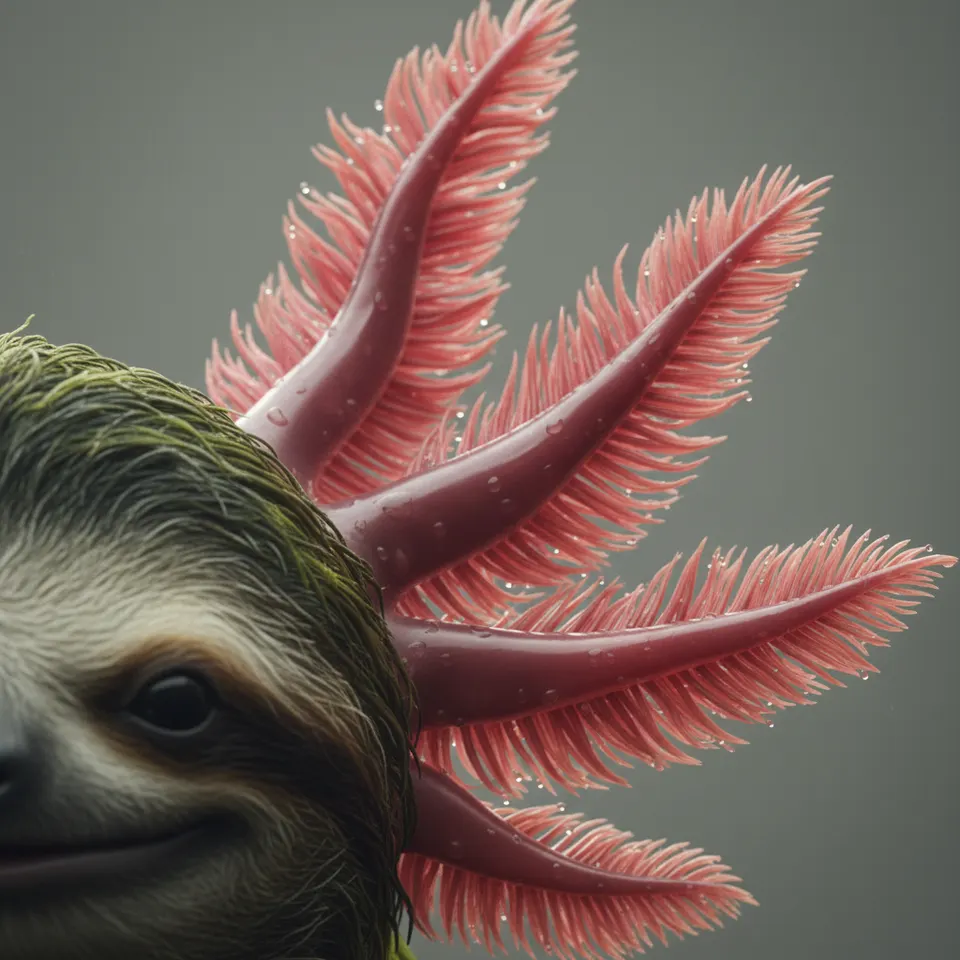
- 🔬 The Axoloth's shaggy, damp fur is a miniature ecosystem in itself, perpetually hosting various species of algae and moss, which not only provide excellent camouflage in its green, misty habitat but also serve as a supplemental food source during lean times.
- 🔬 Possessing one of the slowest metabolisms known in the cryptid world, the Axoloth's movements are often so glacially paced that it can be mistaken for a static part of its environment, earning it the nickname 'The Living Moss'.