The Lobth
Bradypus crustaceus
Stats

Behavior
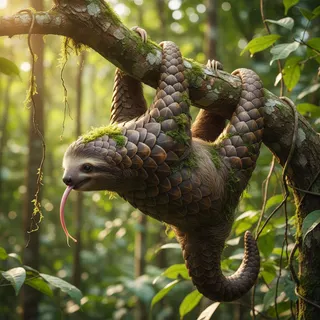
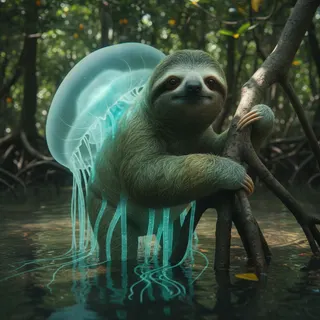
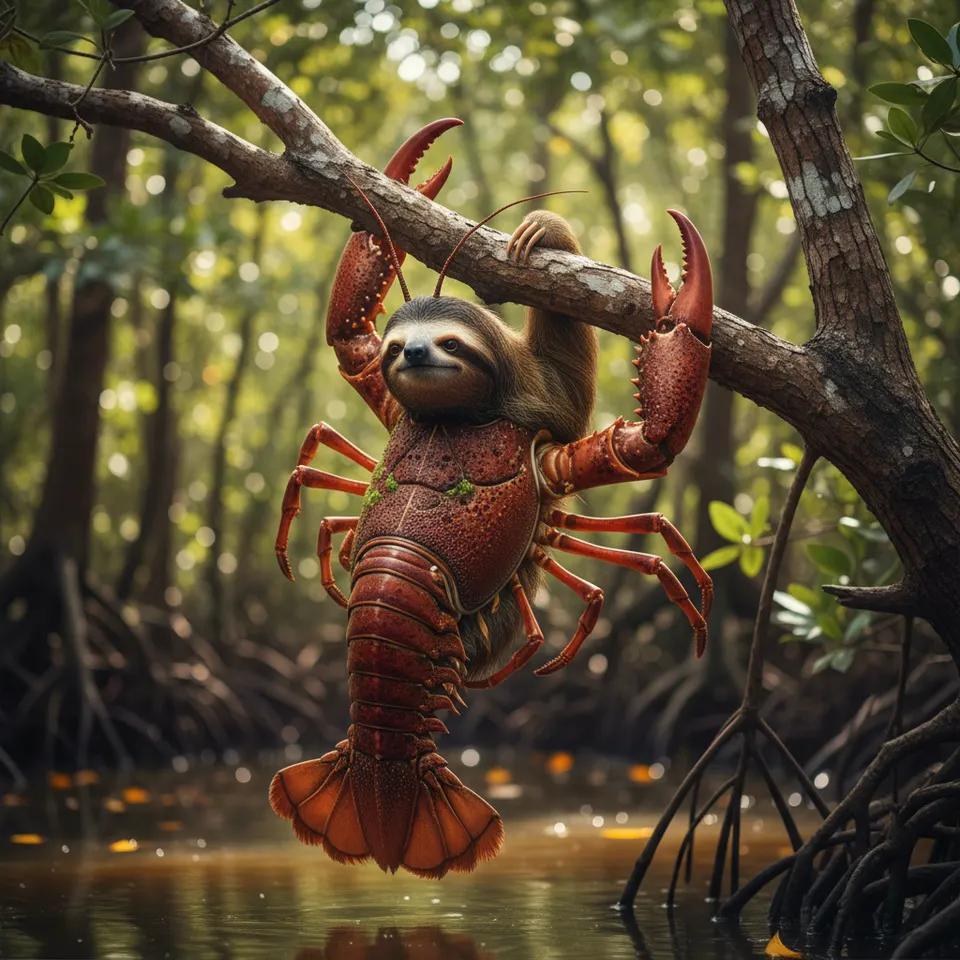
The Lobth is an extraordinarily slow-moving hybrid, inheriting the extreme leisure of its sloth ancestors while sporting the protective shell of a lobster. It spends the majority of its life clinging to mangrove branches, its powerful, multi-jointed claws, adapted from lobster pincers, allowing it to maintain an inverted grip for days on end. Movement is a deliberate, almost meditative process, each limb extension a precise, calculated effort to navigate the dense canopy or descend towards the water below. Its metabolism is incredibly low, enabling it to go extended periods without sustenance, much like a sloth.
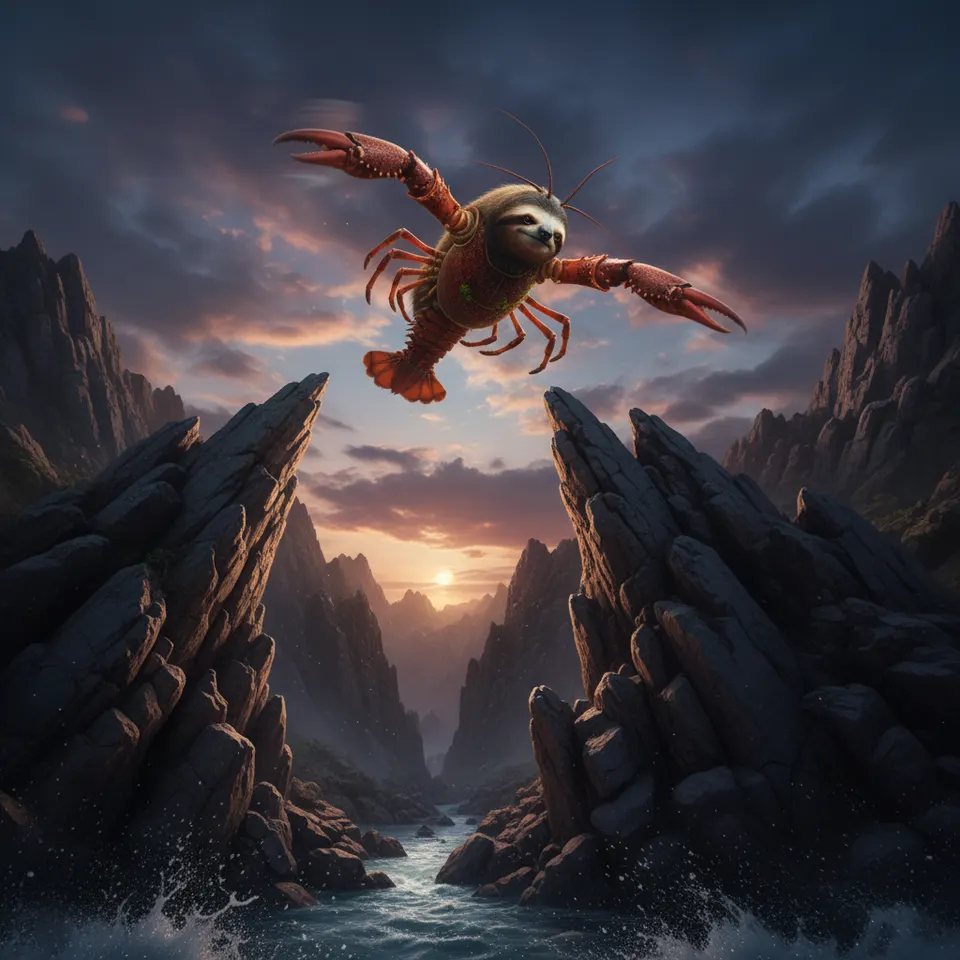
Primarily an arboreal creature, the Lobth ventures into the brackish waters of its mangrove habitat only for specific purposes, such as foraging for aquatic vegetation, small crustaceans, or during its vulnerable molting process. Its tough exoskeleton provides excellent camouflage among the gnarled roots and dappled sunlight, often appearing as just another moss-covered outgrowth. While largely solitary, Lobths are known to gather in small, temporary clusters during the molting season, offering each other a strange, silent form of mutual protection during their defenseless state.
Fun Facts
- 🔬 Unlike most crustaceans, the Lobth sheds its entire exoskeleton over a period of several days, a process during which it is highly vulnerable and hides deep within tree hollows or submerged roots.
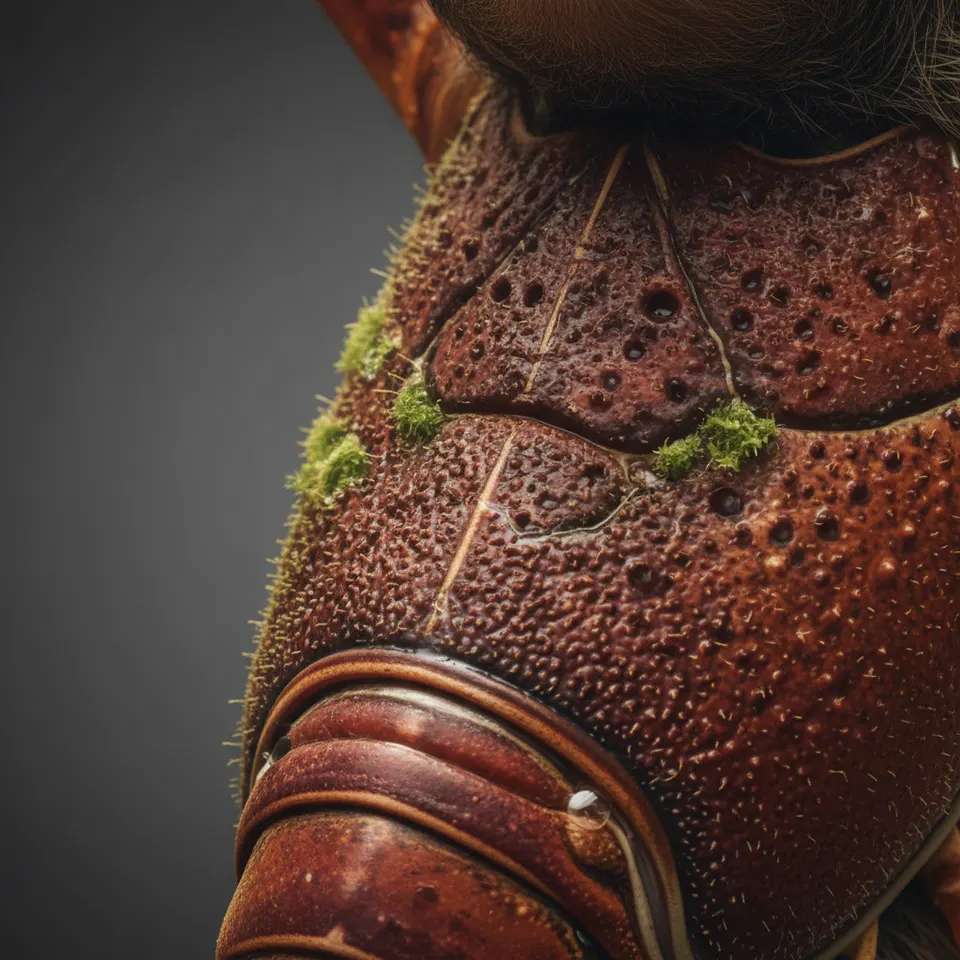
- 🔬 The green algae and moss that often grows on a Lobth's shell is not merely for camouflage; it forms a symbiotic relationship, with the Lobth occasionally 'grazing' on its own shell-bound flora.
- 🔬 Despite its formidable claws, the Lobth is incredibly gentle, using its pincers primarily for gripping branches and carefully tearing leaves, rather than aggressive defense, preferring to rely on its camouflage and slow movements to avoid predators.