Flamstork
Phoenicociconia rubens
Stats
Behavior
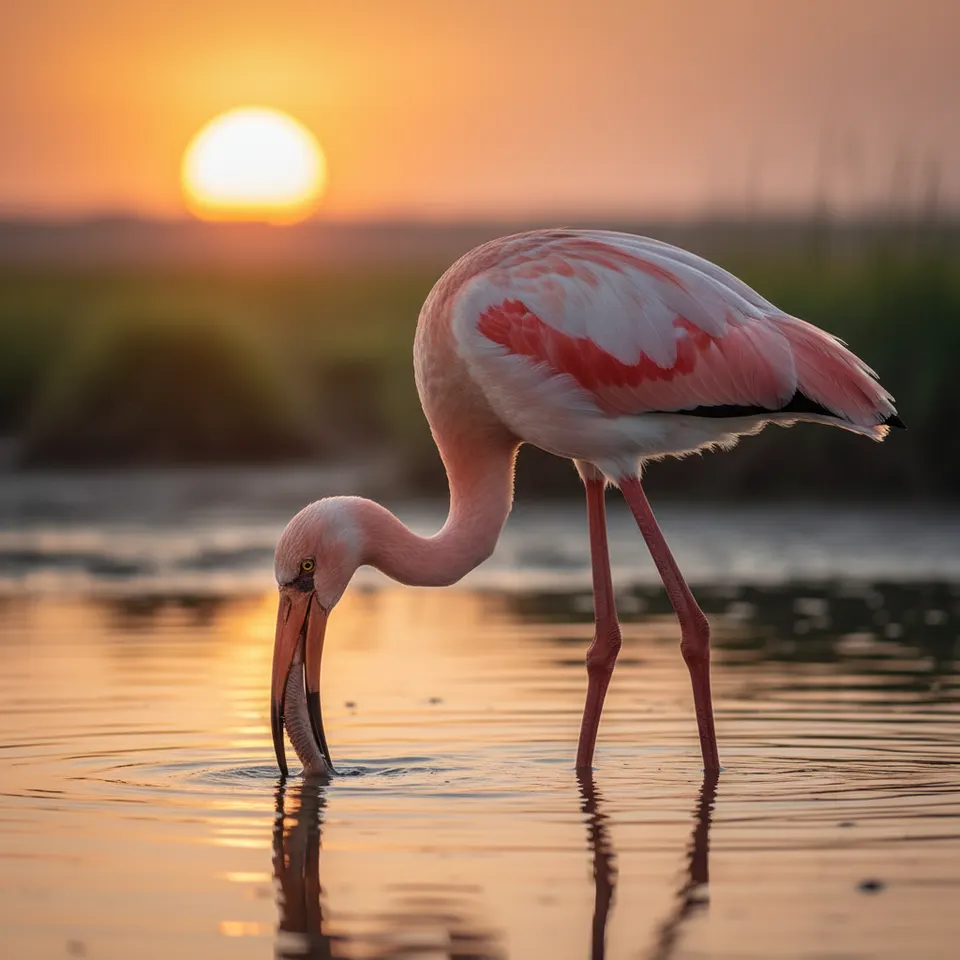
Flamstorks are highly social birds, often observed in large, colorful flocks that can number in the hundreds. They engage in elaborate synchronized courtship dances, a vibrant display of head-flagging, wing-saluting, and 'marching' in unison, culminating in the construction of large, elevated mud nests in colonies within protected wetland areas. Their foraging style is a unique blend, involving the characteristic head-down filter-feeding of flamingos, but also employing a more upright, stalking gait to snatch small prey from the shallows, akin to a stork.
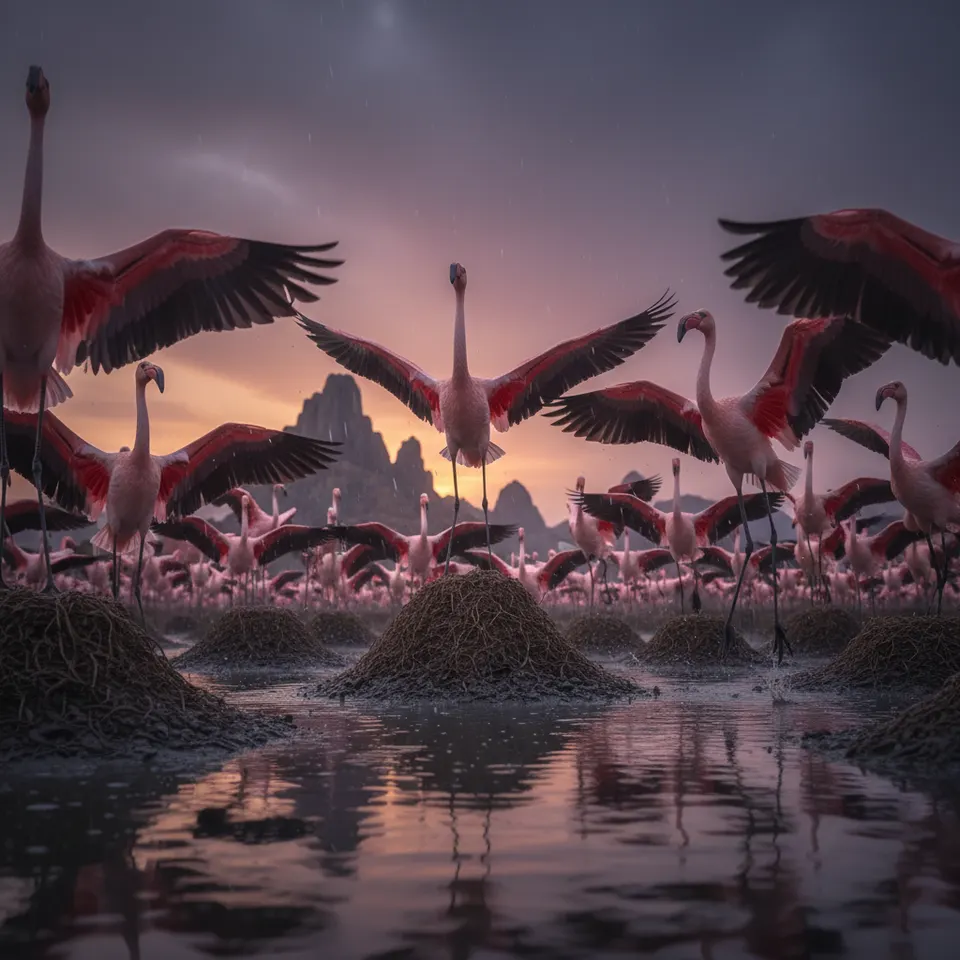
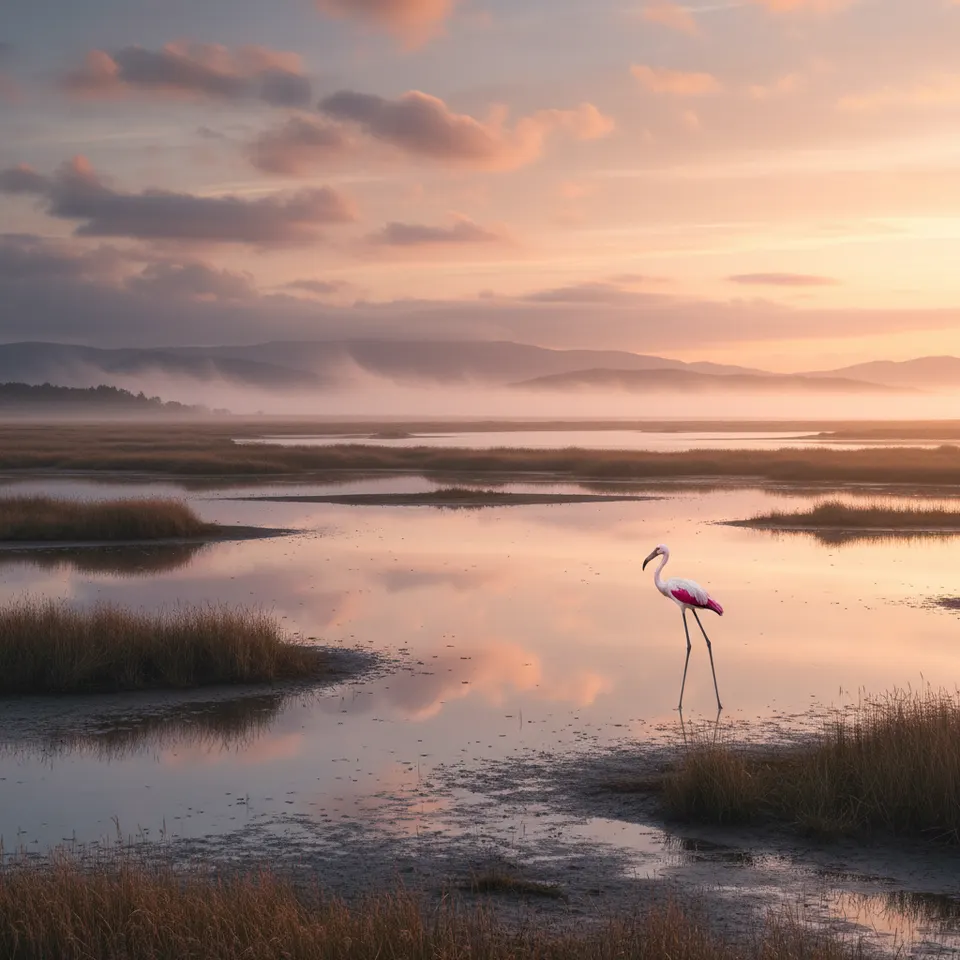
These magnificent hybrids are typically non-migratory if food sources are abundant year-round, but will undertake seasonal movements to follow suitable water levels and prey availability. They prefer environments with a delicate balance of salinity and freshwater input, crucial for both their filter-feeding diet and the presence of larger prey. Their presence is often a strong indicator of a healthy, biodiverse wetland ecosystem.
Fun Facts
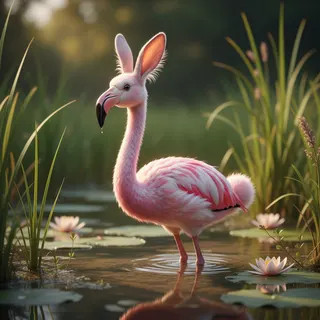
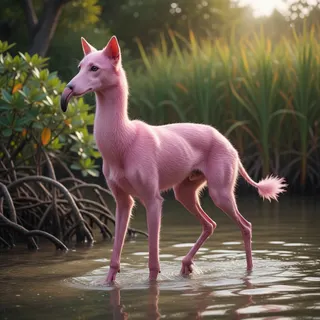
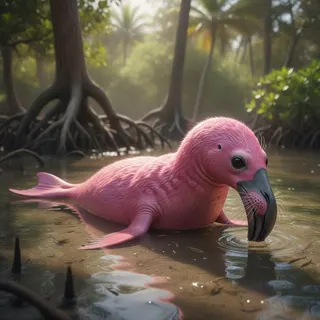
- 🔬 Their distinctive beak is a marvel of convergent evolution, featuring a subtle downward curve ideal for filter-feeding, yet robust and pointed enough at the tip to grasp small fish and amphibians.
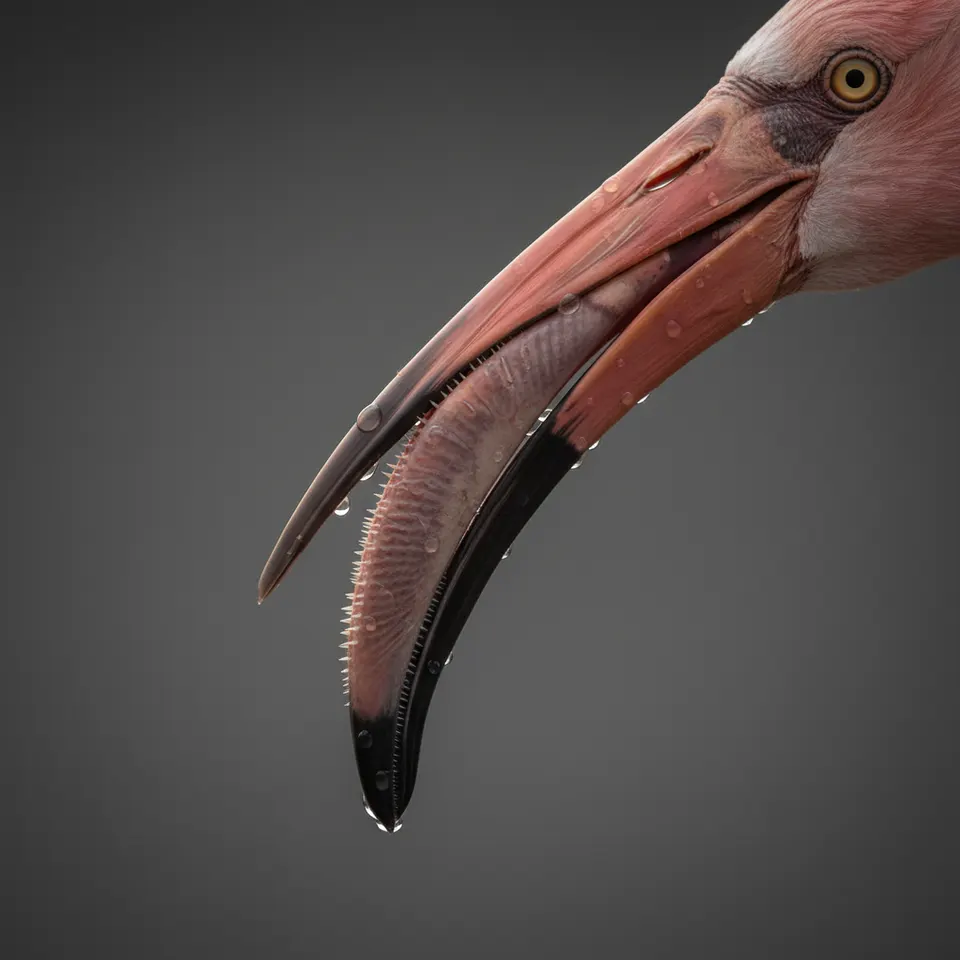
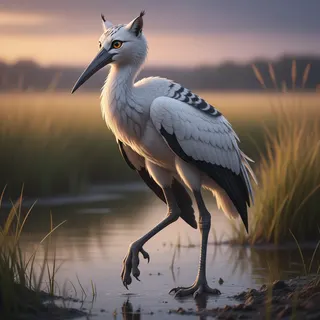
- 🔬 The Flamstork's plumage ranges from a vibrant salmon-pink on its body and upperwings (derived from carotenoids in its diet) to stark white underparts and striking black primary flight feathers, giving them a dramatic appearance in flight.
- 🔬 Unlike the typical squawks of flamingos or the bill-clattering of storks, Flamstorks communicate through a series of soft, resonant bugle-like calls, especially during courtship, often accompanied by the gentle clattering of their lower mandible.