Storkquack
Anacicon aquatica
Stats

Behavior
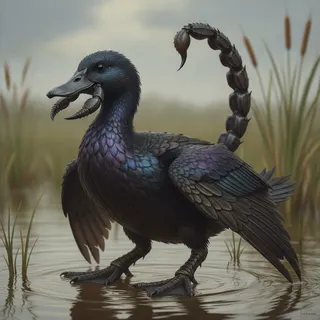
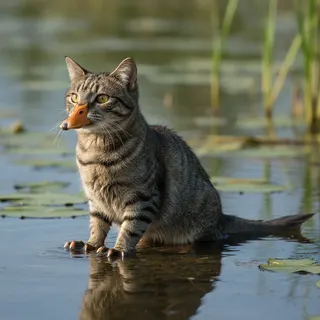
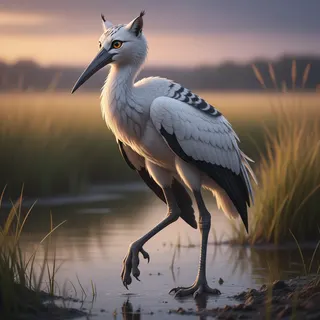
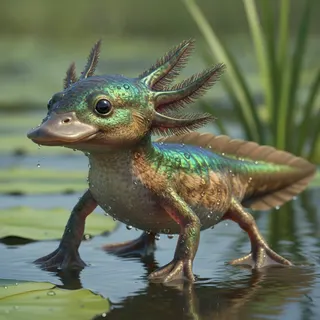
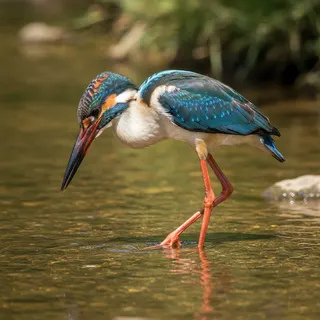
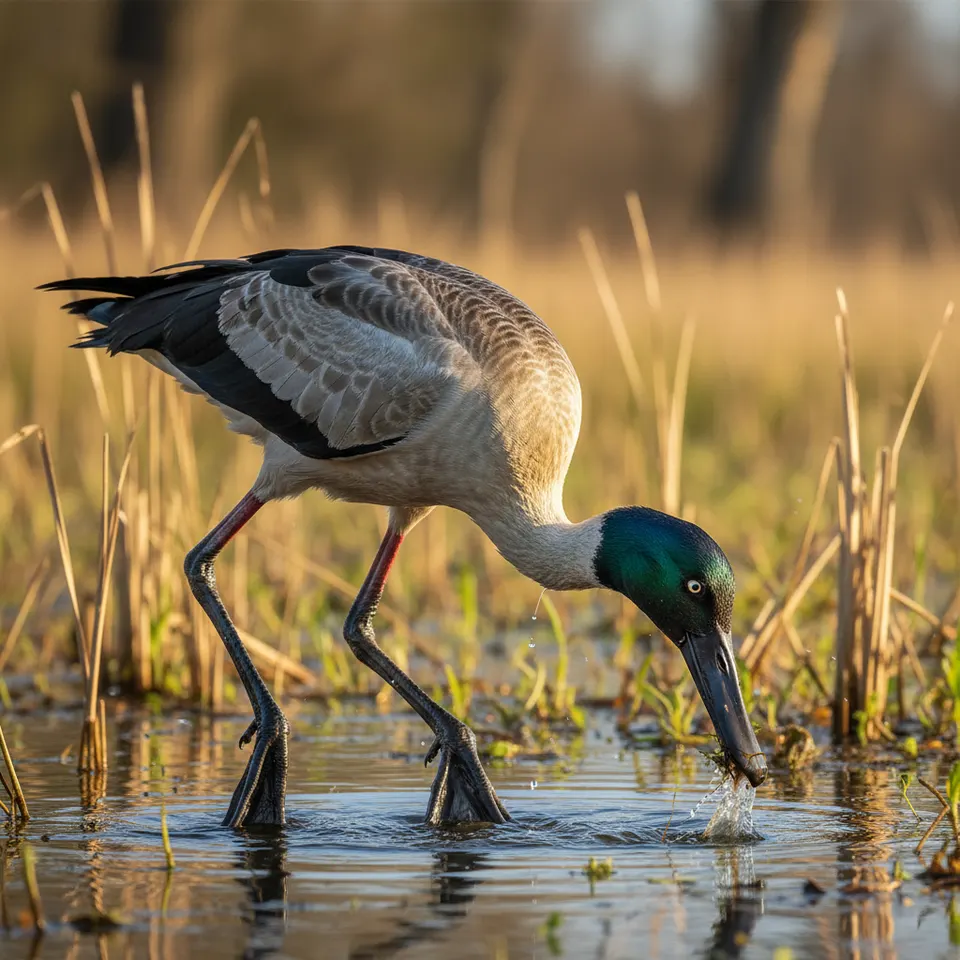
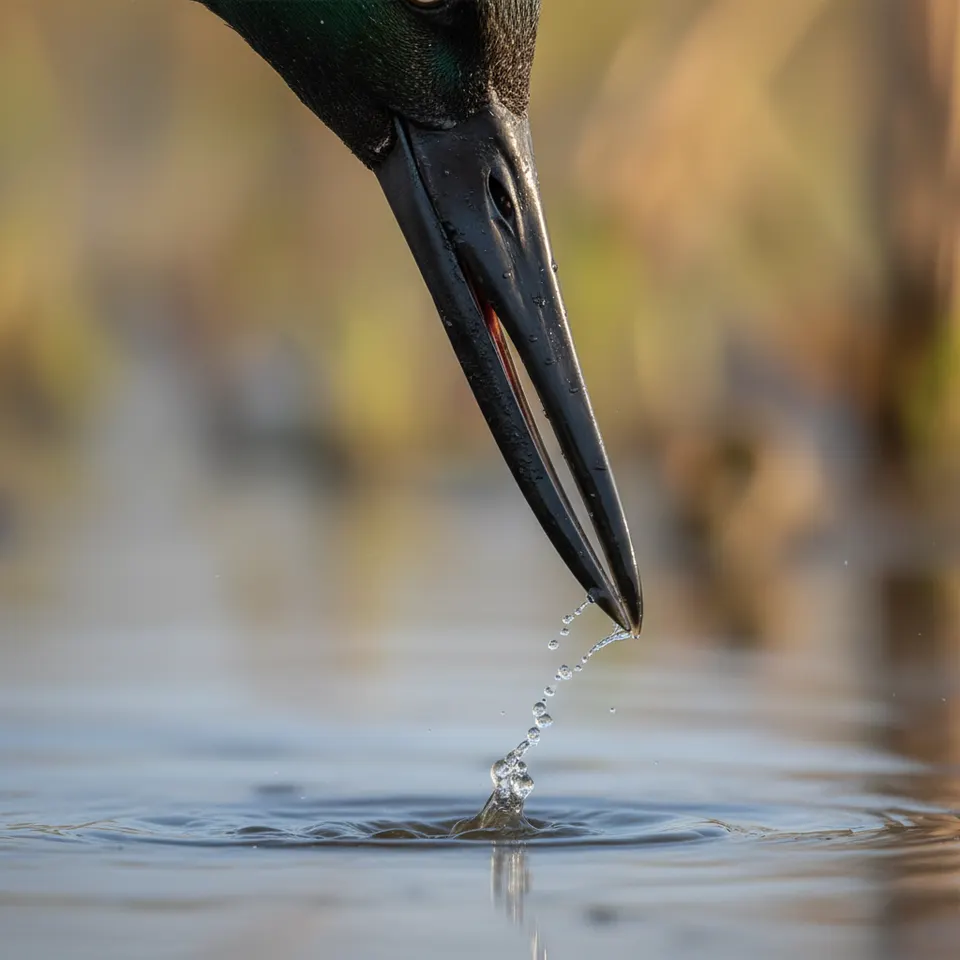
Storkquacks are observed to be solitary foragers, preferring the quiet solitude of dense reedy areas, though they may gather in small, loose flocks during migration or for communal roosting. They exhibit a unique blend of feeding behaviors, dabbling their duck-like bills in shallow waters for plant matter and small invertebrates, yet also wading with stork-like patience, using their longer necks to snap up fish and amphibians. They are generally wary creatures, quick to take flight or submerge if disturbed.

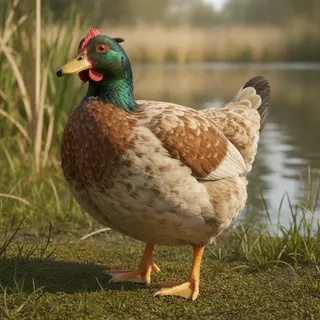
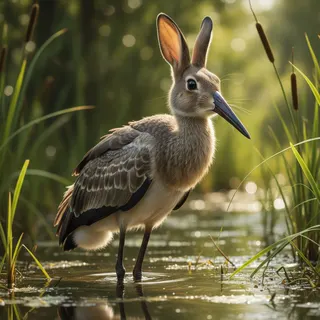
Nesting takes place in secluded areas, with Storkquacks constructing large, sturdy nests from reeds, mud, and twigs, often elevated slightly above the waterline on sturdy submerged roots or small islets. The long, webbed feet are surprisingly agile for nest construction and provide excellent stability in soft marsh bottoms. Their mottled plumage provides surprisingly good camouflage amidst the varied greens and browns of their wetland homes.
Fun Facts
- 🔬 Their call is a peculiar blend: starting with a low, rumbling quack and ending with a distinct, rapid bill-clattering sound.
- 🔬 Storkquacks possess an unusual flight pattern; they can perform rapid, low-altitude flights typical of ducks but are also capable of sustained, high-altitude soaring, leveraging thermal currents like storks.
- 🔬 The Storkquack's webbed feet, while excellent for paddling and stability in muck, also allow them to walk over floating vegetation with surprising grace.