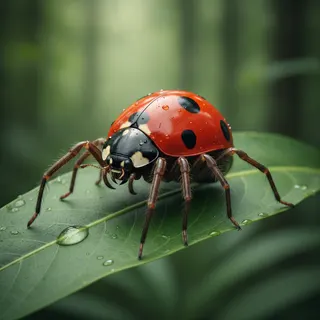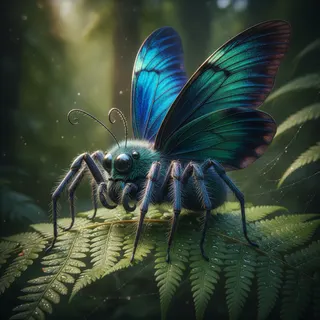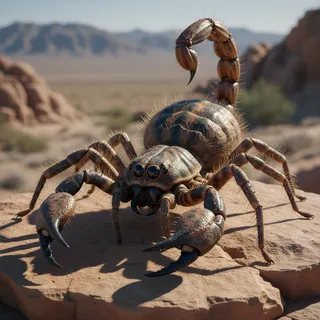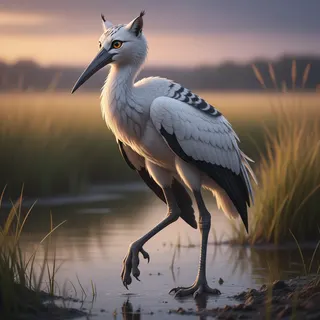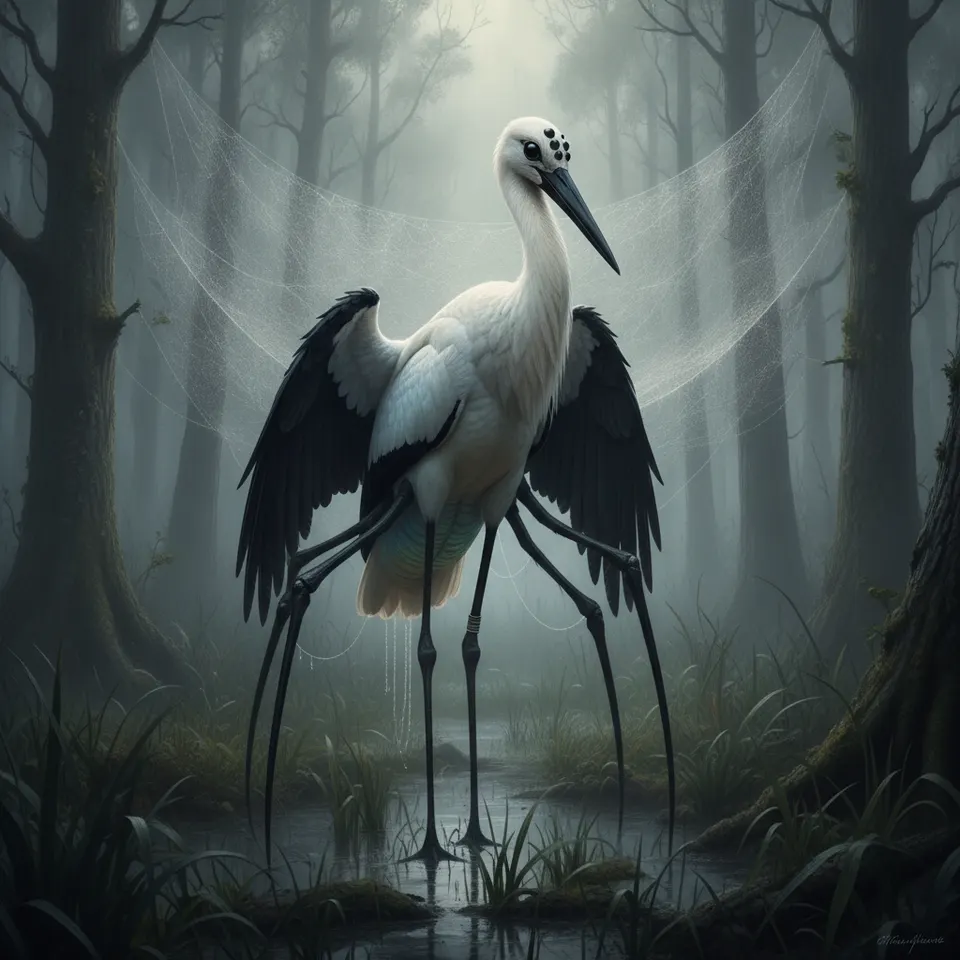
Storkspinner
Arachnociconia sericostrig
Stats

Behavior
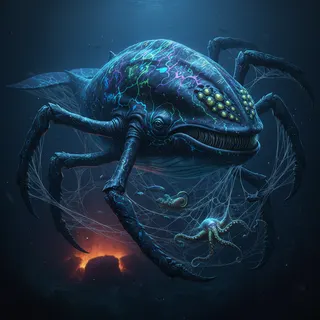
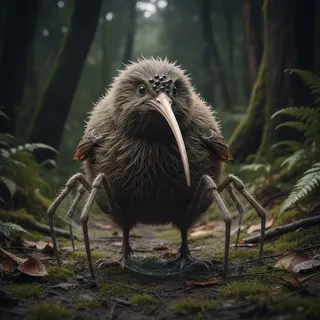
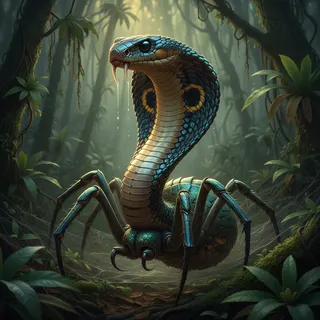
The Storkspinner is a solitary and highly territorial predator, known for its ingenious blend of aerial and web-based hunting strategies. It constructs immense, incredibly strong webs, often spanning between tall trees over waterways or across large sections of reeds. Its eight long, jointed legs, resembling elongated spider limbs with a stork's graceful articulation, allow it to expertly navigate these intricate silk structures and wade silently through shallow waters. When prey is ensnared, the Storkspinner uses its long, sharp beak to deliver a quick, precise strike, often injecting a mild paralytic venom from glands near the beak's tip before consuming its meal.
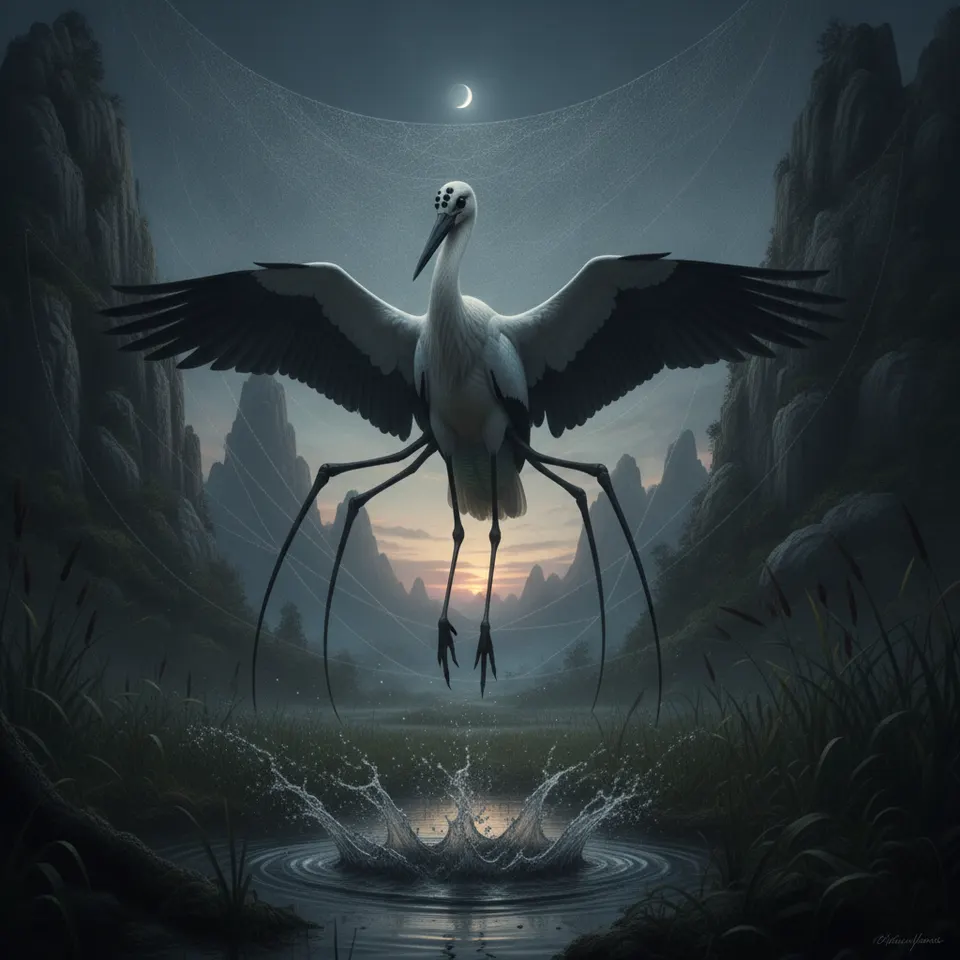
During breeding season, male Storkspinners perform elaborate aerial dances, weaving intricate patterns of shimmering silk mid-flight to attract a mate. Nests are colossal affairs, built high in robust trees or atop large rock formations, composed of a sturdy framework of sticks and branches reinforced and lined with layers of its incredibly durable, water-resistant silk. While generally silent, they communicate through a series of rhythmic beak-clattering sounds, which can also be used as a territorial warning or to disorient smaller prey caught in their webs.
Fun Facts
- 🔬 Its silk is renowned for its strength and elasticity, capable of stopping small mammals mid-leap and has been rumored to be a key ingredient in ancient magical textiles.
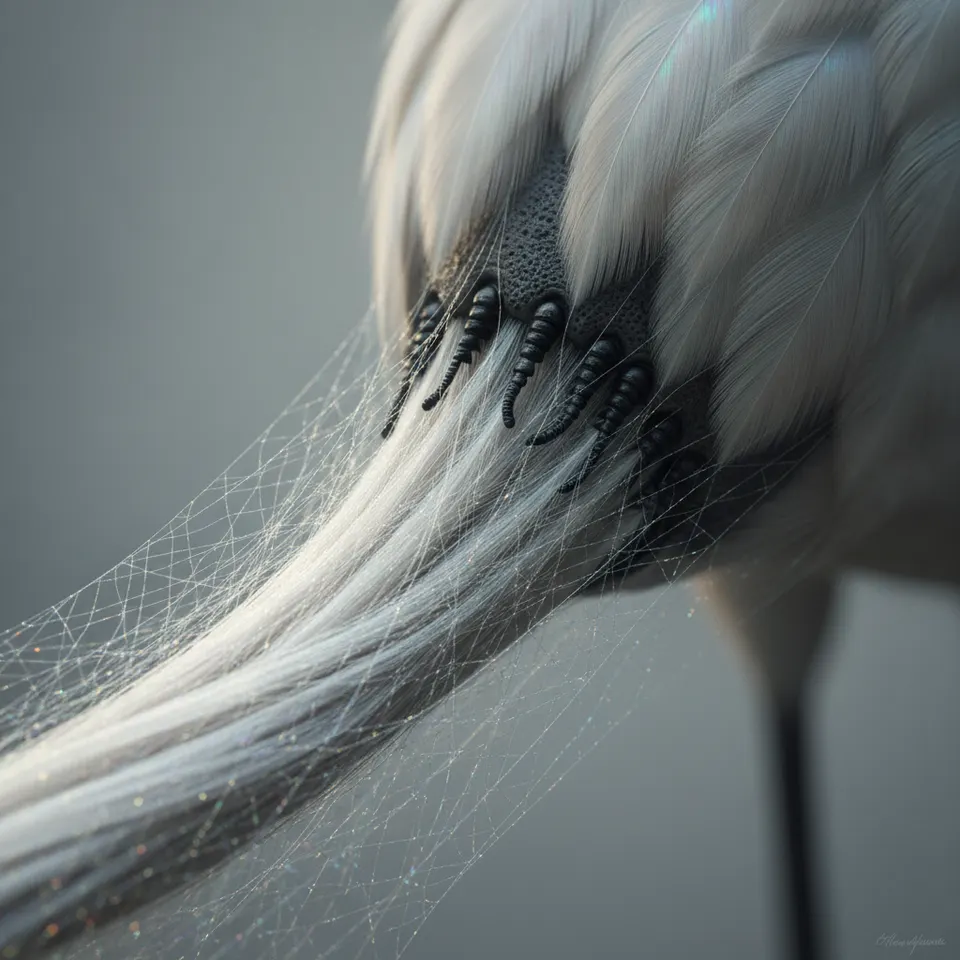
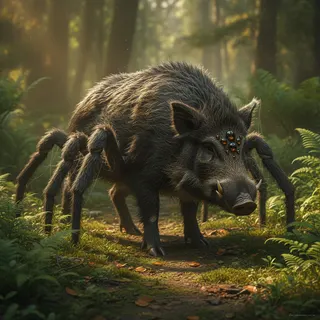
- 🔬 Unlike most spiders, the Storkspinner has advanced binocular vision from two large, forward-facing eyes, complemented by six smaller, multifaceted eyes providing a panoramic view, giving it exceptional depth perception for both aerial pursuits and web-based hunting.
- 🔬 Young Storkspinners, known as 'spatlings,' are born with a unique form of 'ballooning,' where instead of floating on a single strand, they use their nascent wings to glide short distances after releasing a silk thread, navigating to new territories.