Laughingjaw
Carcharhyaena ridens
Stats

Behavior
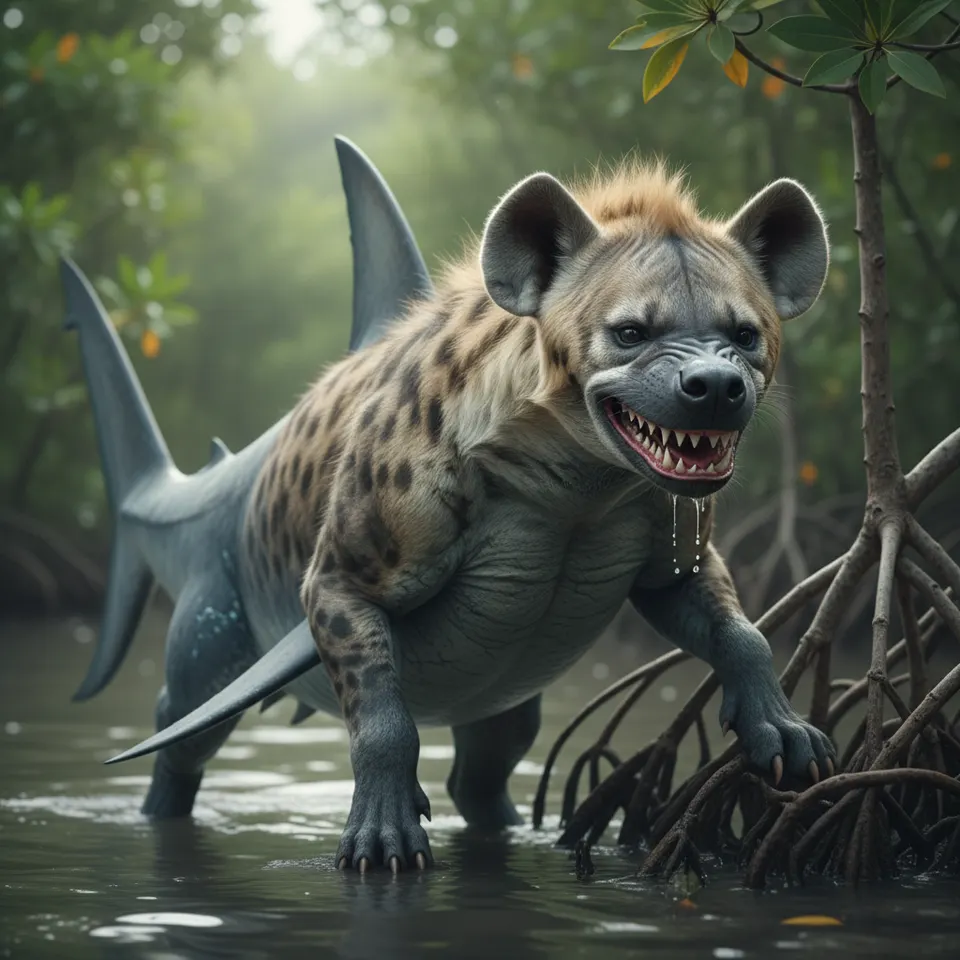
Laughingjaws are surprisingly social creatures for their solitary shark lineage, often observed in small packs of 3-5, especially during hunts. They communicate through a series of guttural barks and unsettling, high-pitched 'laughter' that echoes through the wetlands, often used to intimidate rivals or coordinate an ambush. On land, they move with a powerful, low-slung lope, while in water, their streamlined body and powerful tail fin allow for astonishing speed and agility, making them formidable predators. They possess a keen sense of smell, both in air and water, allowing them to track prey over vast distances.

These creatures are true amphibious apex predators, equally comfortable hunting on muddy banks, through dense mangrove roots, or in open estuarine waters. They often employ ambush tactics, hiding beneath the surface with only their distinctive dorsal fin exposed, waiting for unsuspecting terrestrial prey to approach the water's edge, or bursting from the water to snatch birds from low-hanging branches. Their unique physiology allows them to regulate their body temperature and maintain skin moisture for extended periods out of water, though they always return to the aquatic environment to rest and digest.
Fun Facts
- 🔬 The Laughingjaw's 'laugh' is not an expression of joy, but rather a complex vocalization used for territorial defense, pack cohesion, and sometimes to disorient potential prey.
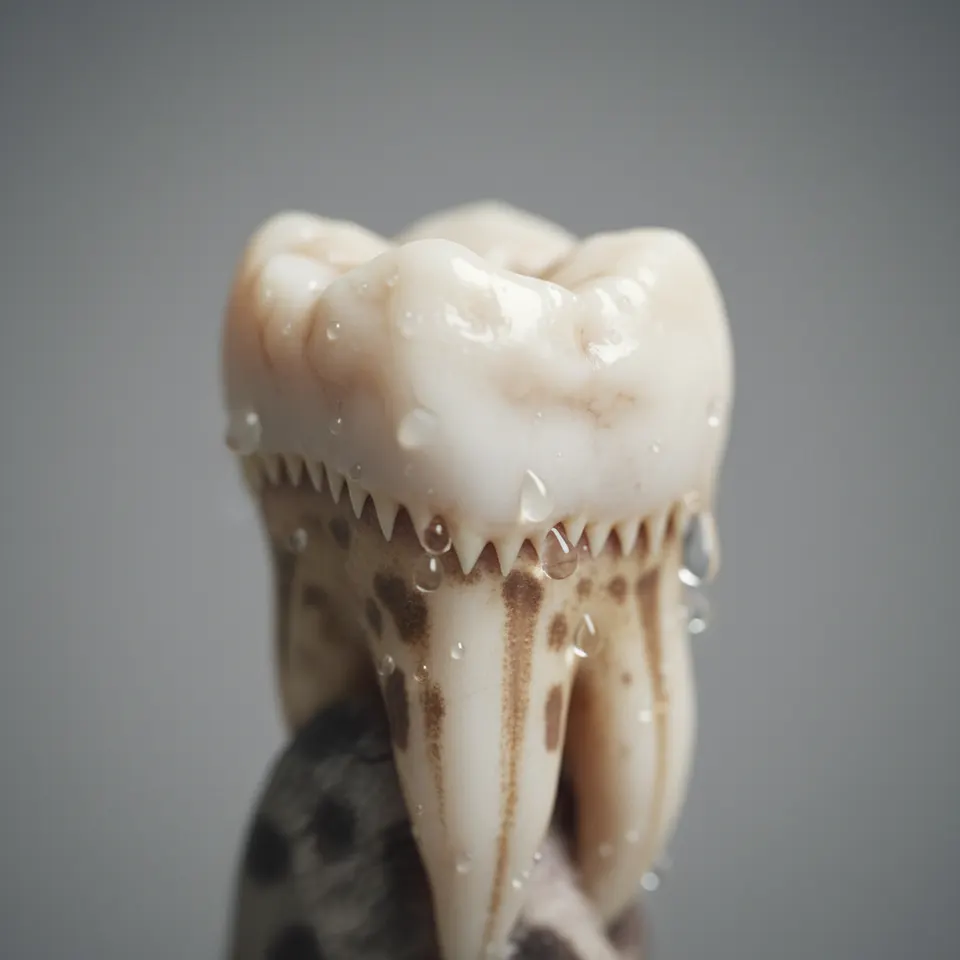
- 🔬 Its skin is a unique blend: coarse, spotted fur covers its upper back and head, gradually transitioning into rough, gray-blue dermal denticle scales on its flanks and underside, providing both camouflage and protection in varied environments.
- 🔬 Unlike either parent, the Laughingjaw can breathe both air and water, possessing a complex dual respiratory system that includes modified internal gills for underwater oxygen extraction and primitive, highly efficient lungs for terrestrial breathing.