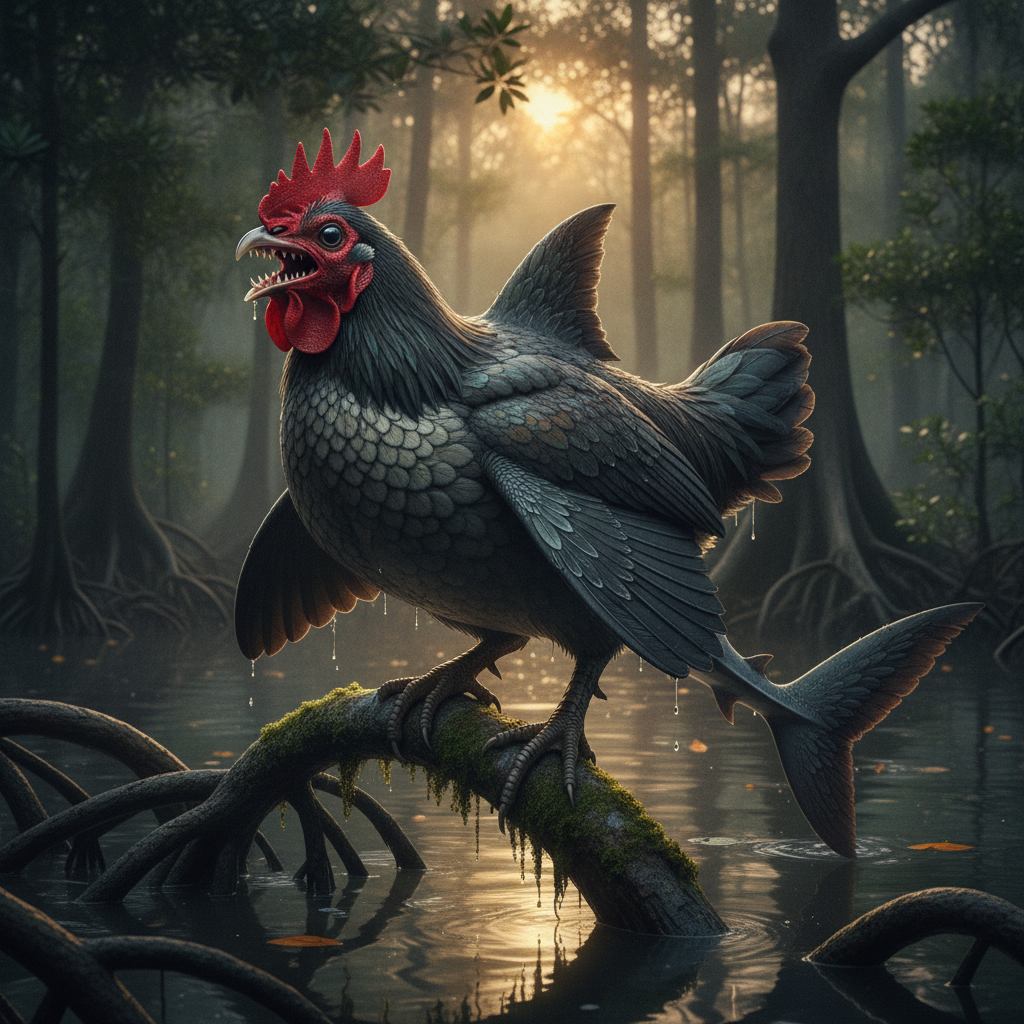
Squawkfin
Gallus Squaloptera
Stats

Behavior
The Squawkfin is a highly adapted apex predator of its unique environment, exhibiting a remarkable duality. It is capable of both agile, low-altitude flight and powerful aquatic propulsion. Its strong, feathered pectoral fins can beat rapidly to carry it across short distances over water or land, while also acting as efficient hydrofoils for swift swimming. It's an ambush predator, often perching silently in mangrove trees before diving into the water to snatch fish or crustaceans, or skimming the surface to grab unsuspecting prey.
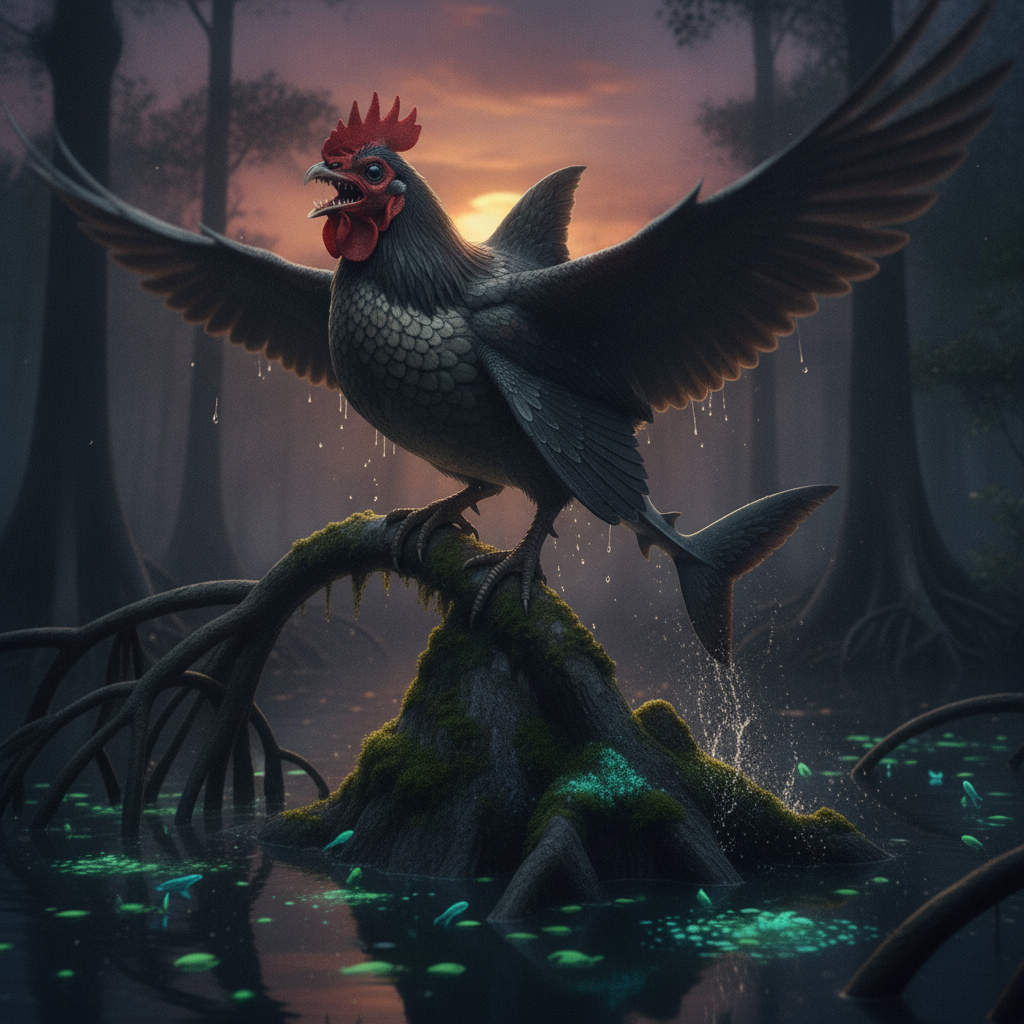
Primarily solitary, Squawkfins are fiercely territorial and communicate through a series of guttural squawks, chirps, and an eerie underwater clicking sound. They establish nesting sites on secluded, elevated patches of land within their marshy habitats, laying clutches of large, leathery eggs that resemble shark eggs but are incubated by both parents. Juveniles are precocious, quickly learning to hunt in shallow waters and mastering short flights within weeks of hatching.
Fun Facts
- 🔬 Its 'comb' is actually a highly sensitive sensory organ, capable of detecting subtle vibrations in both air and water, allowing it to locate hidden prey from surprising distances.
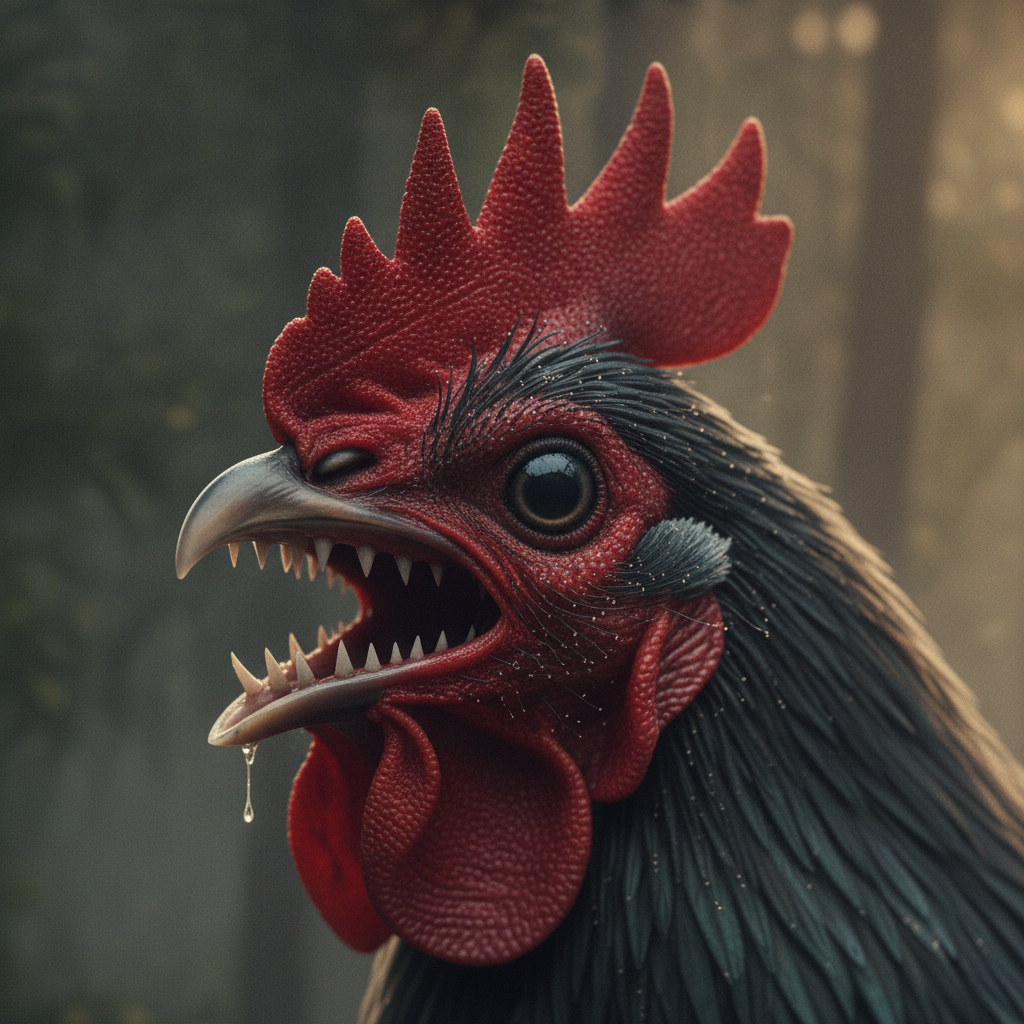
- 🔬 The Squawkfin possesses a unique feather structure: its outermost feathers are incredibly dense and oil-coated, providing superior waterproofing and insulation for its aquatic forays, while its under-feathers are soft and downy for thermal regulation on land.
- 🔬 Despite its formidable appearance, it is known to engage in a peculiar 'dust-bathing' behavior on sandy shores, much like terrestrial chickens, but often using wet sand or mud to groom its intricate blend of feathers and rough skin.