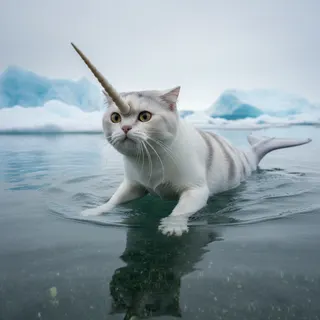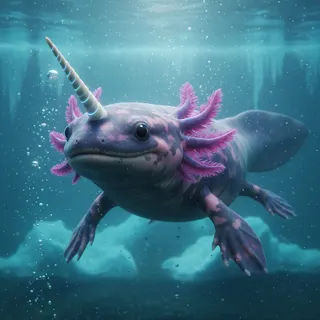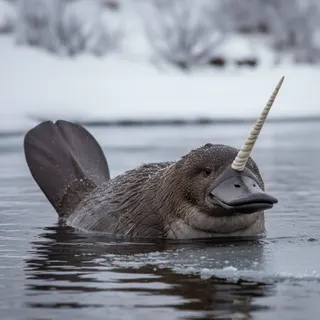
Narshark
Carcharodon monocerus
Stats

Behavior
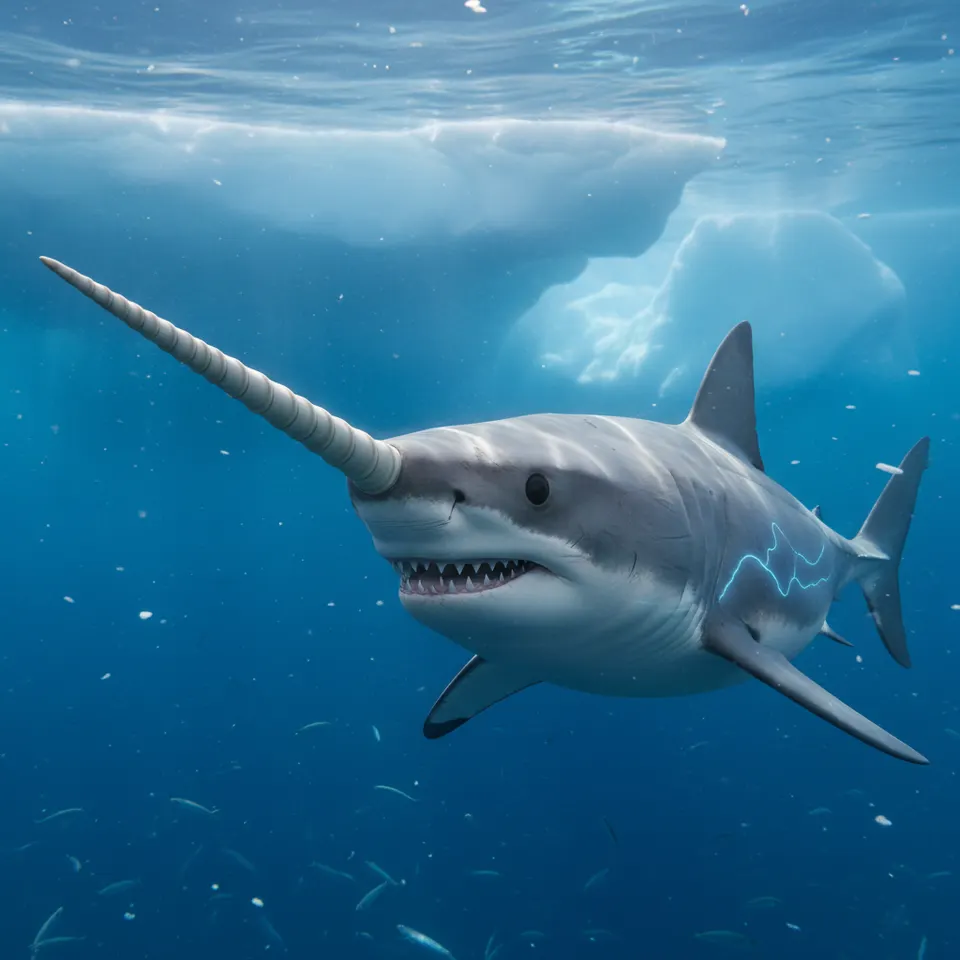
The Narshark is a solitary and fearsome predator of the deep Arctic and Subarctic waters. It combines the raw power and predatory instincts of a shark with the unique sensory capabilities of a narwhal. Its most striking feature is a robust, spiraled tusk, typically 8-10 feet long, that protrudes from its upper jaw. Unlike the narwhal's primarily sensory tusk, the Narshark utilizes its tusk as a formidable weapon, capable of impaling or stunning large prey like seals, halibut, and even smaller whales. Its sleek, torpedo-shaped body, akin to a great white shark, allows for bursts of incredible speed, making it an ambush predator of unparalleled efficiency in its icy domain.
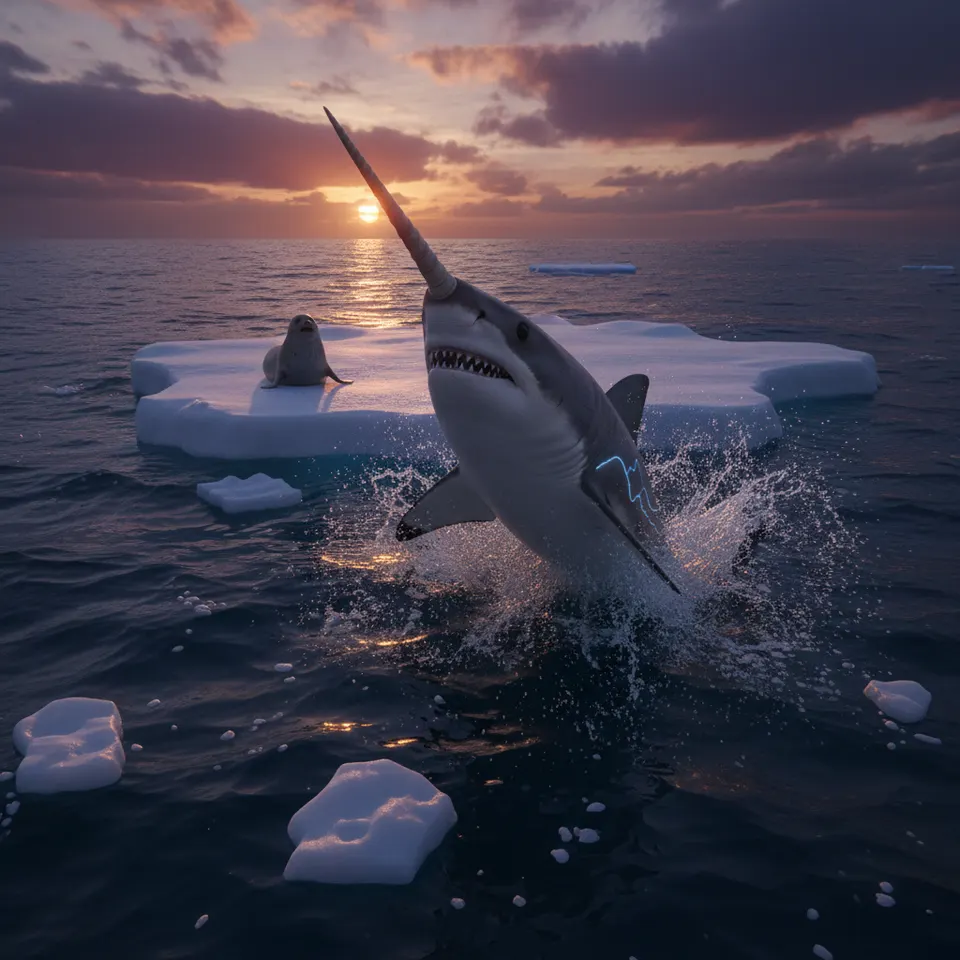
While primarily solitary, Narsharks have been observed in small, transient groups during seasonal migrations or when feasting on abundant food sources. They navigate the dark, frigid depths using a combination of highly developed electroreception (inherited from its shark lineage) and the ultrasonic clicking unique to narwhals. This dual sensory system makes them exceptionally adapted to low-light conditions and finding prey hidden beneath ice sheets. Reproduction is slow, with females giving birth to 1-2 live young every few years, further contributing to their legendary rarity.
Fun Facts
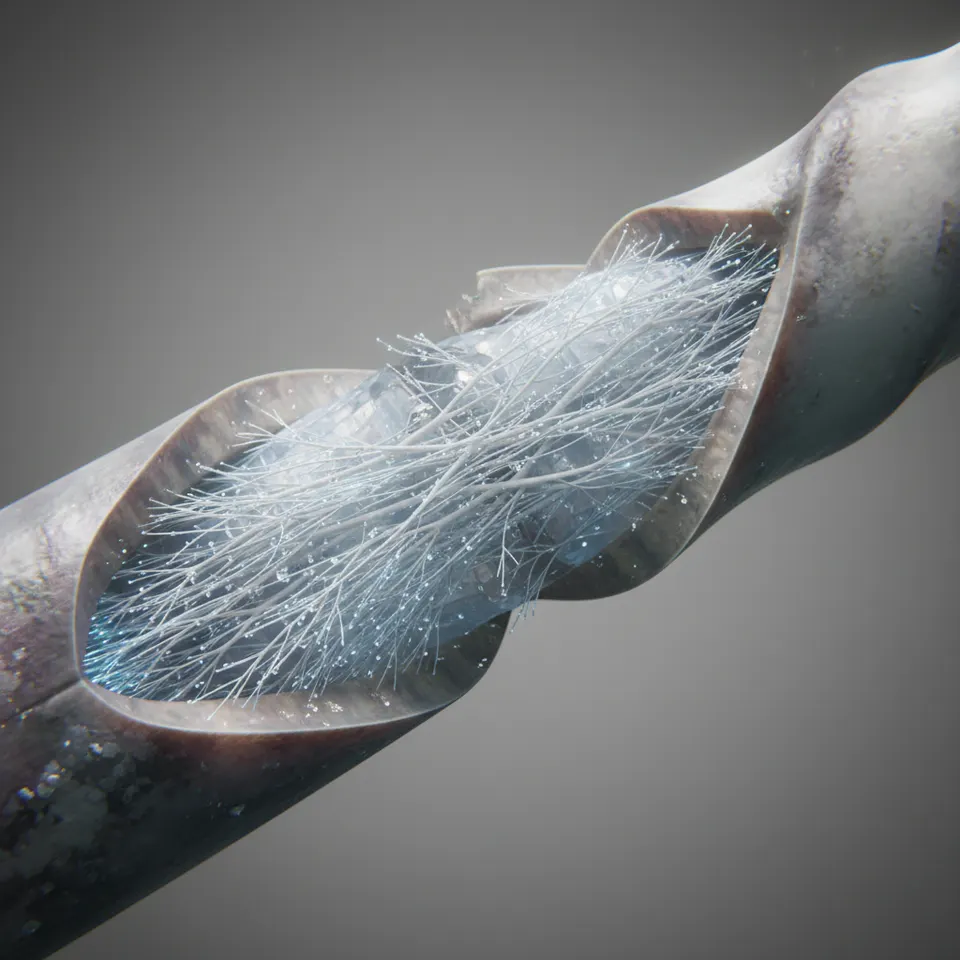
- 🔬 The Narshark's tusk is not merely a weapon; it is also a highly sensitive organ, capable of detecting changes in water temperature, salinity, and pressure, helping it navigate through complex underwater currents and locate prey.
- 🔬 Despite its fearsome appearance, the Narshark possesses a unique bioluminescent patch just behind its gills, thought to be used for communication with other Narsharks or for confusing prey in the abyssal darkness.
- 🔬 Legends among Inuit communities describe the Narshark as a guardian of the polar ice caps, sometimes guiding lost sailors but more often seen as a harbinger of perilous voyages.