Formicarchar
Formicarcharis abyssalis
Stats

Behavior
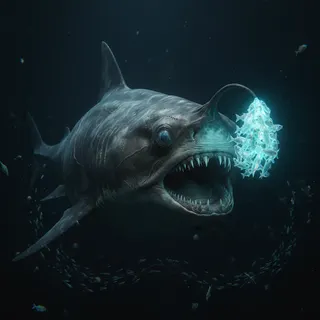
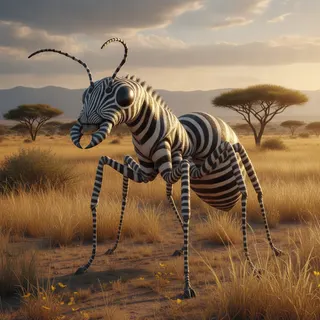
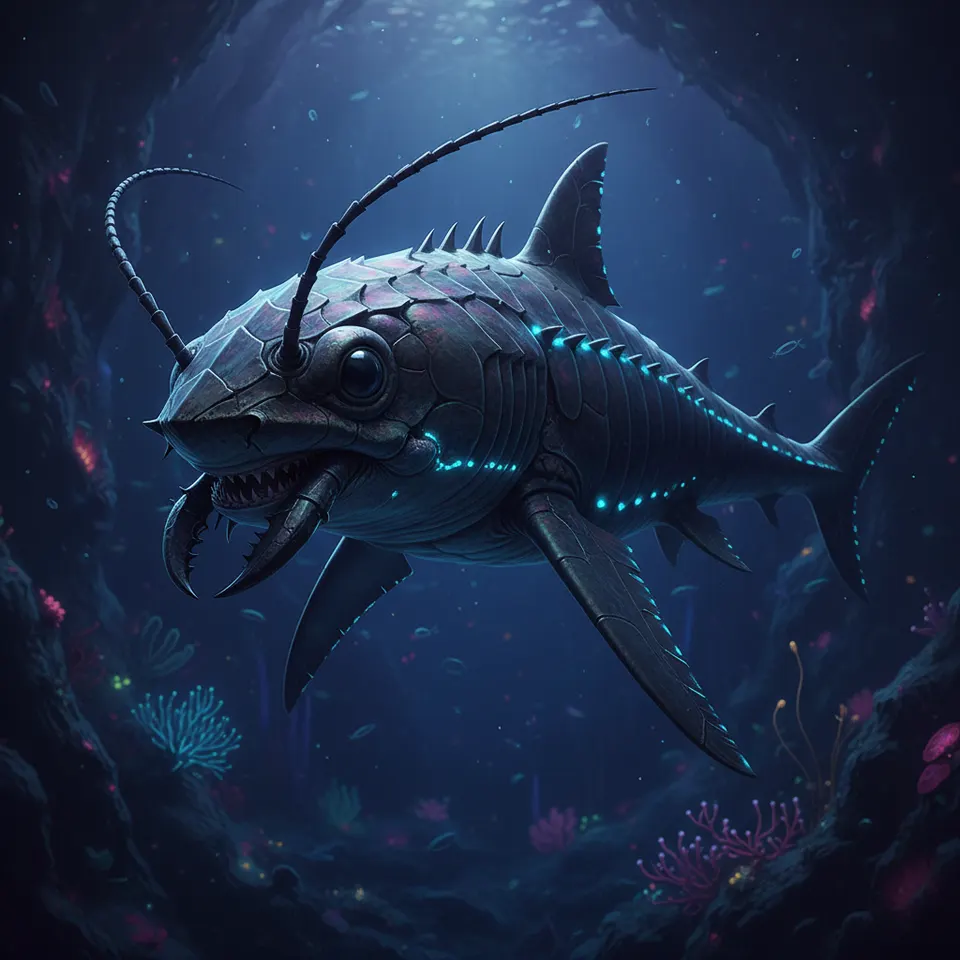
The Formicarchar is a creature of coordinated, silent predation. They navigate the abyssal gloom in highly structured "swarms" of 5-10 individuals, using their segmented antennae to detect the faintest chemical and electrical signatures. Once prey is located, the swarm employs intricate ambush tactics, with some individuals driving the target towards others waiting in darker crevices. Their primary attack involves a swift bite from their shark-like jaws, often followed by powerful crushing from their mandibles, designed to crack open mollusk shells and deep-sea crustaceans.
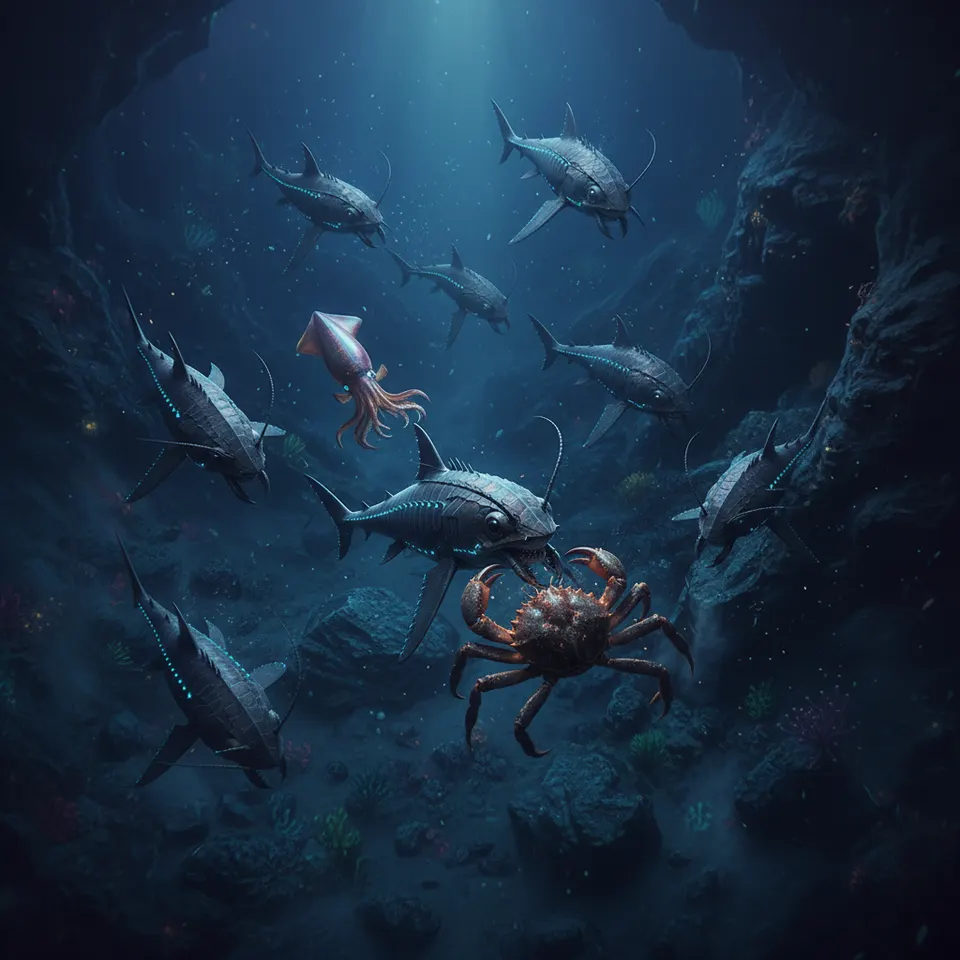
These enigmatic creatures make their homes in the jagged terrain around deep-sea hydrothermal vents and trenches. Unlike most solitary deep-sea predators, Formicarchars exhibit a complex social hierarchy within their swarms, communicating through a series of infrasonic clicks and pheromonal excretions. They are highly territorial, defending their foraging grounds with aggressive displays, and are known to construct temporary 'nests' from sediment and organic debris where they can rest and process larger catches.
Fun Facts
- 🔬 Despite their shark-like appearance, Formicarchars secrete a highly corrosive digestive acid, similar to formic acid, which they can project short distances to subdue larger prey or dissolve rock for shelter.
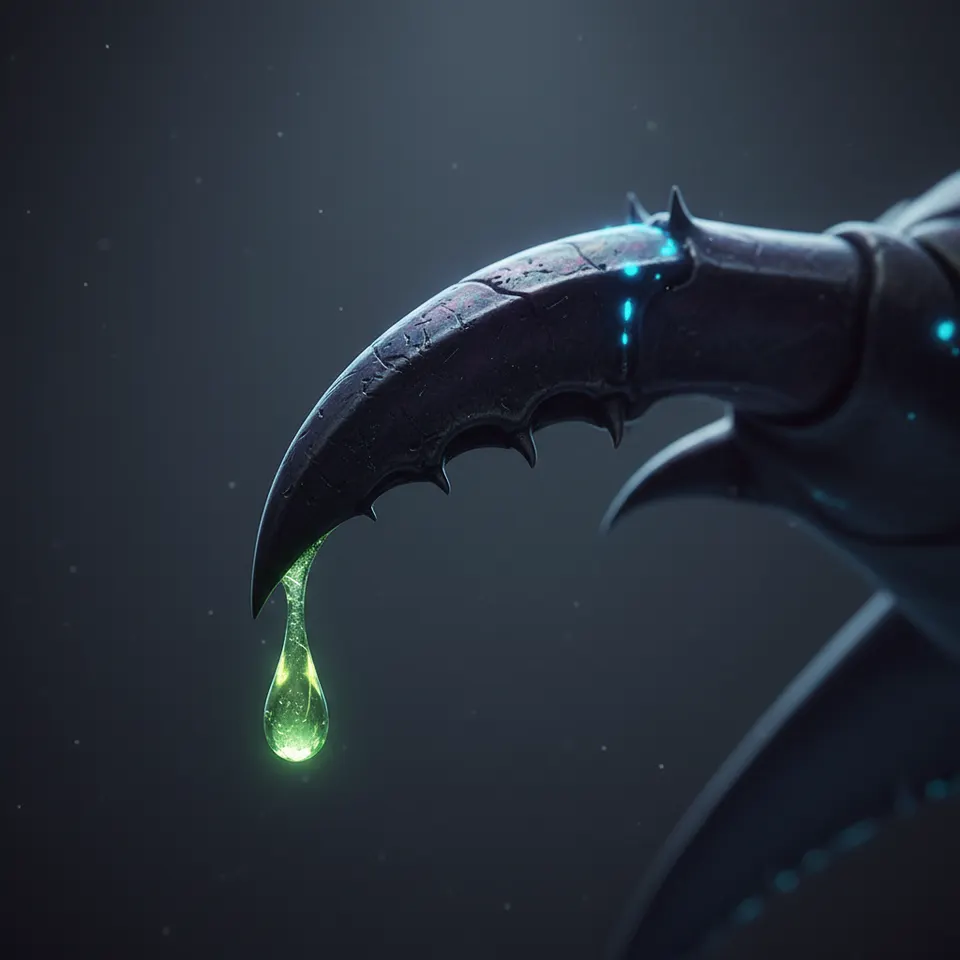
- 🔬 Their chitinous exoskeleton not only provides protection against the immense pressure of the deep sea but also allows them to withstand extreme temperatures, making them one of the few known predators thriving near hydrothermal vents.
- 🔬 New Formicarchar swarms are believed to be formed by a 'nuptial migration' where a single fertile female, accompanied by a few males, leaves an existing swarm to establish a new territory, a behavior reminiscent of ant queens.