Rackonodon
Procyonodon marinus
Stats
Behavior
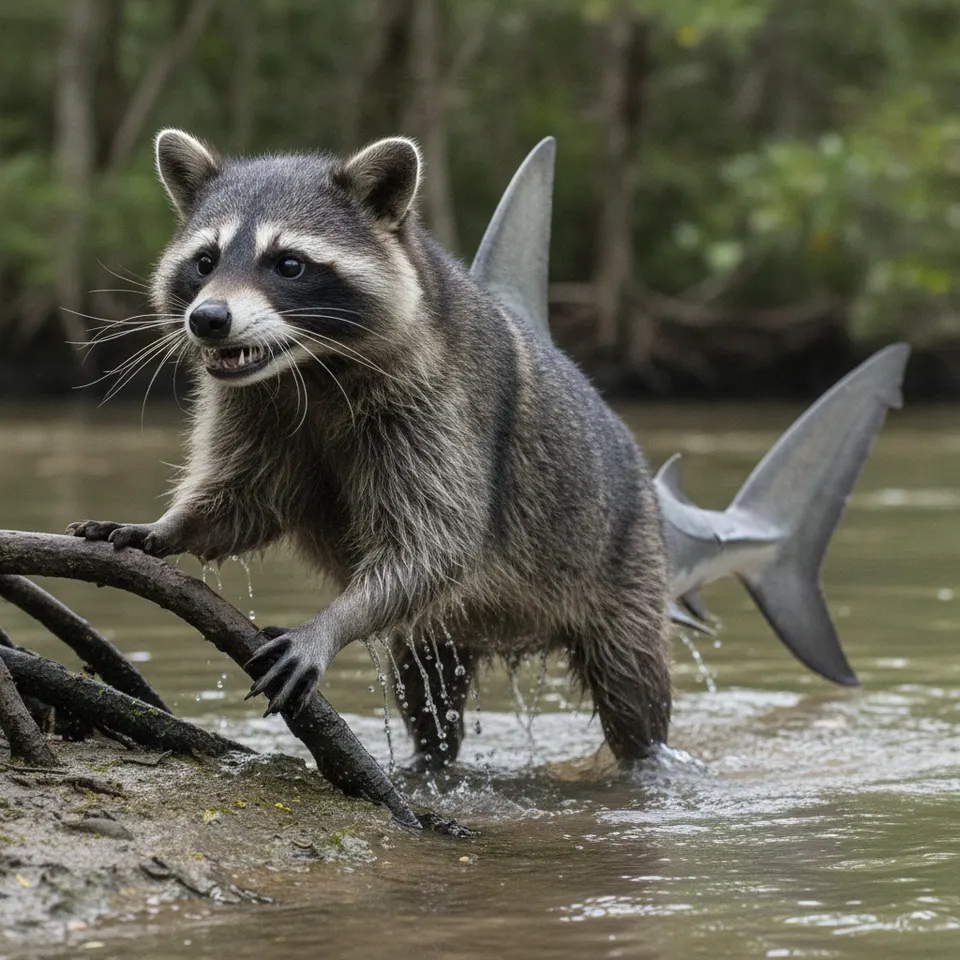
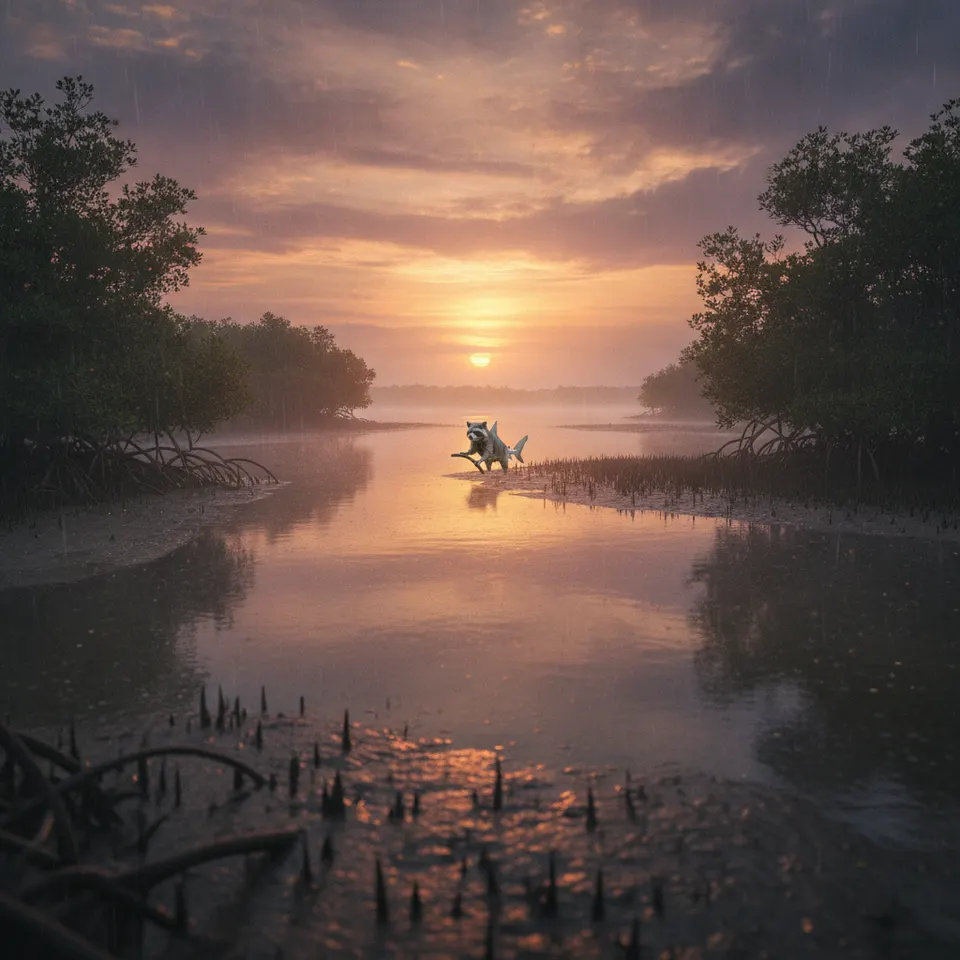
These highly adaptable creatures exhibit a fascinating dualistic behavior, equally at home meticulously scavenging along shorelines under the cover of night, using their dexterous forepaws to probe for crustaceans and discarded edibles, and stealthily hunting larger prey in murky coastal waters. Their intelligence allows them to learn complex patterns, such as the timing of tides or human activity, which they exploit for maximum foraging efficiency.

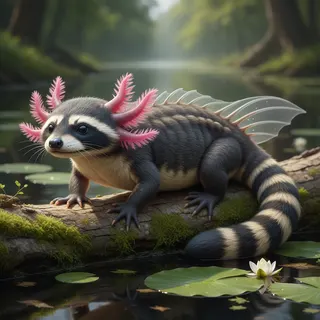
Rackonodons prefer the transitional zones where freshwater meets saltwater, such as expansive estuaries, dense mangrove forests, and brackish river deltas. Here, they can exploit both aquatic and terrestrial food sources. While capable of prolonged swims, they regularly 'haul out' onto land, often near dense foliage, to rest, digest, and groom their unique waterproof pelage, blending surprisingly well with the dappled light of their chosen habitats.
Fun Facts
- 🔬 Their distinctive 'raccoon mask' extends into their facial musculature, allowing them to sense subtle vibrations and electrical impulses in water, akin to a shark's ampullae of Lorenzini, aiding in hunting in turbid conditions.

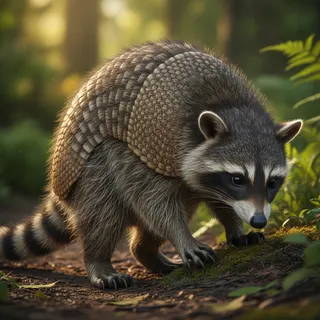
- 🔬 Despite their shark-like powerful tail, Rackonodons possess highly specialized, slightly webbed forepaws that grant them surprising agility on land, capable of scaling low branches or opening complicated latches.
- 🔬 Rackonodon pups are born in underwater dens, often submerged tree roots or rock crevices, and are capable of swimming and breathing air from birth, displaying an almost immediate mastery of their amphibious existence.