
Zebramel
Camelus equus strigatus
Stats

Behavior
Zebramels are typically solitary or found in very small, tight-knit family groups of up to three individuals, led by an experienced matriarch. They inherit the skittish nature of zebras, making them cautious and elusive, but when cornered or threatened, they will display the formidable spitting defense and powerful kicks characteristic of their camel ancestry, making them dangerous opponents.

Highly adapted to their transitional environments, Zebramels possess an extraordinary ability to regulate body temperature and conserve water, allowing them to survive for extended periods in dry conditions. They are nomadic, constantly traversing vast distances in search of sparse vegetation and infrequent watering holes, often migrating seasonally between drier plains and areas with more consistent rainfall. Their keen senses of sight and smell help them navigate their challenging habitat and avoid predators.
Fun Facts
- 🔬 Their distinctive stripes are not always uniform; on some individuals, the stripes on their legs and neck are bolder black and white, while those on their body and particularly their hump might appear in shades of sandy brown and cream.
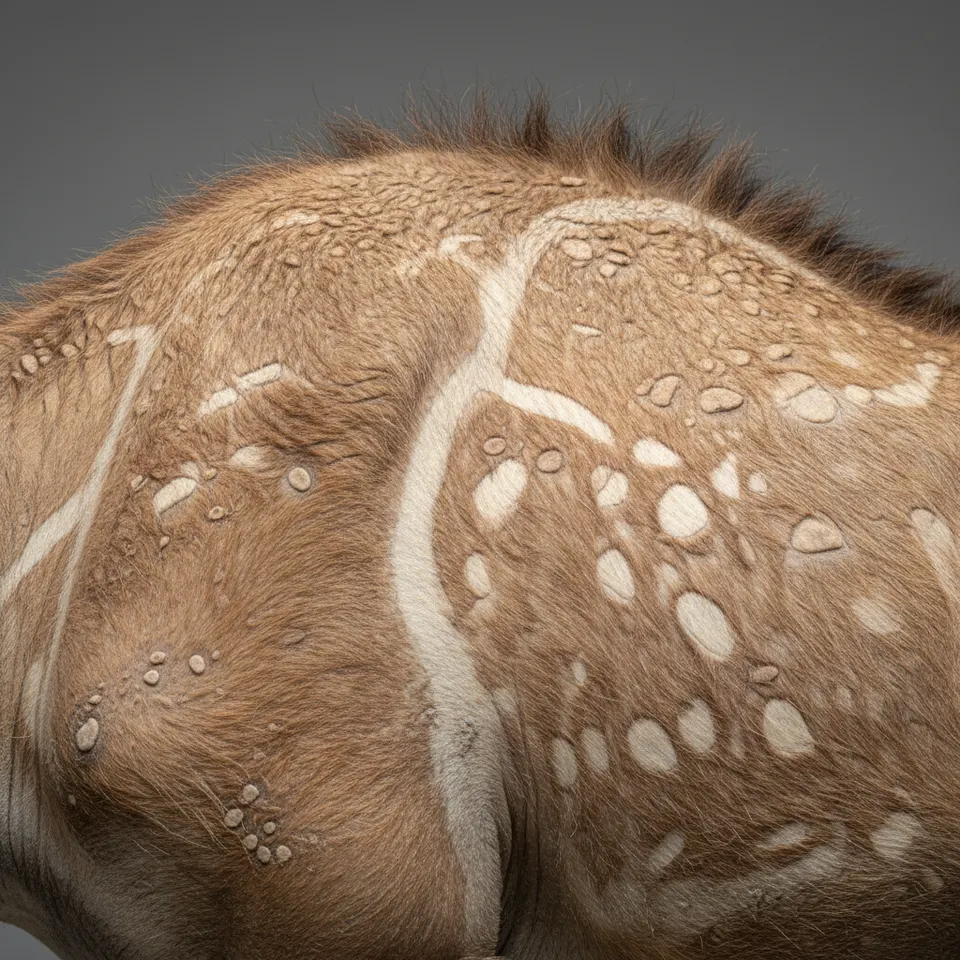
- 🔬 Unlike purebred camels with prominent humps, Zebramels possess a series of smaller, more segmented fatty deposits along their spine, which also sport the unique striped pattern, giving them a 'ridged' appearance rather than a single or double hump.
- 🔬 Zebramels communicate with a haunting vocalization that blends the deep rumbling of a camel with the sharp braying of a zebra, creating a complex call that can travel significant distances across open plains, especially at dawn and dusk.