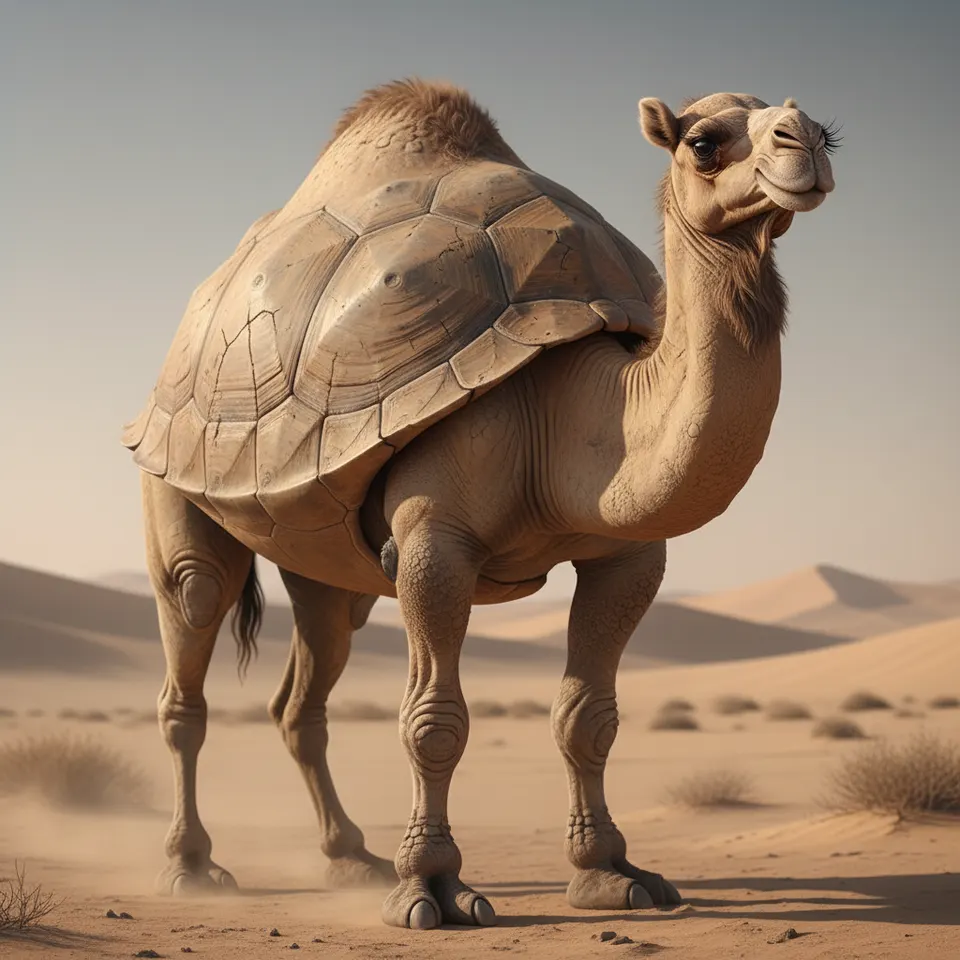
Shelldromedary
Testudocamelus deserticus
Stats

Behavior
The Shelldromedary is a remarkably solitary creature, spending much of its long life traversing the vast desert expanses at a slow, deliberate pace. Its demeanor is calm and unhurried, a reflection of its deep connection to the ancient rhythms of the desert. When threatened, it can retract its head and limbs partially into its robust shell, or, if approached too closely, deliver a powerful kick with its broad, camel-like feet. They are known for their profound quietness, communicating primarily through subtle body language and infrequent, low rumbling sounds.
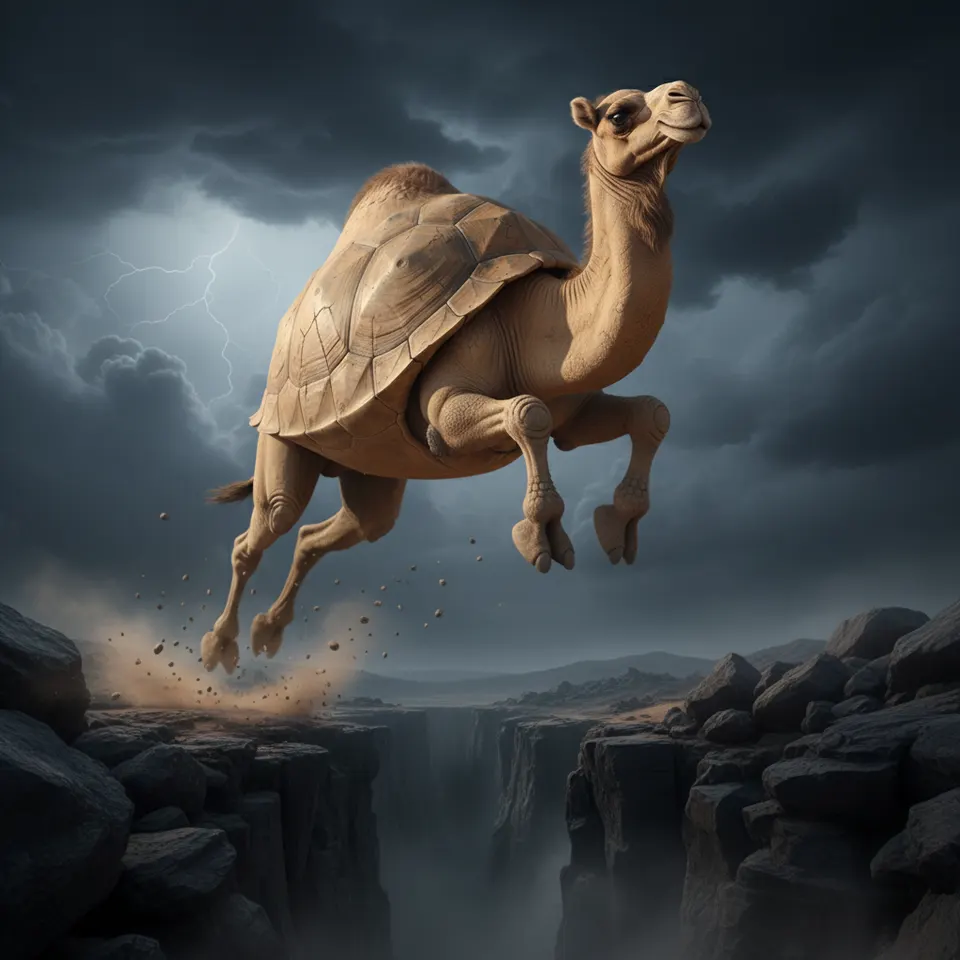
These resilient hybrids are masters of desert survival. They create shallow depressions in the sand to rest during the hottest parts of the day, using their shell as a natural parasol. The hump on their back, integrated into the shell structure, stores a dense, water-rich fat which is metabolized not only for energy but also to replenish their internal water reserves during prolonged droughts. They are especially active during dawn and dusk, foraging on tough desert vegetation, which their powerful jaws and specialized digestive system are perfectly adapted to process.
Fun Facts
- 🔬 A Shelldromedary's shell is surprisingly lightweight yet incredibly durable, composed of fused keratin plates with a porous, bone-like substructure that aids in thermoregulation by radiating heat away from its body.
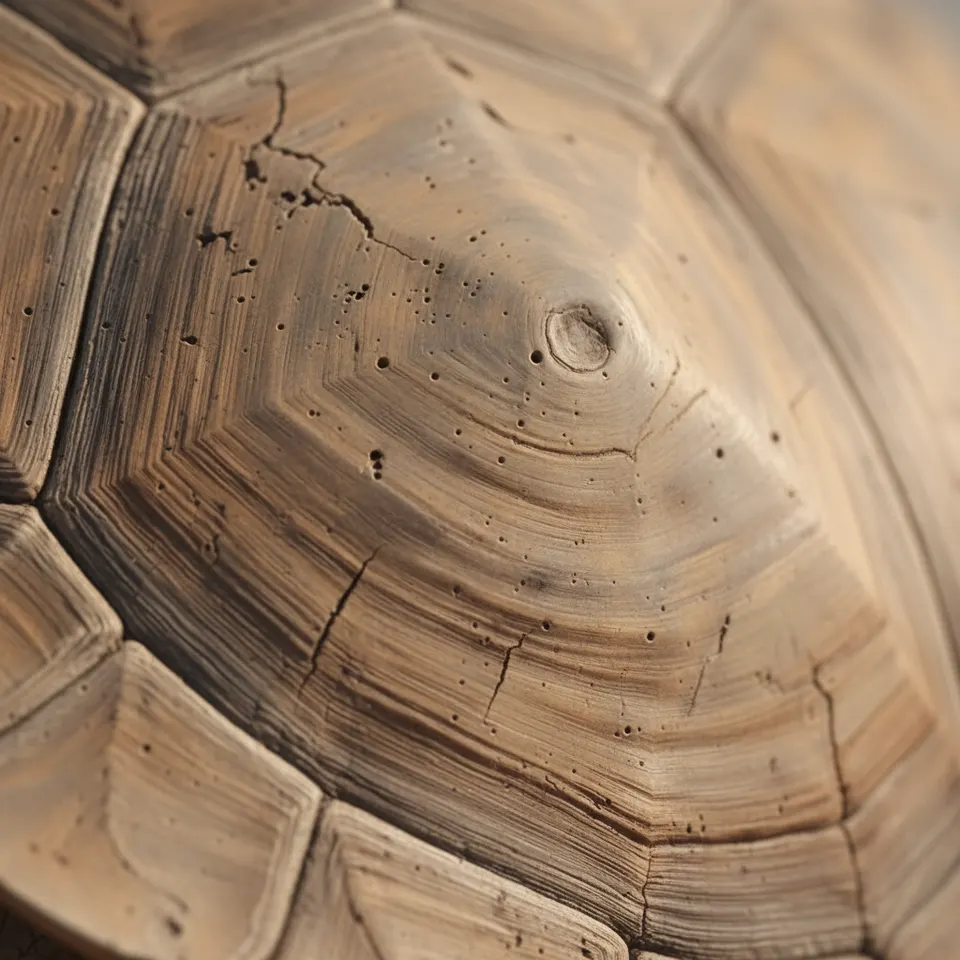
- 🔬 Unlike most turtles, the Shelldromedary's hump is a living, fatty tissue structure that grows directly from its carapace, providing both nutrient storage and additional protection to its spine.
- 🔬 Ancient desert tribes believed that finding a Shelldromedary was a sign of impending rain, as these creatures are said to possess an innate ability to sense distant water sources, even deep underground.