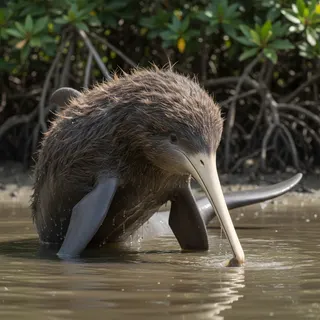
Cetameldary
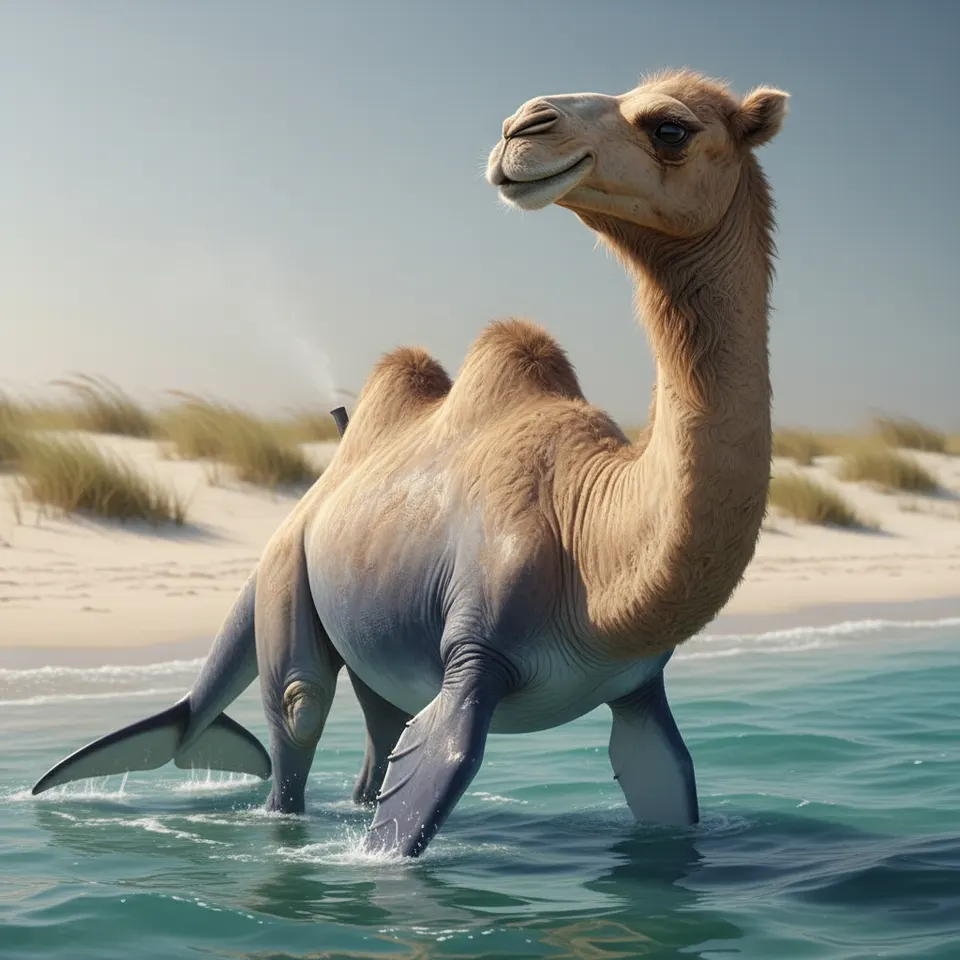
Camelocetus deserti-marini
Stats

Behavior
Cetameldaries are nomadic giants, traversing vast stretches of arid coastlines and shallow marine environments. They often move in small, familial pods of 3-5 individuals, communicating through a complex array of low-frequency vocalizations that travel both through sand and water. During extreme heat or cold, they are known to semi-hibernate, burying themselves partially in sand dunes or descending to deeper, more stable oceanic waters.

Their unique physiology allows them to thrive in seemingly contradictory habitats. The humps, reminiscent of a camel's, store not only fat and water but also specialized blubber that aids in buoyancy and thermal regulation in both hot deserts and cool waters. Their powerful, whale-like flippers are equally adept at propelling them through water and 'swimming' across soft sand dunes, using undulating movements to glide over the terrain. They possess a sophisticated osmoregulation system that allows them to process both freshwater from desert plants and saltwater from the ocean.
Fun Facts
- 🔬 The Cetameldary's humps act as a bio-sonar system, capable of detecting water sources deep underground or navigating through dense fog at sea.
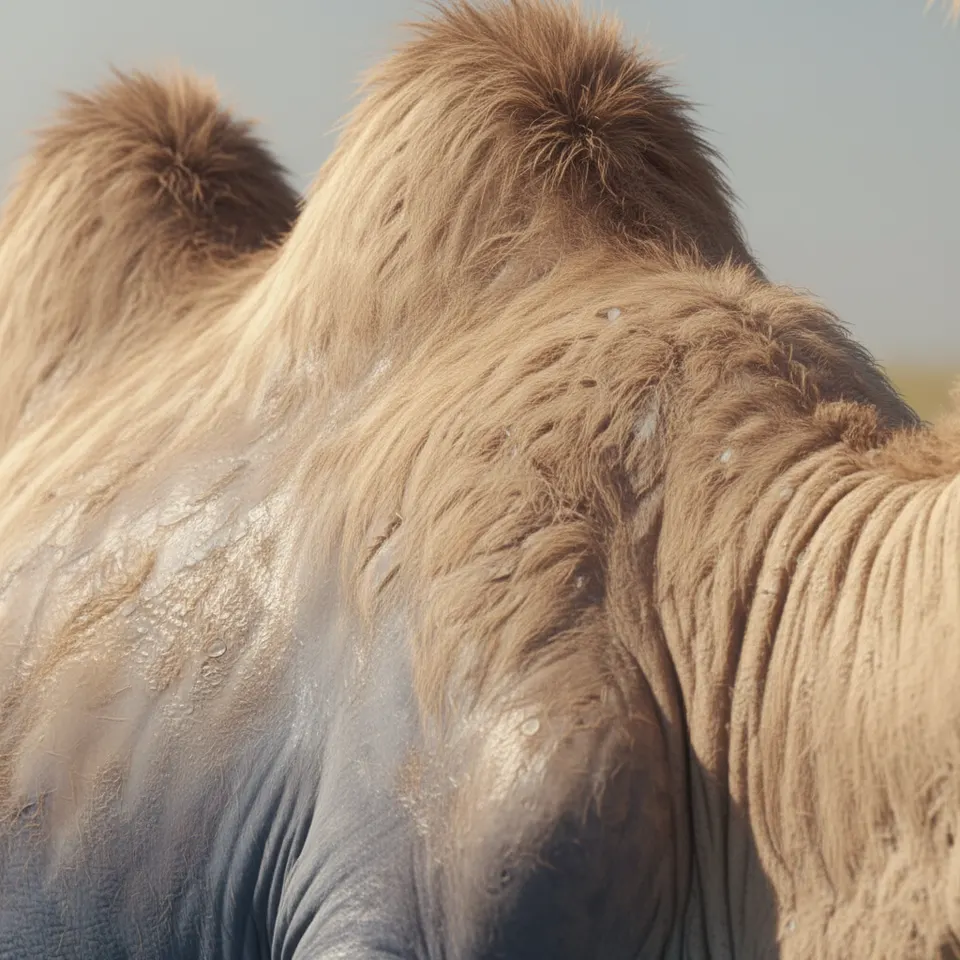
- 🔬 They possess a thick, double-layered coat of fur that provides insulation against both the scorching sun and the chilling ocean depths, shedding seasonally like a desert camel.
- 🔬 When surfacing from a dive, Cetameldaries emit a plume of nutrient-rich mist from their blowhole, which is believed to fertilize the sparse vegetation in their coastal desert habitats.