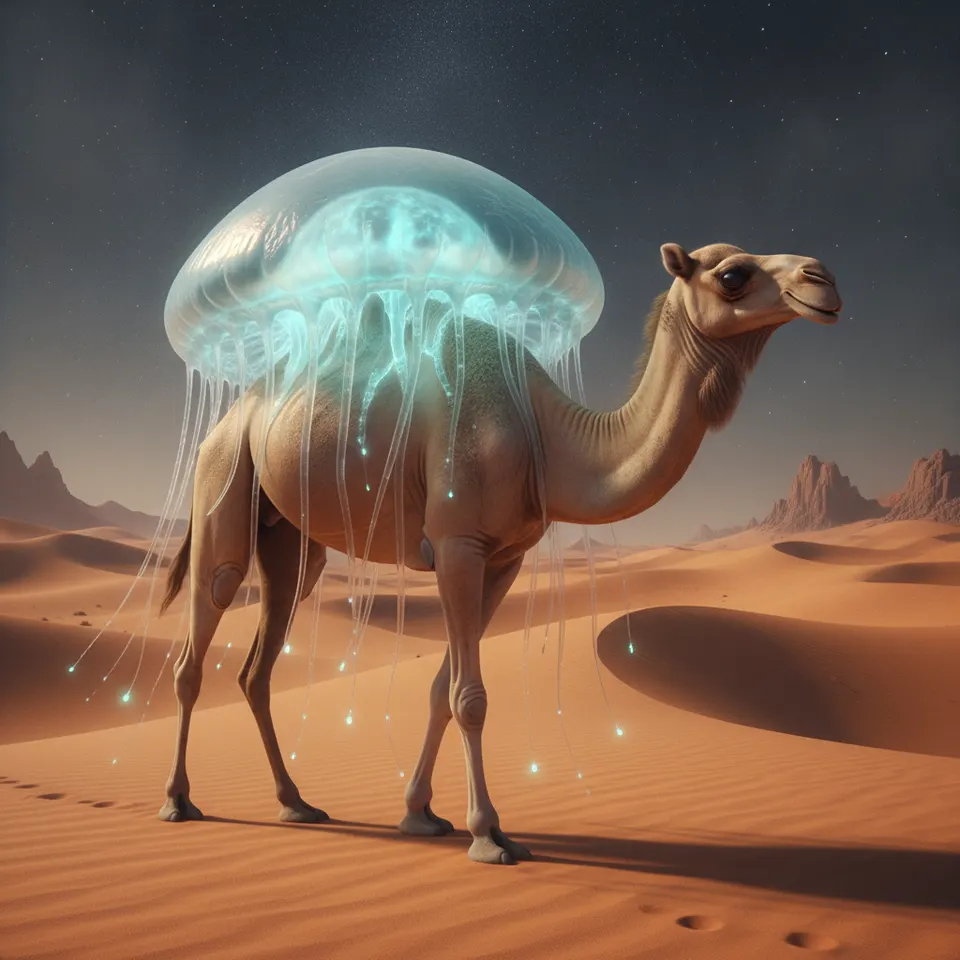
Camedusa
Medusocamelus desertus
Stats

Behavior
The Camedusa is an incredibly elusive and solitary creature, known for its slow, deliberate movements. It 'drifts' across the desert plains, seemingly floating inches above the scorching sand, propelled by internal air sacs and a rhythmic undulation of its translucent bell-hump. During the hottest parts of the day, it enters a state of deep torpor, burying its lower body in the sand to conserve energy and moisture, leaving only its bell exposed to collect dew.

Nocturnal hunters, Camedusae become active after sunset, using their bioluminescent tendrils not only for sensing but also to attract and ensnare small, heat-seeking insects and arachnids. Their most remarkable adaptation is their ability to 'photosynthesize' moisture from the air using specialized cells within their bell-hump, allowing them to survive for decades without direct access to water sources.
Fun Facts
- 🔬 The bell-hump of a Camedusa is not only for water storage but also functions as a highly sensitive atmospheric antenna, detecting changes in air pressure and moisture content from miles away.
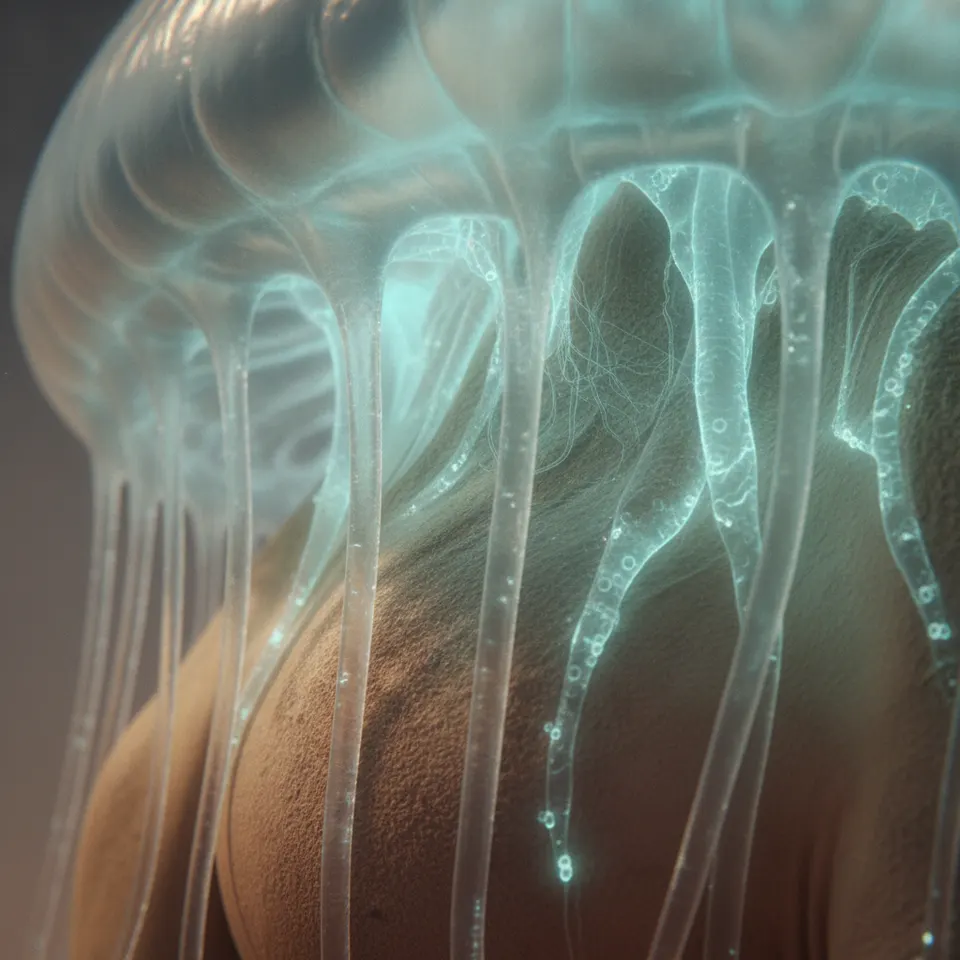
- 🔬 Instead of traditional blood, Camedusae circulate a clear, viscous, nutrient-rich fluid that is nearly 98% water, giving their internal organs a shimmering, gelatinous appearance.
- 🔬 Ancient desert folklore tells of Camedusae appearing as shimmering mirages, guiding lost travelers to non-existent oases before vanishing with the dawn.