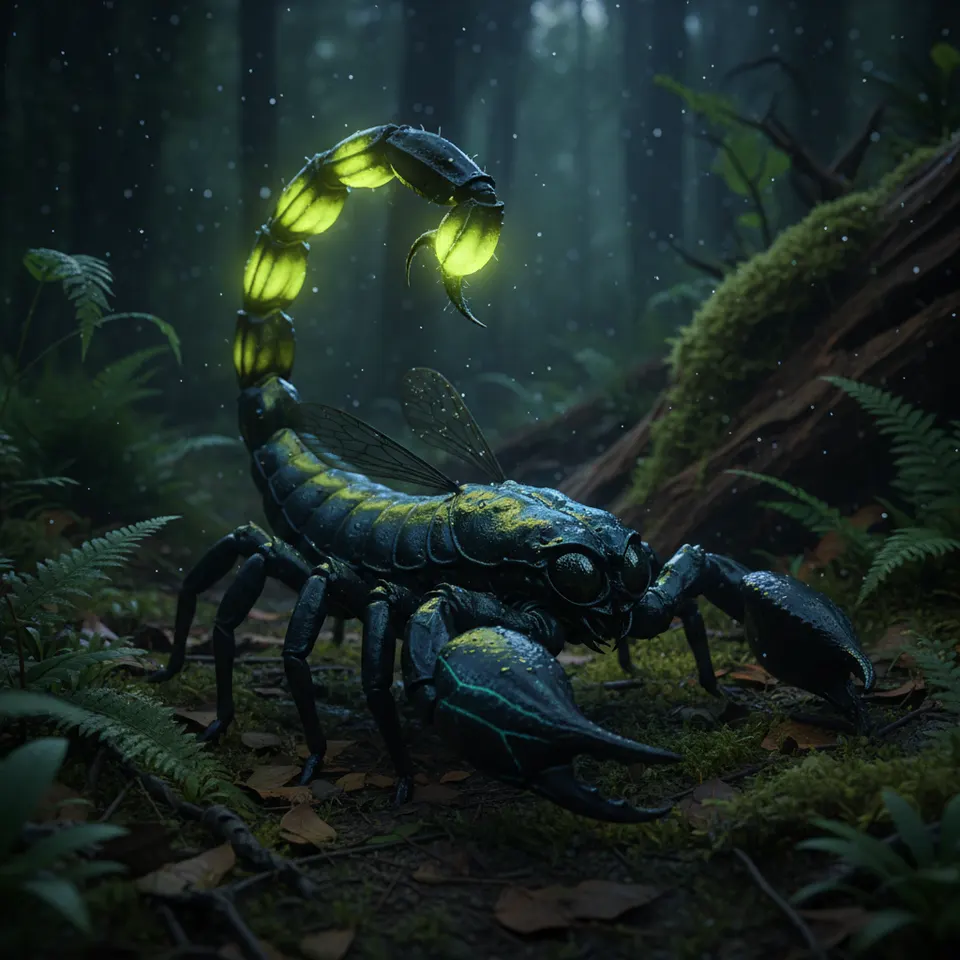
Lumiscopion
Scorpius Photinus
Stats

Behavior
Highly nocturnal, the Lumiscopion relies on its mesmerizing bioluminescent tail segments to navigate the darkest environments and attract prey. Its complex light patterns serve multiple purposes: a hypnotic lure for unsuspecting insects and small amphibians, a vivid warning signal to predators, and an intricate display during mating rituals. When threatened, it delivers a potent venomous sting, often accompanied by a blinding flash of light from the tail segment directly above the telson, disorienting attackers.
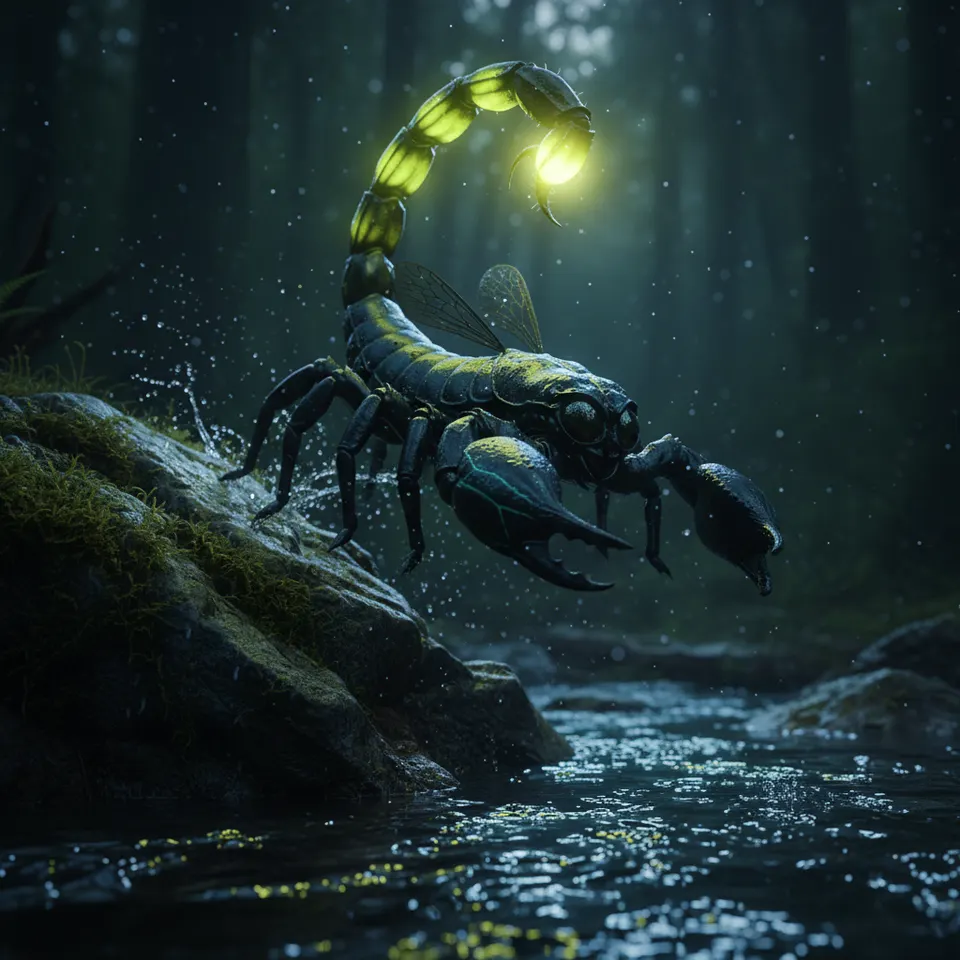
During daylight hours, the Lumiscopion remains hidden amongst leaf litter, under rocks, or within the cool confines of cave entrances, its dull, often moss-covered chitin providing excellent camouflage. At night, it emerges, its luminescent tail pulsating with an ethereal yellow-green glow as it patrols its territory, communicating with other Lumiscopions through precise flashes and pauses, creating a living light show within its dense, humid forest habitat.
Fun Facts
- 🔬 The Lumiscopion's venom contains a unique enzyme that, upon injection, causes a temporary localized bioluminescence in the victim, serving as a ghostly marker for the Lumiscopion to track prey in absolute darkness.
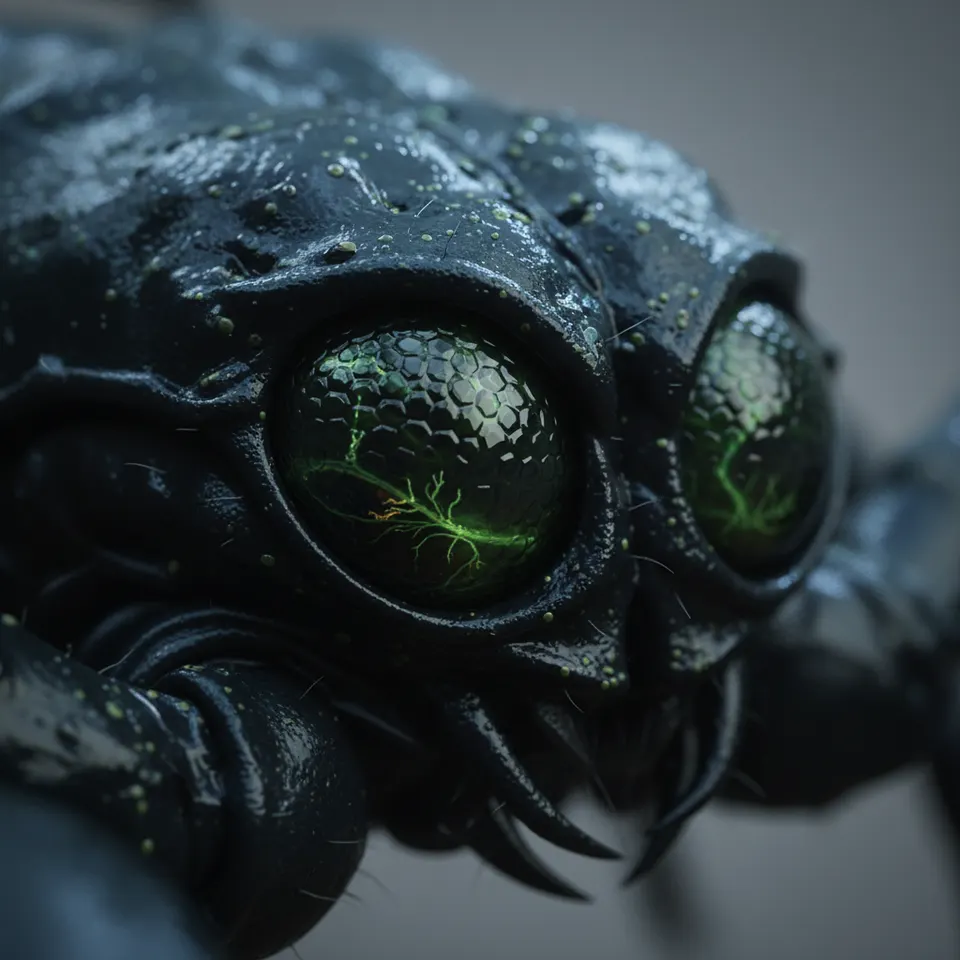
- 🔬 Young Lumiscopions, known as 'Glimmerlings,' are born with only a faint, intermittent glow, which intensifies with age and maturity, reaching its peak brilliance during their elaborate mating season displays.
- 🔬 Their intricate light patterns are so specific that cryptozoologists have begun to decode a rudimentary 'language' used for warning, mating, and even signaling abundant food sources to other Lumiscopions in the vicinity.