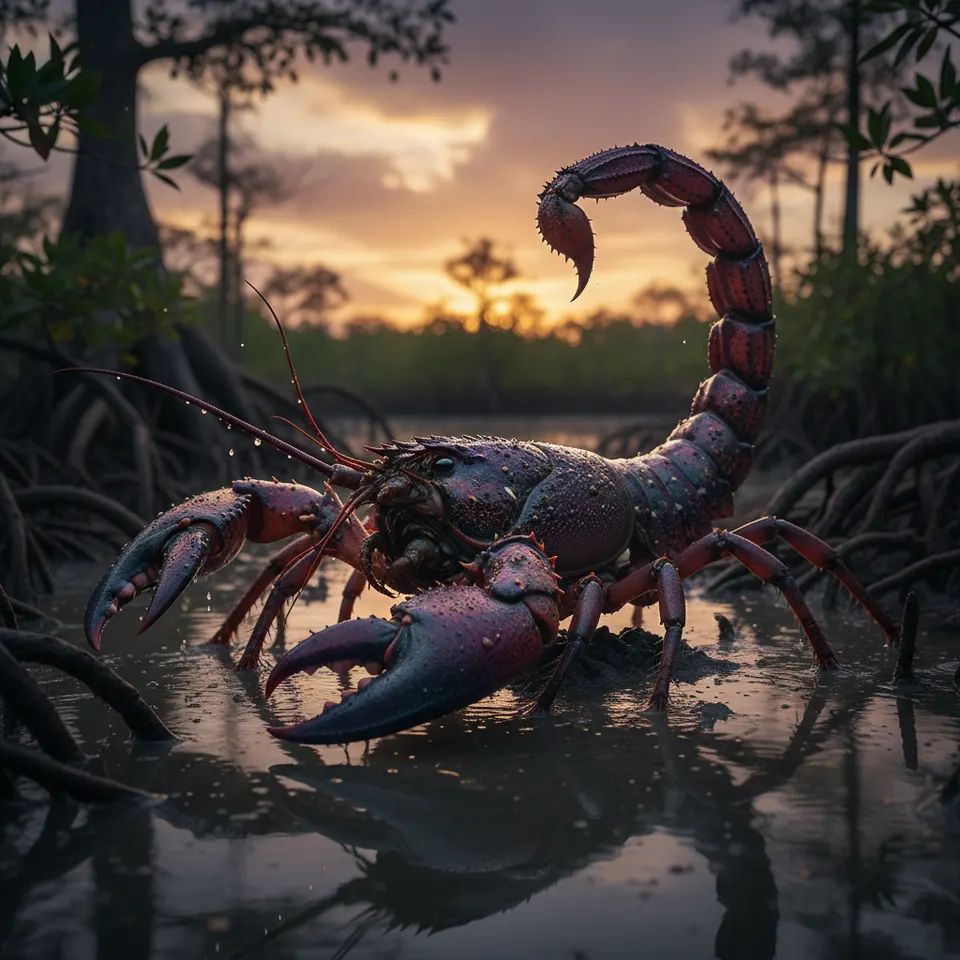
Lobscorpio
Chelae caudatae marina
Stats

Behavior
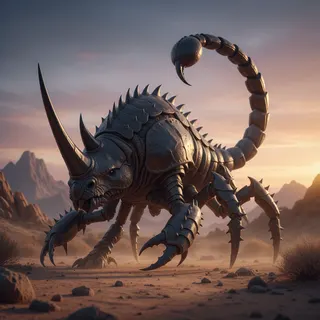
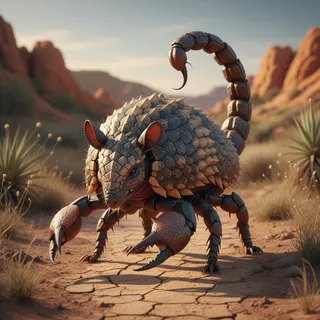
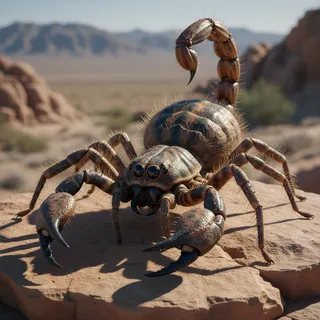
The Lobscorpio is a formidable nocturnal ambush predator. It spends its days hidden within burrows or camouflaged among dense mangrove roots, emerging under the cover of darkness to hunt. Its massive, crushing claws, reminiscent of a lobster's, are used to dispatch larger prey like fish, crabs, and even small waterfowl, while its powerful, venomous scorpion tail is reserved for stunning or incapacitating more agile victims. They are highly territorial and solitary, communicating through a series of substrate vibrations and low-frequency clicks.
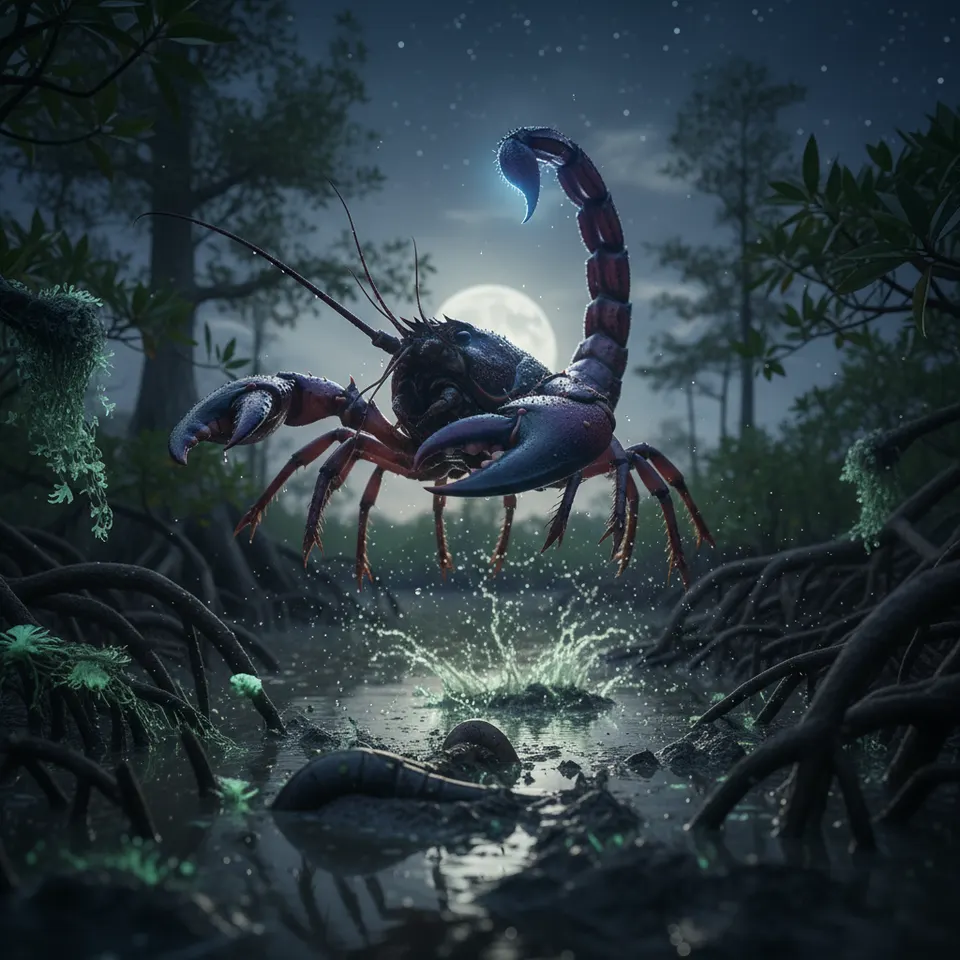
Adapted to both aquatic and semi-terrestrial environments, the Lobscorpio possesses specialized gills that allow it to breathe underwater for extended periods, complemented by rudimentary lung-like structures for short excursions on land. Its tough, chitinous exoskeleton provides excellent protection against predators and the elements. They are known to meticulously construct intricate underwater burrows, often reinforced with mud and debris, which serve as both a safe haven and a strategic hunting blind.
Fun Facts
- 🔬 The venom of a Lobscorpio contains a unique neurotoxin that causes immediate paralysis in aquatic prey but induces vivid, hallucinatory dreams in terrestrial victims, making them easier to track.
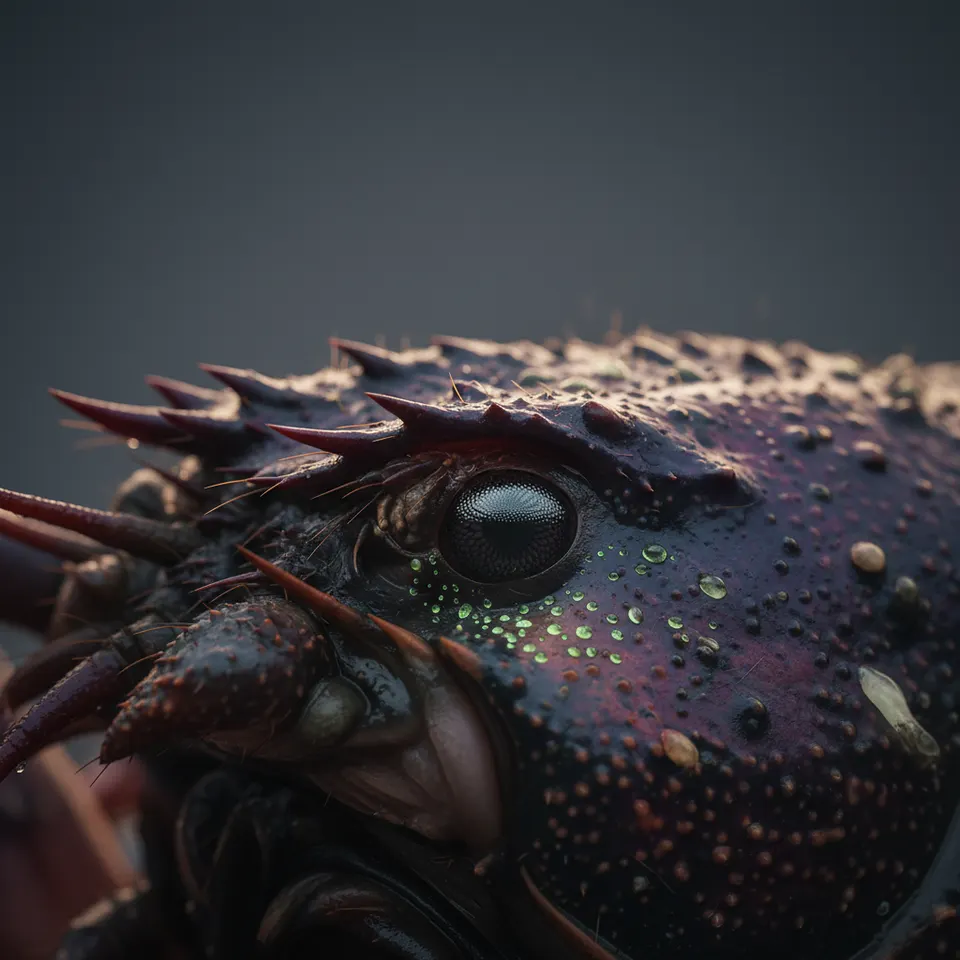
- 🔬 During its molting process, the Lobscorpio sheds its entire exoskeleton, including the barb of its tail, which is then often sought after by indigenous cultures for its alleged medicinal and spiritual properties.
- 🔬 Despite its fearsome appearance, the Lobscorpio is observed to perform an elaborate, almost balletic courtship dance, involving intricate claw movements and synchronized tail displays, before mating.