Skorpiwoolf
Luposcorpio venenosa
Stats

Behavior
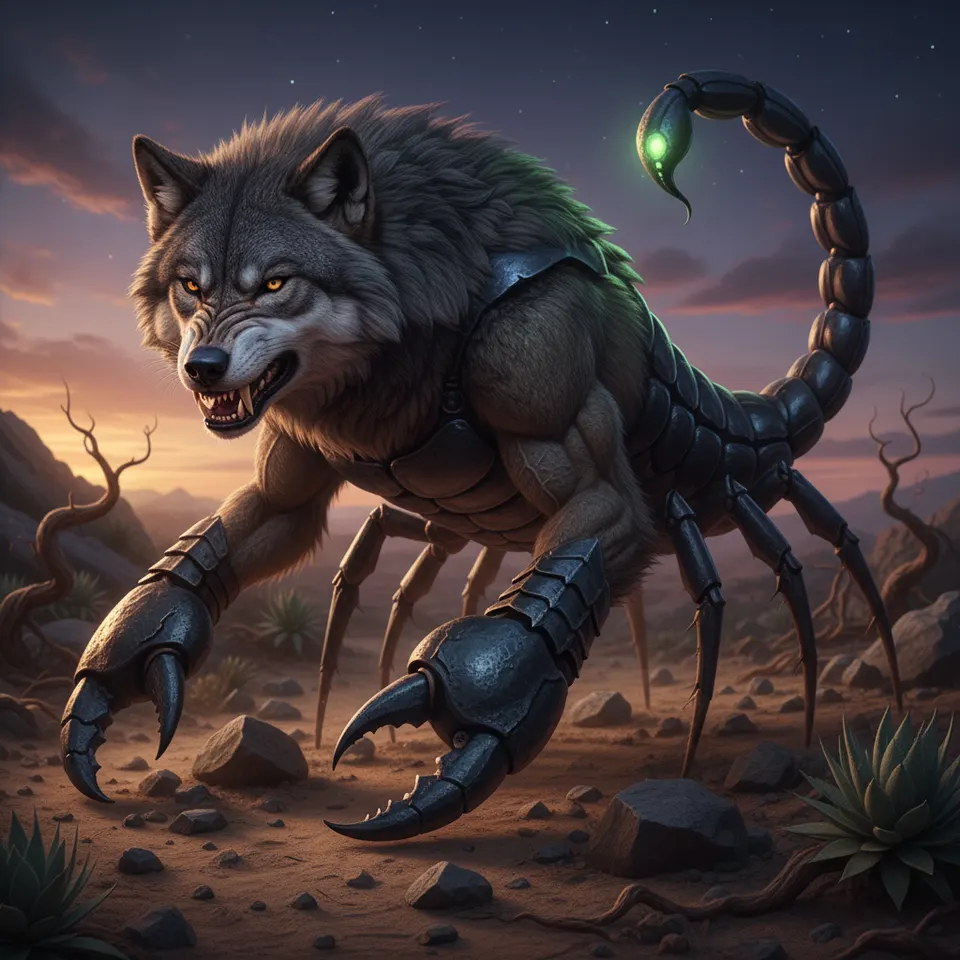
Skorpiwoolfs are highly territorial and primarily solitary, though mating pairs may tolerate each other briefly for reproduction. They are ambush predators, using their keen lupine senses of smell and hearing to track prey, then relying on the scorpion's powerful chelae and venomous tail for the final, swift strike. Despite their formidable appearance, they are surprisingly intelligent, capable of complex hunting strategies to outwit larger game.

They prefer to inhabit rocky outcrops, deep caves, or abandoned burrows, which they modify with their powerful claws and forelegs. Primarily nocturnal, they emerge at dusk to hunt, their segmented tail held high as a warning or a display of dominance. During the day, they retreat to their cool, dark lairs, relying on their tough chitinous plates and coarse fur to regulate body temperature against the harsh desert sun.
Fun Facts
- 🔬 Their howl is a chilling blend of a wolf's mournful cry and the unnerving hiss of a giant arachnid, capable of disorienting prey.

- 🔬 The venom from a Skorpiwoolf's stinger can paralyze a fully grown elk within minutes, but folklore suggests a diluted antidote can be made from its shed chitinous exoskeleton.
- 🔬 Unlike true scorpions, Skorpiwoolfs possess a thick, coarse fur pelt over much of their wolf-like body, providing insulation against extreme temperature fluctuations in their desert habitats.