Scorpider
Arachnoscorpius telarius
Stats

Behavior
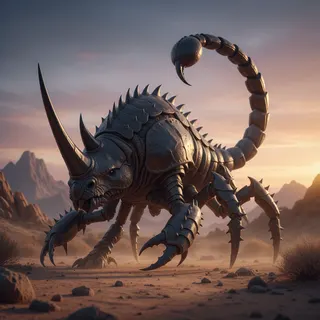
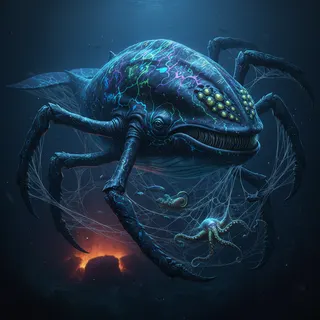
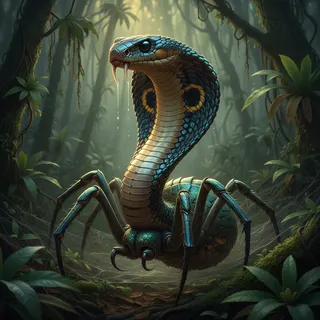
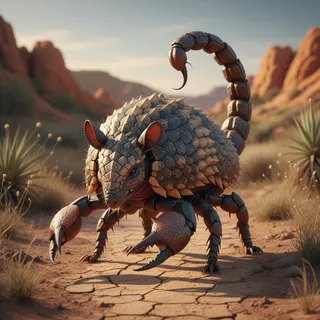
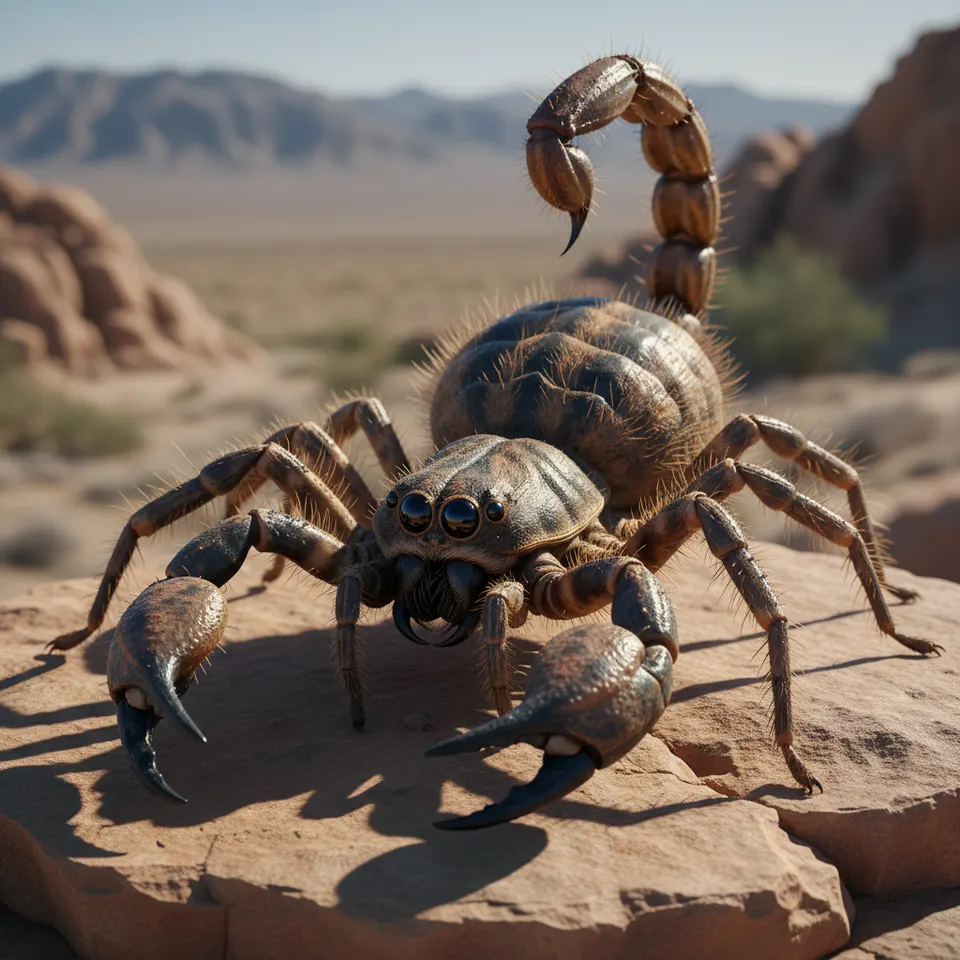
The Scorpider is a highly territorial and solitary predator, known for its ambush tactics. It often creates elaborate web-lairs in crevices or under rocks, not for trapping prey, but as a sensory net to detect vibrations. When prey approaches, it lunges with astonishing speed, immobilizing its target with either its potent neurotoxic fangs or its fast-acting hemolytic stinger, depending on the size and resistance of the victim. They are extremely aggressive when threatened, displaying a characteristic 'threat pose' by raising their stinger-tipped tail and clacking their formidable pedipalps.

Primarily nocturnal, Scorpider activity peaks during the cooler hours of the night. During the day, they retreat into their concealed lairs to avoid the harsh desert sun. Mating rituals are brief and perilous, often ending with the female consuming the male. Females lay clutches of eggs which they protect fiercely until hatching, after which the young disperses quickly. They have an uncanny ability to navigate complex subterranean environments, using a combination of chemosensory hairs on their legs and low-light vision from their multiple eyes.
Fun Facts
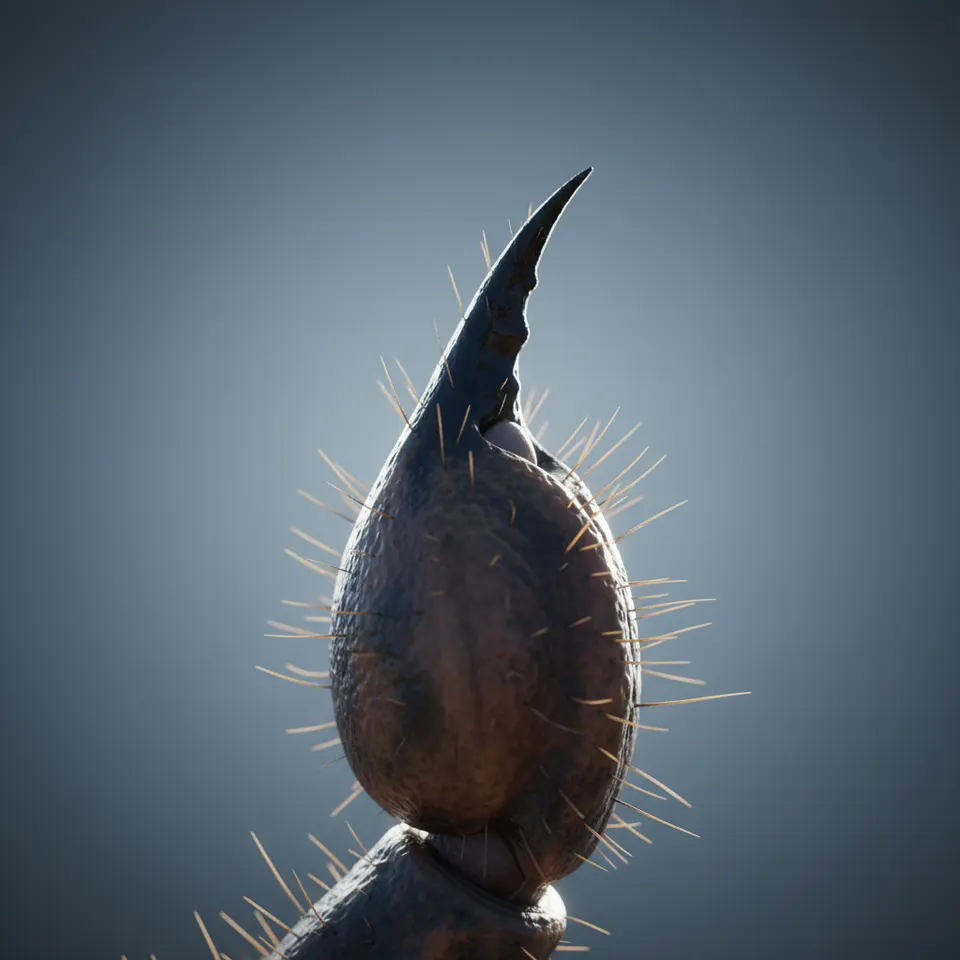
- 🔬 A Scorpider possesses two distinct venom glands: one in its chelicerae (fangs) delivering a fast-acting neurotoxin similar to a Black Widow's, and another in its telson (stinger) delivering a potent hemolytic toxin akin to an Emperor Scorpion's.
- 🔬 Despite having spinnerets, the Scorpider's 'silk' is exceptionally thick and sticky, more akin to tripwires or a binding agent than a traditional web. It uses it to reinforce its lair, secure captured prey, or even to create temporary 'rappelling' lines when navigating steep terrain.
- 🔬 Their exoskeleton, particularly on the cephalothorax and tail, is coated with a fluorescent compound that glows intensely under ultraviolet light, a trait believed to be used for species recognition during mating or as a warning display to other predators.