Mellicorps
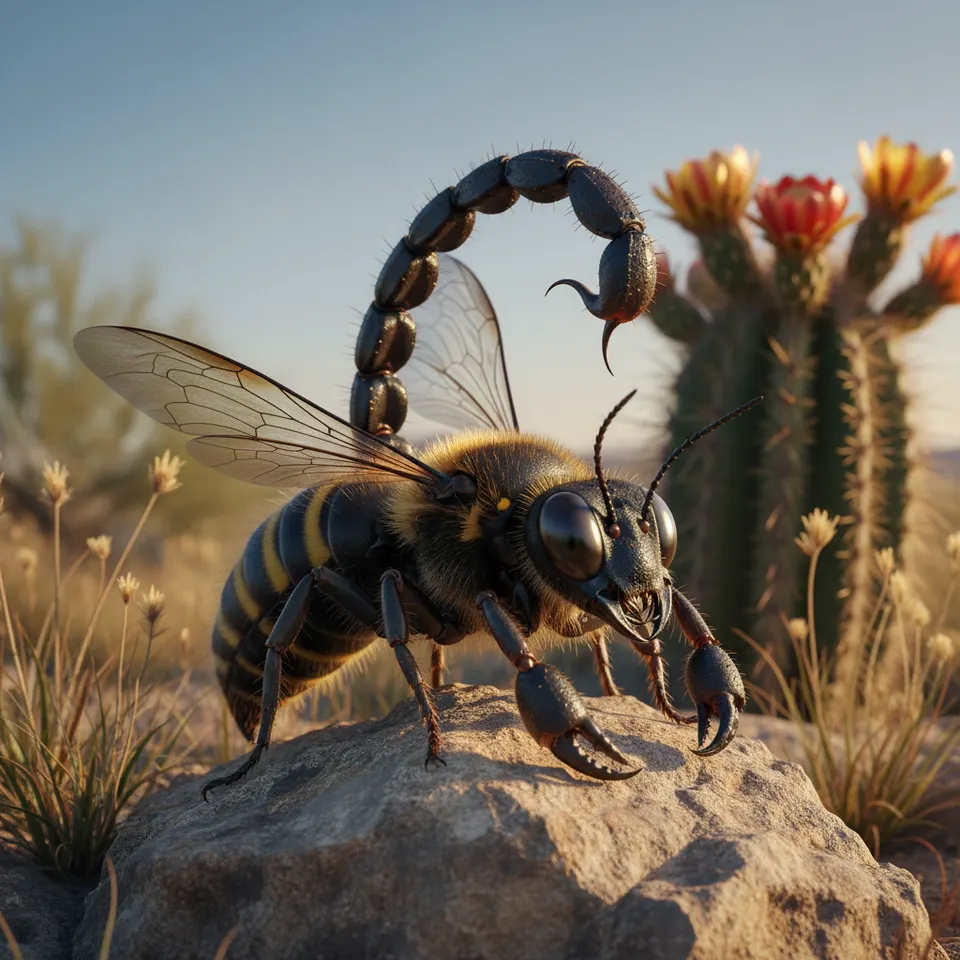
Apiscorpio venomiferus
Stats

Behavior
Mellicorps exhibit a complex social structure akin to certain solitary bees, forming small, matriarchal colonies of 3-5 individuals. While generally docile when foraging for nectar and pollen, they become fiercely territorial and aggressive if their nest or food sources are threatened, utilizing both their potent venomous stinger and powerful pedipalps. They communicate through intricate dances that incorporate both aerial maneuvers and ground vibrations, conveying information about food locations or potential dangers.
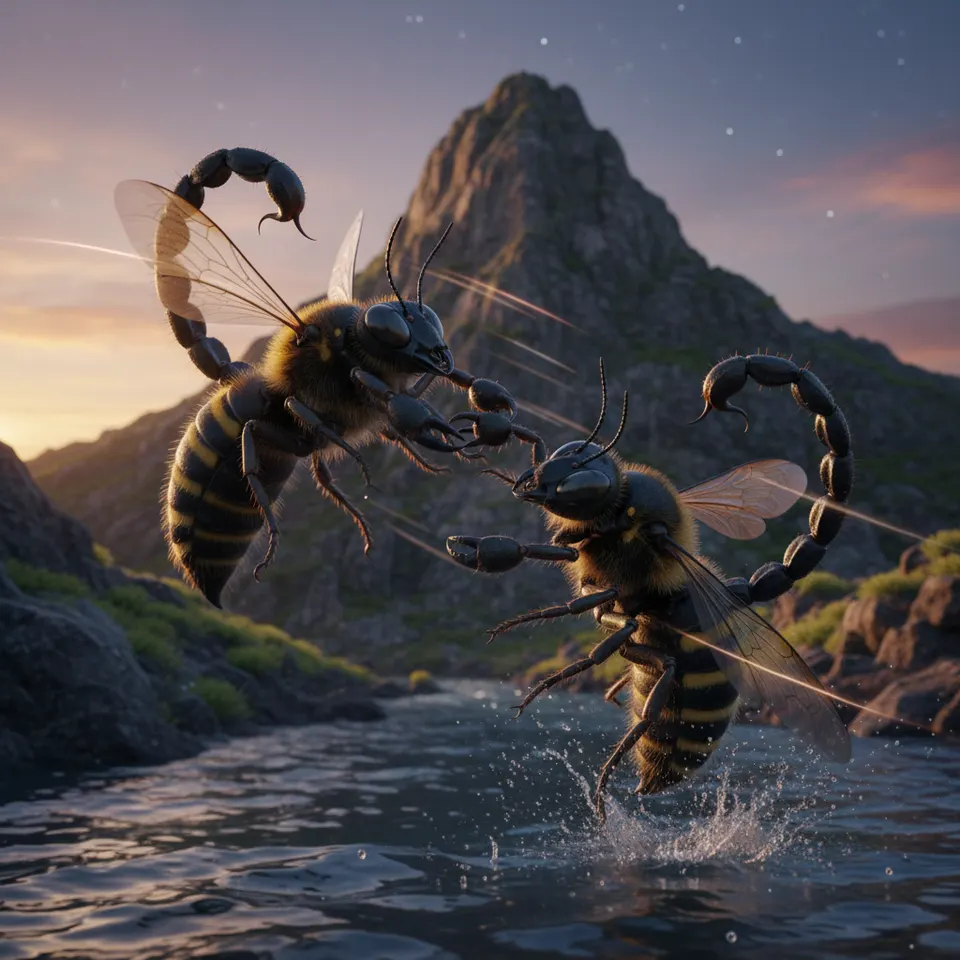
Nests are typically constructed within hollowed-out rock crevices or abandoned rodent burrows, lined with a resinous, wax-like substance that protects against extreme temperatures. Mellicorps are primarily diurnal, actively foraging during the day, but will hunt small prey during dawn and dusk. Their robust, camouflaged exoskeleton provides excellent blending among rocky terrain, while their buzzing wings can be deceptively quiet when they stalk unsuspecting prey on the ground.
Fun Facts
- 🔬 Their venom is a potent neurotoxin, a unique blend of apitoxin and scorpamin, causing rapid paralysis and intense pain in larger targets, yet is specifically adapted to subdue insect prey without harming their internal organs for consumption.
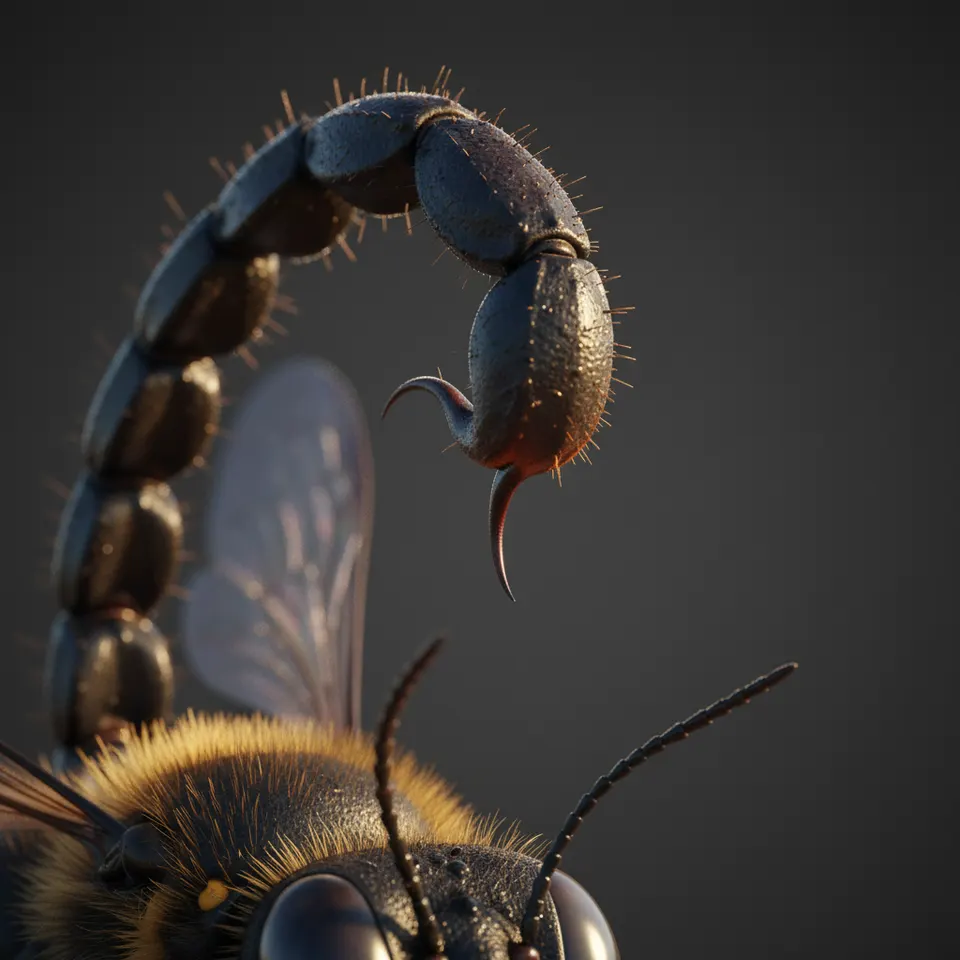
- 🔬 Mellicorps possess six legs: two sturdy, scorpion-like pedipalps modified into small but strong pincers for grasping prey, and four slender, bee-like legs covered in fine hairs, used for walking, clinging, and gathering pollen.
- 🔬 Unlike most bees, Mellicorps do not produce honey; instead, they store excess nectar in specialized crop sacs, which is fermented into a potent, energy-rich liquid used to sustain the colony during lean times and boost the queen's egg-laying capacity.