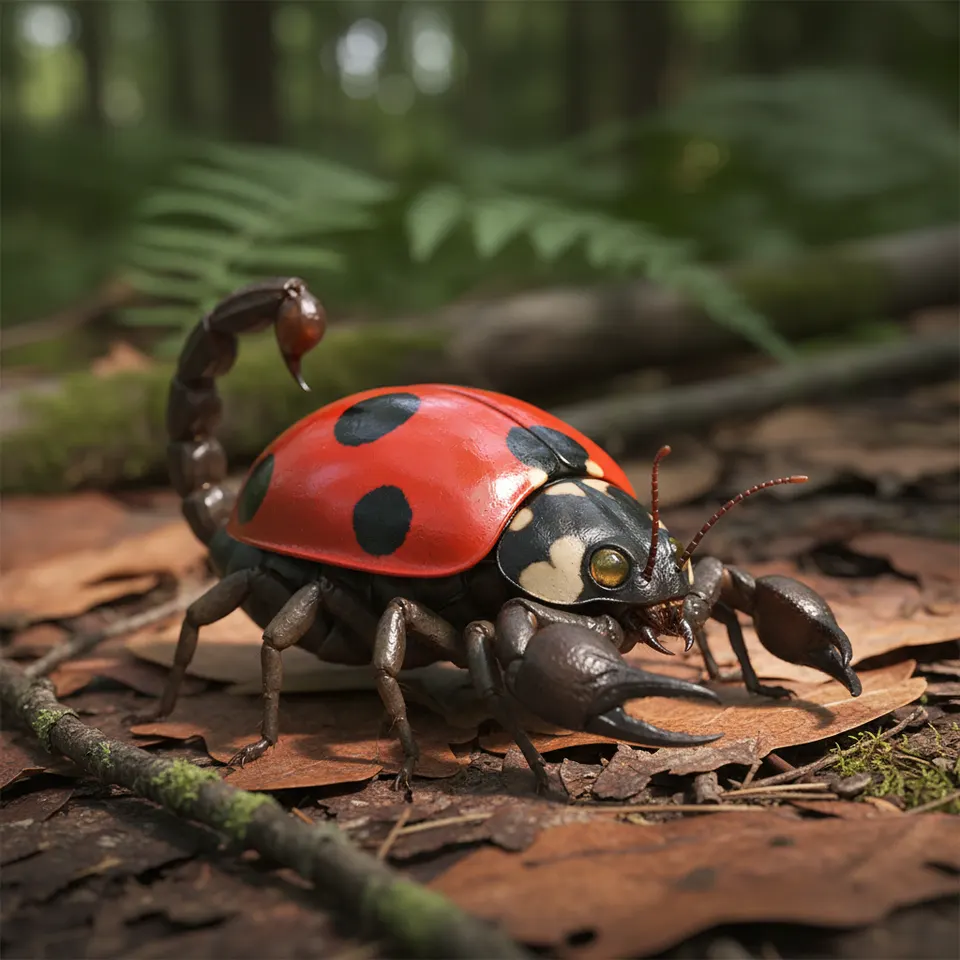
Scorpiolady
Coccinoscorpius maculatus
Stats

Behavior
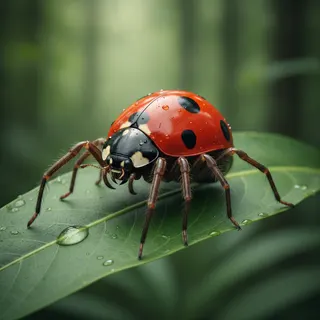
The Scorpiolady is a solitary and nocturnal hunter, known for its patient ambushes. It moves with a deliberate, scuttling gait, often mistaken for a large beetle until its venomous tail is raised in defense. Despite its striking appearance, it is generally reclusive, preferring to hide under rocks, bark, or within dense vegetation during the day. Its vibrant red and black shell acts as an aposematic warning, deterring most predators, though its primary defense is a potent neurotoxic sting.

They construct shallow burrows or commandeer existing crevices for shelter. Females are known to exhibit maternal care, protecting their young hatchlings for a short period after birth, carrying them on their backs similar to scorpions. While not aggressive, Scorpioladies will sting if provoked or cornered, delivering a venom that can incapacitate small mammals and cause severe discomfort in larger creatures.
Fun Facts
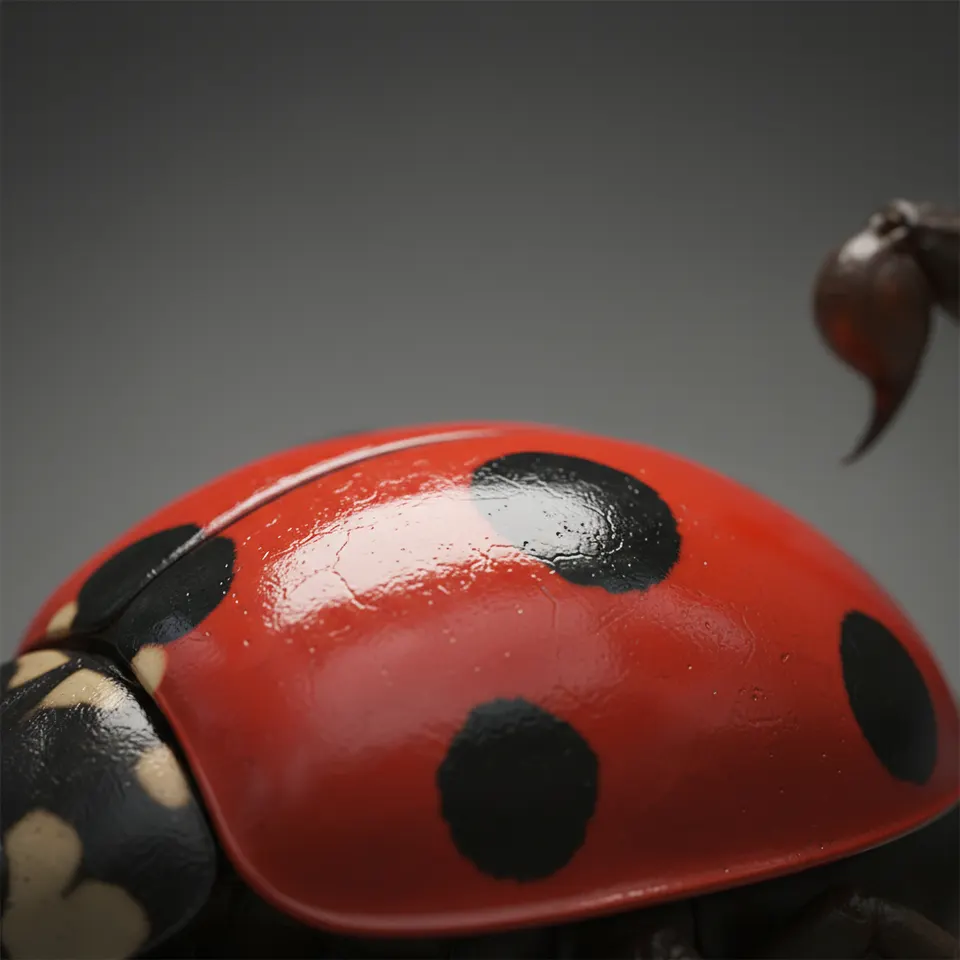
- 🔬 Its hard, dome-shaped elytra are not just for protection; they can be vibrated rapidly to produce a distinct warning buzz when threatened, a sound that oddly resembles a faint, high-pitched cicada call.
- 🔬 Like true scorpions, the Scorpiolady's exoskeleton contains compounds that fluoresce a vivid blue-green under ultraviolet light, a mysterious trait thought to aid in nocturnal navigation or communication.
- 🔬 Despite its scorpion-like sting, its primary diet as a juvenile consists almost entirely of aphids, making it a surprisingly beneficial predator for gardeners, albeit a dangerous one to encounter personally.